The Tarmac SL9 S-Level Saves $4,000 — Here's What 135 Grams Actually Costs You
Specialized's Tarmac SL9 S-Level offers near-S-Works performance with Dura-Ace or RED, power meters, and carbon wheels — for $4,000 less. Here's what you give up.

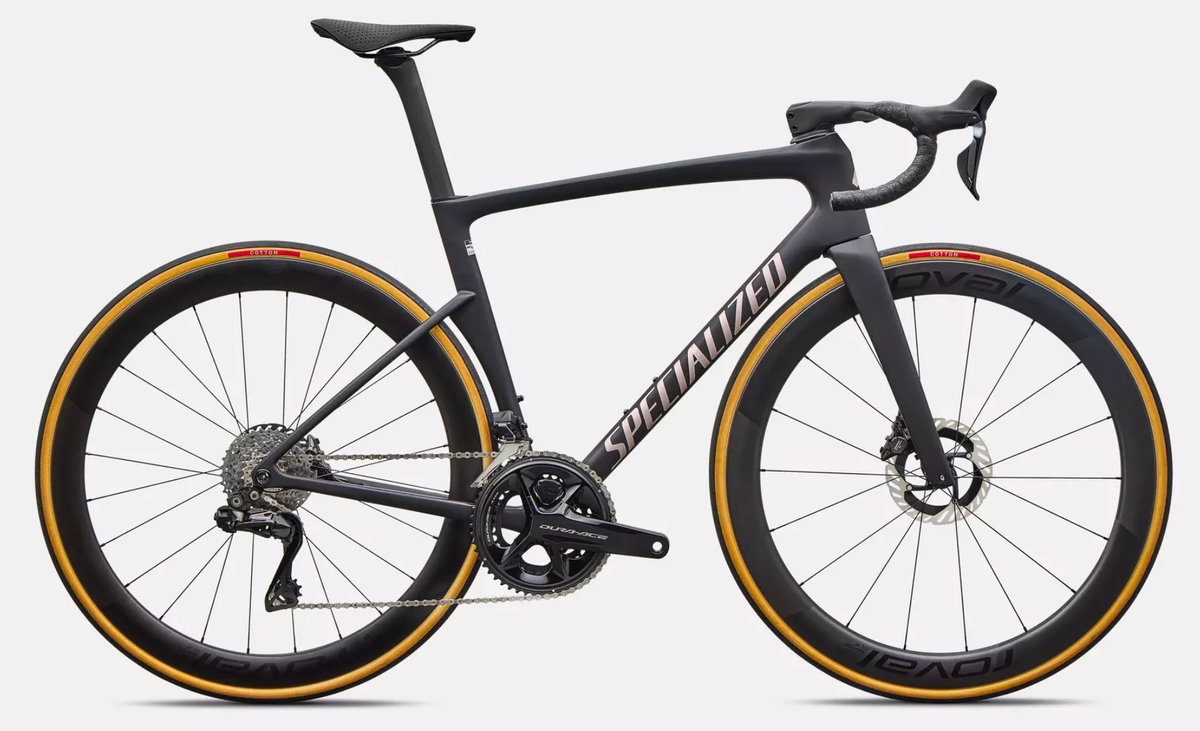
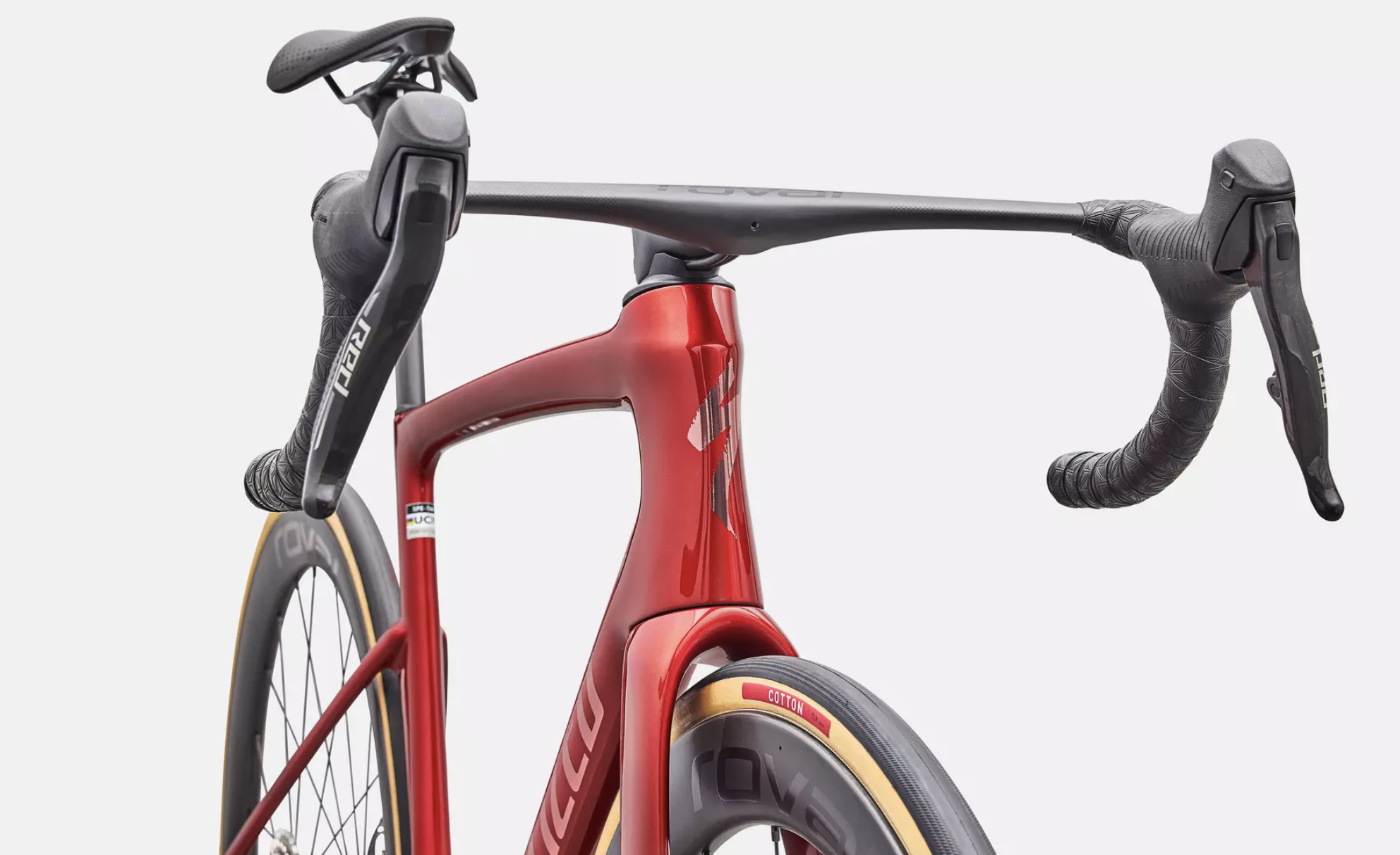
An 822-gram frame, Dura-Ace or RED AXS, dual-sided power, carbon race wheels, and an integrated cockpit — for $4,000 less than S-Works. Specialized's new Tarmac SL9 S-Level is the clearest answer they've given to the question every self-funded racer asks: how close can I get to the pro build without crossing into irrational territory?
The short version: very close. S-Level uses Specialized's FACT 10r carbon instead of the 12r found in S-Works, adding roughly 135 grams to the frame. The fork stays 12r. Specialized claims identical stiffness, compliance, and aero profiles between the two layups — the weight is the variable they're trading. For most of us, that's an abstraction. You're not feeling 135 grams distributed across a frame on a Tuesday night crit. You might notice it on a scale, or in your bank account.
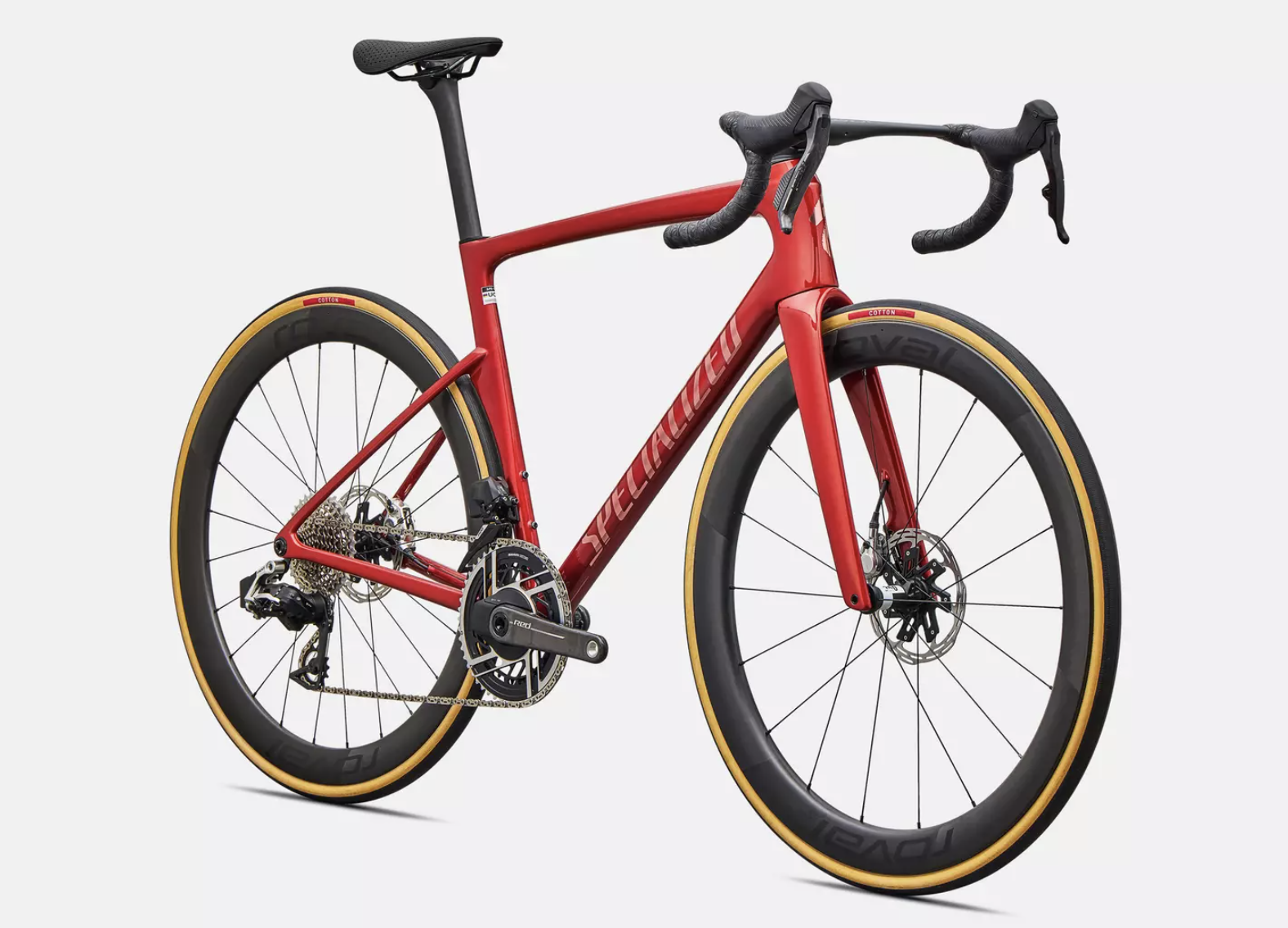
The real savings come from the parts bin: Roval Rapide CL III wheels instead of CLX III, a Power Pro saddle instead of S-Works, and the older SL8 seatpost rather than the new tapered Rapide design. CeramicSpeed bearings disappear. None of these are downgrades that'll slow you down in any measurable way — they're the kind of cuts that trim cost without gutting performance. Both S-Level builds still include power meters: SRAM's integrated unit on the RED version, 4iiii Precision Pro dual-sided on Dura-Ace. That alone is worth $800–$1,000 if you were going to add it anyway.
The catch — and there is one — is that $10,000 still buys you a lot of bike, or a lot of other things. S-Level isn't a value play in any normal sense. It's a value play relative to a $14,000 S-Works, which is a strange yardstick. If your budget tops out at $7,000, the Expert with Force AXS or Ultegra Di2 uses the same FACT 10r frame and saves you the integrated cockpit and power meter for later. At $4,500, the Comp drops to alloy rims and Rival or 105 — still a race-geometry SL9, still electronic shifting, just with more obvious compromises.
S-Level makes the most sense for the rider who actually races, tracks power, and wants the aero cockpit sorted from day one — but doesn't need the lightest-possible flex on the start line. If you're chasing every gram, S-Works is still there. If you're chasing podiums on your own dime, S-Level closes the gap without requiring you to justify the last $4,000 to yourself or your spouse.