New Goodyear Eagle F1 Tires: Race-Day Speed or Puncture Protection, Pick One
Goodyear's new Eagle F1 RS claims a 4.8-watt rolling resistance drop with puncture protection. Here's what the specs mean for real-world riding decisions.

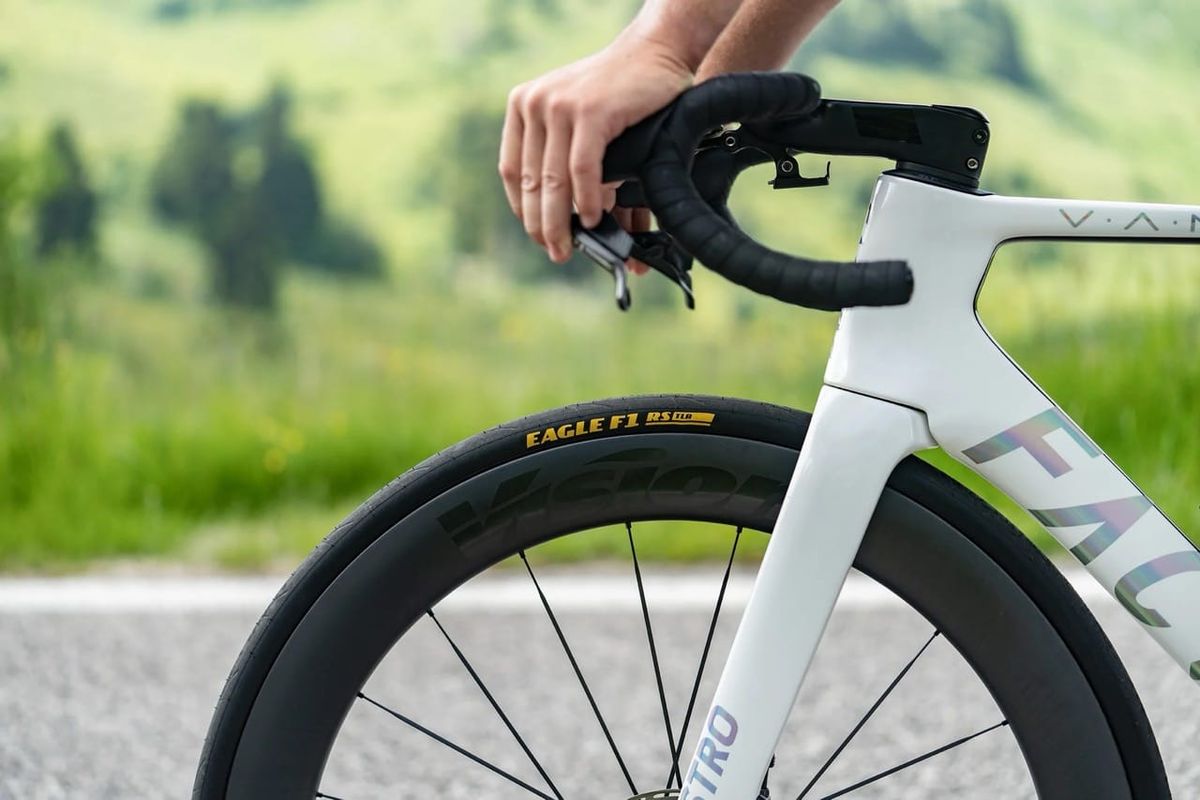
A 4.8-watt rolling resistance drop is the kind of number that makes you double-check the press release. Goodyear claims exactly that for their new Eagle F1 RS compared to the outgoing model—measured at 72 psi, which is realistic pressure for most riders on 28–32mm tires. For context, 4.8 watts is roughly what you'd save switching from a mid-tier training tire to a race-day tubular. Except this one has puncture protection built in.
The two new tires split along predictable lines. The SuperSport RS is the pure race option: 260g in a 28mm tubeless-ready, no puncture belt, Goodyear's lightest road tire to date. The F1 RS adds an R:Shield breaker layer and comes in both tube-type and tubeless versions up to 34mm. That width matters if you're running wider rims or want the option of lower pressures on rough roads. The tube-type F1 RS in 28mm hits 220g—light for a protected tire—while the tubeless version in the same size jumps to 290g. That 70-gram penalty is the cost of running sealant-compatible construction.
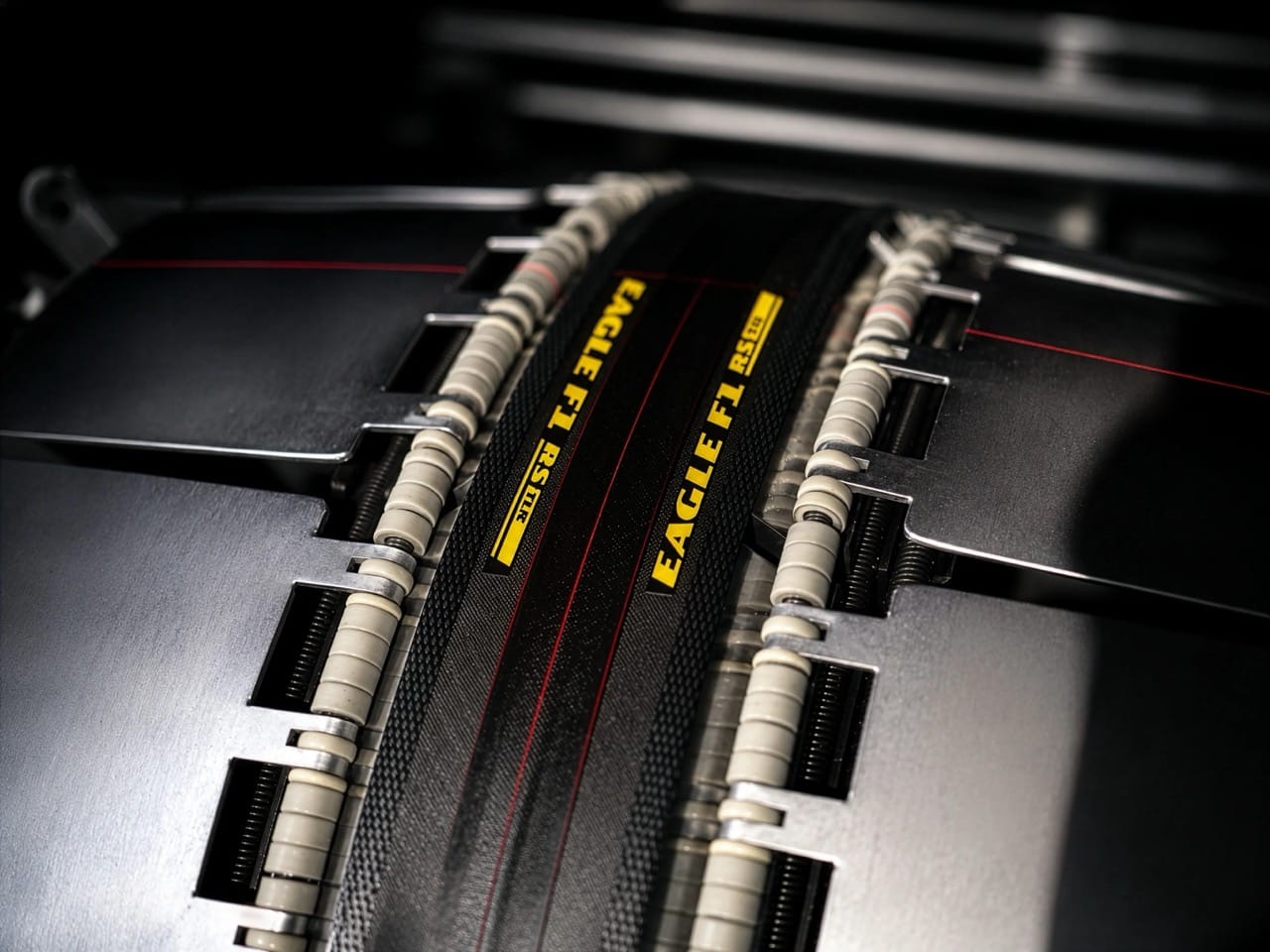
Both tires share Goodyear's new casing architecture: a non-overlapping double-layer design they call "Advanced Profile." The claimed benefit is less energy lost to casing deformation in the contact patch, plus better support at the shoulders for cornering. Whether that translates to feel on the road is harder to say from specs alone. The 120 TPI count is standard for performance tires—not ultralight race-day territory, but supple enough.
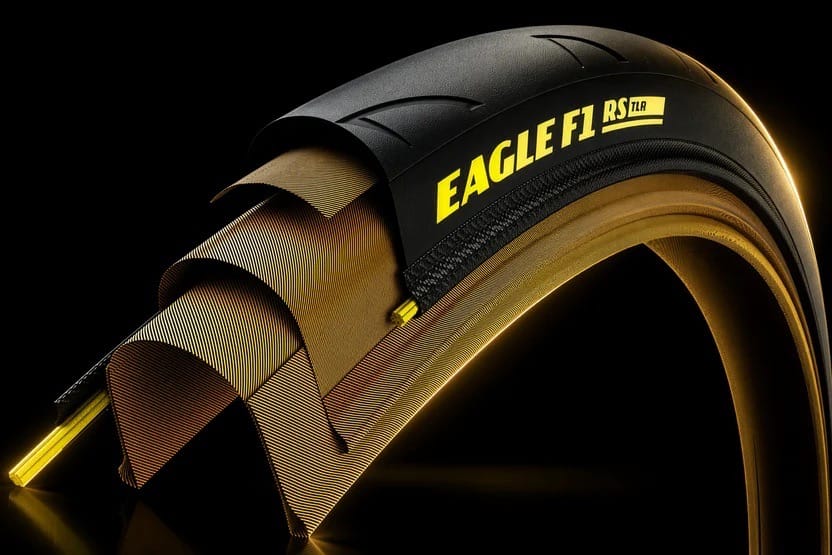
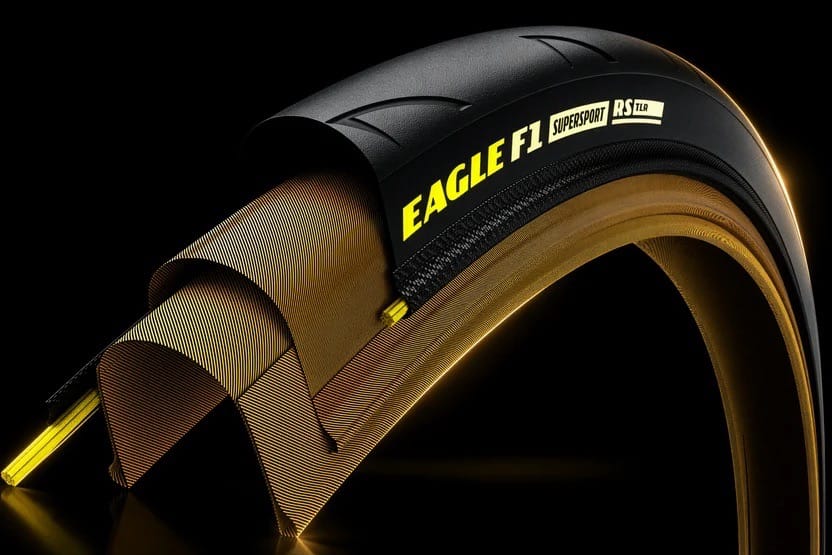
Here's what might give some riders pause: the SuperSport RS is tubeless-only, no tube-type option. If you're mid-ride with a slashed sidewall and no spare tube compatible with your setup, you're calling for a ride. The F1 RS hedges that bet with tube-type versions at a lower price ($85 vs. $95–100), which might make more sense for training miles or mixed-surface days where flats are a real risk.
At $100 for the SuperSport RS and $85–95 for the F1 RS, these sit in the crowded mid-premium tier alongside Continental GP5000 S TR and Vittoria Corsa N.EXT. The watts-saved claims are compelling on paper, but independent rolling resistance tests will tell the real story. For now, the F1 RS looks like the smarter pick for riders who want race-day speed without babysitting their tires—especially in that 32mm tubeless version for all-day comfort on variable roads.