Why Your Power Drops 10% in the Heat (And What Actually Fixes It)
Heat acclimatization, hydration strategy, and warning signs every cyclist needs to know. A data-driven guide to training and racing when it's hot.


Your power meter doesn't care that it's 95°F. TrainingPeaks doesn't adjust your TSS because the humidity made you feel like you were pedaling through soup. But your body knows. And if you've ever watched your heart rate climb 15 beats above normal while your watts quietly cratered, you've already learned the lesson: heat is a performance variable that most riders chronically underestimate and almost never train for.
Which is a problem, because heat is also one of the few race-day wildcards you can actually prepare for.
The Physiology You Can't Outwork
When you're putting out 250 watts, your muscles are generating roughly 750 watts of heat. Your body has to dump that heat somewhere, and the primary mechanism is sweat evaporating off your skin. Simple enough — until the ambient temperature climbs and your cardiovascular system starts fighting itself.
To shed heat, your body diverts blood to the skin's surface. That's blood that's no longer available to deliver oxygen to your working muscles. The result is cardiac drift: your heart rate climbs at the same power output because your heart has to beat faster to maintain the same oxygen delivery with less blood volume per stroke. Your RPE spikes. Your power drops. And if humidity is high, your sweat can't evaporate efficiently, which means your primary cooling system is throttled at the exact moment you need it most.
None of this is a fitness problem. It's physics. It happens to WorldTour riders and it happens to you.
Heat Acclimatization: The Biggest Return on Investment
If you're a time-crunched rider who can only focus on one heat-related intervention, make it this one. Heat acclimatization produces measurable physiological adaptations over 10 to 14 days of consistent heat exposure:
- Increased plasma volume (more blood to go around)
- Earlier onset of sweating (you start cooling sooner)
- More dilute sweat (you lose less sodium per liter)
- Lower resting core temperature
- Reduced heart rate at any given effort
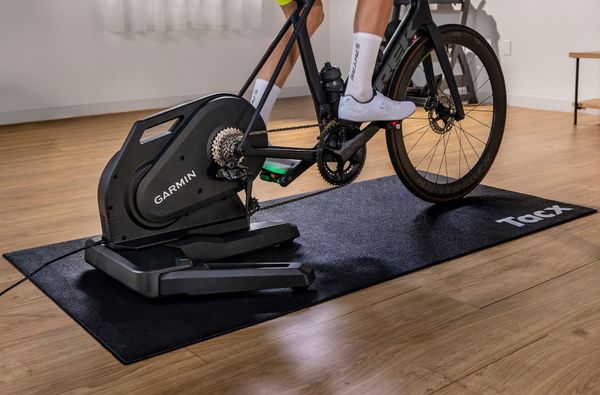
You become, mechanically, a better cooling system. The protocol is straightforward: 60 to 90 minutes of heat stress per day, starting with easier efforts and progressively adding intensity over the two-week block. If you live somewhere temperate, you can simulate the stimulus by overdressing on the trainer, training indoors without a fan, or adding 15-to-20-minute sauna sessions or hot baths after your workouts.
For the dad who gets one window per day to ride — maybe 5:30 AM before the kids wake up — this is where the sauna hack becomes genuinely useful. You can do your quality work in the cool morning hours, then accumulate heat stress post-workout without sacrificing the training session itself.
Acclimatization decays, though. Without ongoing heat exposure, you'll lose a significant chunk of those adaptations within two to three weeks. Time your heat block to peak right before your target event, not a month out.
Hydration: Match the Loss, Don't Overcorrect
The instinct when it's hot is to drink as much as possible. This is wrong, and in extreme cases, dangerous.
Hyponatremia — dangerously low blood sodium from overdrinking — is a real risk on long, hot efforts, and it presents with symptoms that can look a lot like dehydration: confusion, nausea, headache. The difference is that drinking more water makes hyponatremia worse, not better.
The goal is to match your fluid intake to your sweat rate, not to maximize volume. You can estimate your sweat rate by weighing yourself before and after a ride: roughly one kilogram of weight lost equals one liter of fluid deficit. Most riders fall somewhere between 0.5 and 1.5 liters per hour in hot conditions, but individual variation is huge. Know your number.
Sodium replacement matters too, especially if you're a heavy sweater or you notice salt stains on your kit. Plain water over multiple hours won't cut it. Use an electrolyte mix with meaningful sodium content — most of the "hydration" products on the market are criminally underdosed, so check the label. You're looking for 300-500mg of sodium per serving minimum for serious heat.
Pre-Cooling and Mid-Ride Cooling: Free Watts
Actively managing your body temperature before and during a hot ride buys you measurable performance. The research here is robust enough that WorldTour teams travel with ice vests and slurry machines.
Before you start: cold drinks, ice slurry, a cold towel around the neck, or a cooling vest while you're waiting to roll out. The idea is to bank thermal headroom — start with a lower core temperature so you have more room to climb before hitting the performance cliff.
During the ride: pour water over your head and neck, tuck ice under your helmet or down the back of your jersey, drink cold fluids when available, and use shade strategically. These are basics that most riders skip because they feel performative. They work.
Pacing by Feel, Not by Numbers
This is the hardest adjustment for data-driven riders, and it's non-negotiable.
In the heat, your heart rate will be elevated at any given power output, and your sustainable power will be lower than normal. If you go out at your usual FTP percentage or your usual race pace, you will blow up. The heat doesn't care about your training plan.
Pace by RPE. Start conservative. Let the race come to you in the final third when everyone who ignored this advice is cooked. Your power file will look unimpressive for the first hour. Your finishing position won't.
For training days, the same principle applies: accept that your numbers will be down in the heat. Don't chase watts to hit a target; you'll just dig a recovery hole. If you need to hit specific power targets for a structured workout, do it early in the morning or indoors with a fan.
The Warning Signs You Can't Ignore
Heat illness exists on a spectrum, and the top of that spectrum kills people. Learn to recognize it.
Heat cramps: Painful muscle cramping, usually in the legs. Stop, cool down, hydrate, replace sodium. This is your body's first warning shot.
Heat exhaustion: Heavy sweating, cool or clammy skin, weakness, dizziness, nausea, headache, rapid weak pulse. Stop riding. Get into shade. Lie down. Cool your body with water and sip fluids. If you're not improving within an hour, or you start vomiting, you need medical attention.
Heat stroke: This is a medical emergency. Call 911 immediately. The red flag is altered mental status — confusion, disorientation, slurred speech, stumbling, strange behavior, agitation, collapse. The person's core temperature is dangerously high. Do not wait for "dry skin" to act; in exertional heat stroke, the person may still be sweating.
While waiting for help: cool the person as aggressively as possible. Cold-water immersion is the gold standard. If that's not available, pack ice against the neck, armpits, and groin, douse them with cold water, fan them. Getting core temperature down fast is what saves lives.
The single most important thing: any confusion or altered behavior during hard effort in the heat is heat stroke until proven otherwise. Don't let anyone "ride it off."
The Variables That Stack Against You
Your heat tolerance on any given day isn't fixed. Dehydration, poor sleep, alcohol the night before, an illness you're fighting, certain medications (diuretics, beta-blockers, antihistamines, stimulants), and lack of acclimatization all lower your threshold. Pile two or three of these together and a day that should be manageable becomes dangerous.
For the dad who got four hours of sleep because the toddler was up sick, then had two beers at the neighborhood cookout, then lined up for a hot Saturday group ride without any heat prep: you're not starting from zero. You're starting from negative.
Be honest with yourself about how many risk factors you're carrying into a hot ride. The heat doesn't grade on a curve.
Putting It Together
Heat is trainable. That's the good news. The 10-to-14-day acclimatization protocol works, and it works well enough that you can show up to a hot event with a genuine physiological advantage over riders who didn't prepare.
It requires planning, though. You need to time the heat block correctly, maintain some exposure leading into the event, dial in your hydration strategy, and accept that your numbers on race day won't look like your numbers in perfect conditions.
For the rider who's already juggling work, family, and limited training hours, adding a heat-prep layer feels like one more thing. It is. But it's also one of the highest-leverage interventions available — a two-week block that can be the difference between finishing strong and getting pulled from the course.
The field will thin itself in the heat. Your job is to not be part of that thinning.
TL;DR
- Heat acclimatization over 10-14 days produces real physiological adaptations (more plasma volume, earlier sweating, lower heart rate at effort) — time it to peak at your event, not a month before.
- Hydrate to match your sweat rate, not to maximize volume; overdrinking causes hyponatremia, which can look like dehydration but gets worse with more water.
- Any confusion or altered mental status during hard effort in the heat is heat stroke until proven otherwise — call 911 and cool aggressively while waiting.