Google's $100 Fitbit Air Promises Invisible Tracking — Here's What Actually Matters
Google's Fitbit Air is a screenless tracker with AI coaching, auto-detection for cycling, and a week of battery. Here's what matters — and the catch.

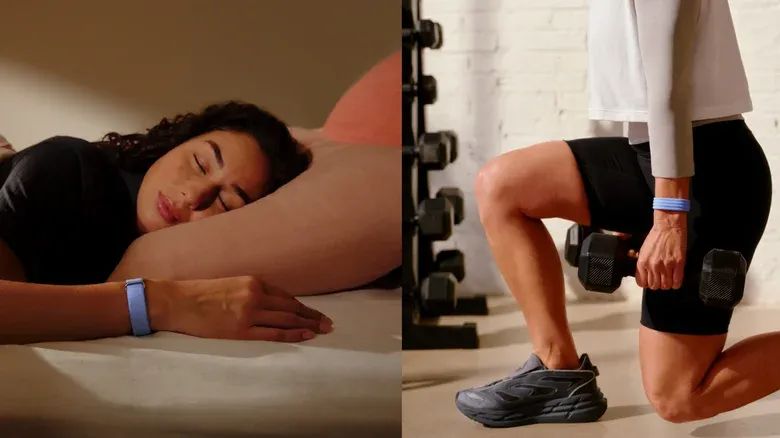
Google just launched the Fitbit Air — a screenless tracker you wear on your wrist (or eventually, anywhere) that's supposed to disappear into your routine. It's 5.2 grams without a band, tracks heart rate 24/7, auto-detects cycling and running, and leans hard on AI coaching through Google's Health Coach. Pre-orders are $100, ships May 26.
Here's what matters if you're trying to squeeze training into a life that also includes kids, work, and about four hours of sleep: the Air doesn't require you to do anything. No buttons. No screen taps. It just logs rides, assigns a Sleep Score, tracks HRV, and buzzes you awake at the right point in your sleep cycle. The AI coach is supposed to adjust your training plan based on real-time performance and your actual schedule — which sounds useful if it works, but I can't verify how well it adapts when your kid wakes up at 2 a.m. and torches your recovery.
The specs that actually move the needle: up to a week of battery life, five-minute quick charge for a day of tracking, 50-meter water resistance (not waterproof, so don't swim laps), and auto-detection for outdoor and stationary cycling. Google claims the new machine learning models are 15% more accurate than previous versions and that Sleep Score now "better reflects recovery," whatever that means in practice. The vibration motor is quiet enough for silent alarms, which is legitimately helpful if you're trying not to wake your partner before a 5 a.m. ride.
Here's the catch: you're locked into Google's ecosystem and the Health Premium subscription model. Three months are included, but after that you'll need to pay to unlock the full coaching features and deeper analytics. The device also has no chest strap option yet — just three wristbands, including a "Performance Loop" that's micro-adjustable and an "Active" silicone band for sweaty efforts. If you want better HR accuracy during intervals, you're still using a separate chest strap and syncing it through your phone.
I haven't worn one yet, so I can't tell you if it actually stays put during a hard ride or if the AI coach is smarter than a spreadsheet. But if you're already in the Google/Fitbit world and you want something that tracks consistently without adding another screen to your life, the Air might be worth the $100. Just know you're trading control for convenience — and betting that Google's algorithms understand your recovery better than you do.