The One Spec That Makes the Apocalypse Bike Interesting
A two-wheel-drive apocalypse bike sounds absurd. For dads hauling cargo, the traction tradeoff might actually make sense.

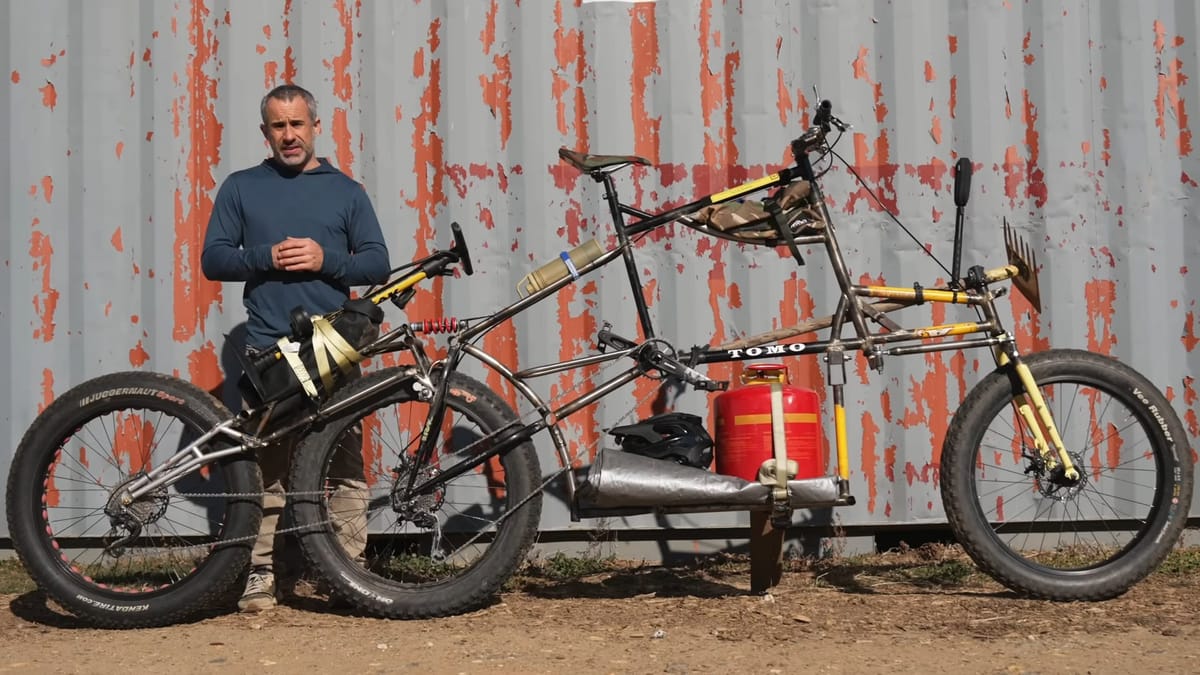
Tall. Fat. Suspended. Cargo-capable. And—most interesting—two-wheel drive.
That’s the only spec that matters here. When both rear wheels are driven in 3-wheel trim, you’re not chasing efficiency. You’re chasing traction under load. For a busy dad hauling kids or gear through gravel, slop, or a snowy cul-de-sac, driven rear mass changes the equation. More contact patch + torque to both wheels = fewer stall-outs at walking speed.
Here’s the catch: complexity compounds fast. More chains, more bearings, more alignment issues. Two-wheel drive sounds apocalyptic in a good way—right up until you’re adjusting cable tension on a Sunday night before the school run. I can’t verify long-term durability here. The video shows chaos and short testing windows. If you value service simplicity over mechanical curiosity, ignore this entirely.
Still, I get the appeal. The Apocalypse Bike isn’t about shaving grams. It’s about redundancy and traction when the path isn’t clean. For the data-minded rider, the question isn’t “is it wild?” It’s: does powered redundancy offset failure risk? Depends on terrain. And your tolerance for tinkering.