The Anti-Hype Grip: PDW’s Lisbon Cork Experiment
PDW’s Lisbon Cork Grips use dense Portuguese cork to reduce vibration without killing control—light, durable, and quietly smart.

Your hands feel the road long before your legs do. On a two-hour ride wedged between school drop-off and dinner, that matters.
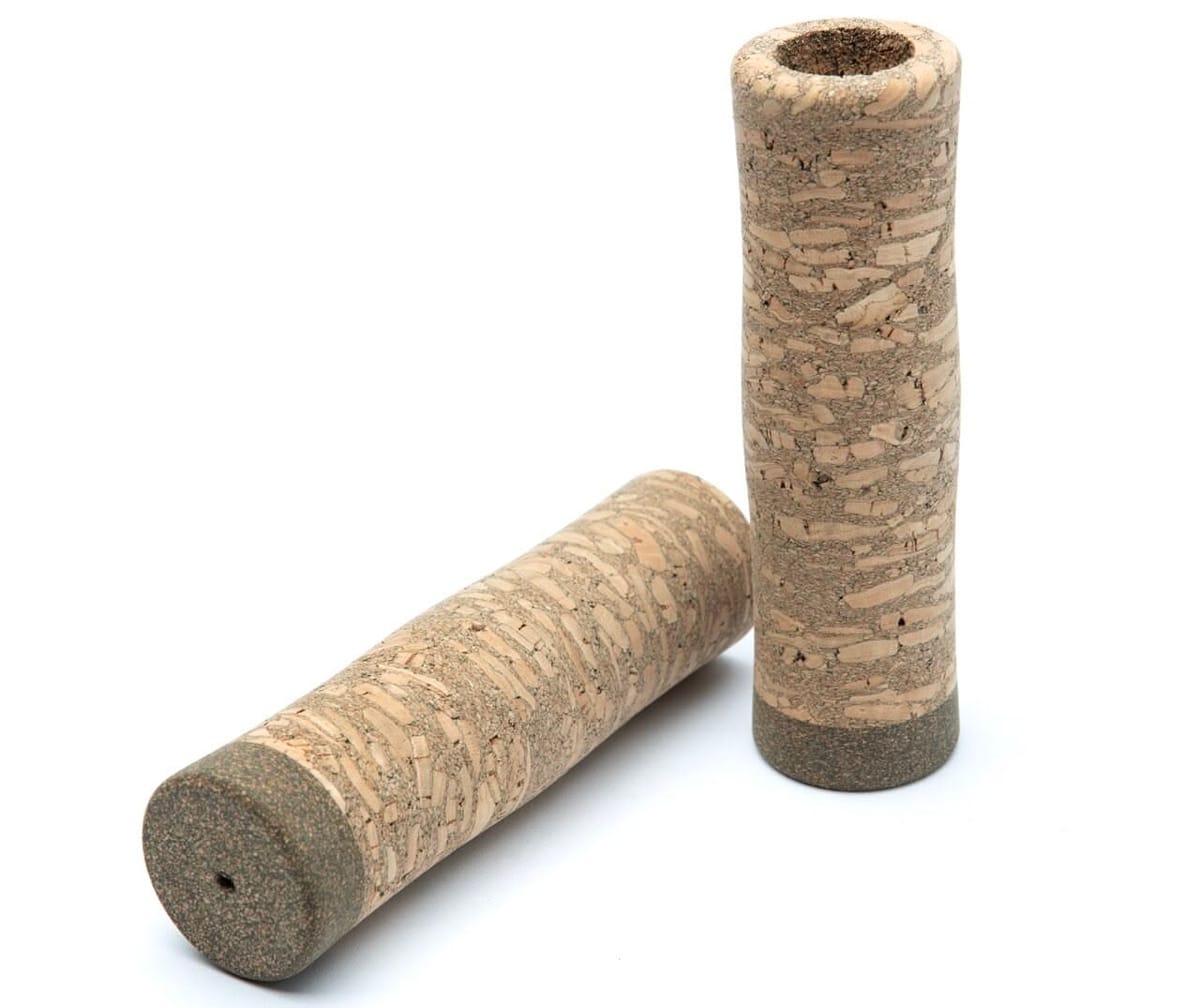
PDW’s new Lisbon Cork Grips lean into an old material with modern restraint. Portuguese cork—made in Lisbon, not just named for it—does one thing exceptionally well: it damps high-frequency vibration without turning your bars into marshmallows. The result is a firm, positive interface that stays calm when chipseal gets loud.
The one spec worth caring about: 58 grams per pair. That’s light enough to disappear from a weight perspective, but more importantly, it signals density. Dense cork resists compression fatigue, which means your grip feel on mile 5 is closer to mile 55. As someone who’s logged thousands of miles on Rivendell cork grips, durability—not plushness—is the quiet win here.
Cork works because it attenuates vibration while preserving proprioception. Soft grips mute feedback; cork filters noise.
There’s one practical footnote. The rubber–cork reinforced ends add 13mm per side, effectively making your bars 26mm wider. For broad-shouldered riders or commuters running bags and bells, that’s likely a feature—not a bug.
Why It Matters 🧠
- Less hand fatigue without sacrificing control on long, steady rides
- Low weight (58g) signals durability, not disposable comfort
- Weather-agnostic grip: dry or damp, cork stays predictable
- Built for real bikes: commuters, randonneurs, and dad rigs—not showroom queens