Shimano Tiagra Goes 11-Speed and Drops 200 Grams. The Catch Is the Price of Levers.
Shimano's new Tiagra R4000 brings 11-speed shifting, an 11-36T cassette, and 105-derived levers to its budget road group. Here's what matters and what doesn't.

Shimano just announced the Tiagra R4000, and the headline spec is the one everyone expected: 11-speed. The old Tiagra 4700 was a 10-speed holdout in a world that's moved on. Now it catches up. Sort of.
The R4000 is a 2×11 mechanical drivetrain. No electronics, no wireless, no app. For a lot of riders buying bikes under $2,000, that's not a limitation — it's the point.
What actually changed
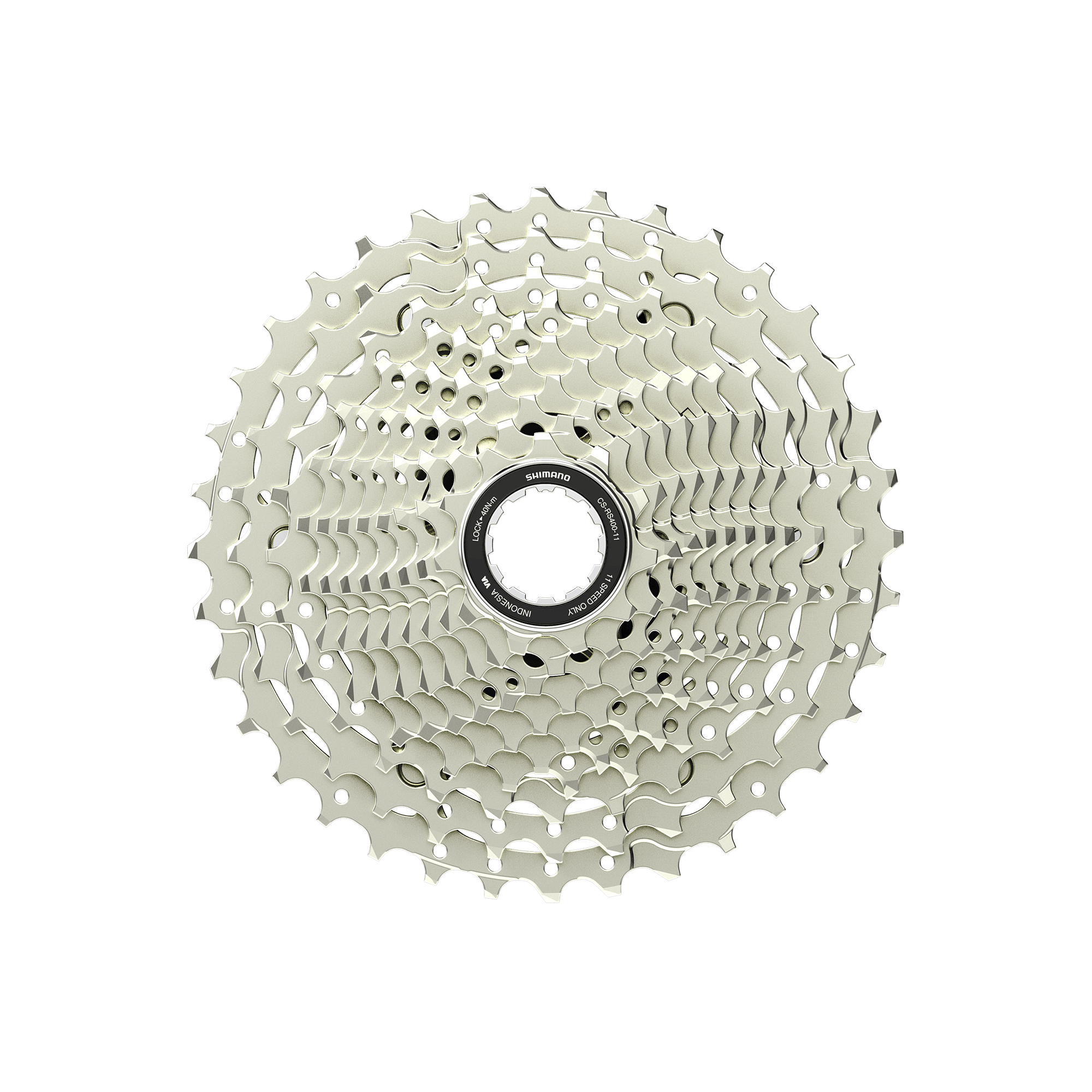
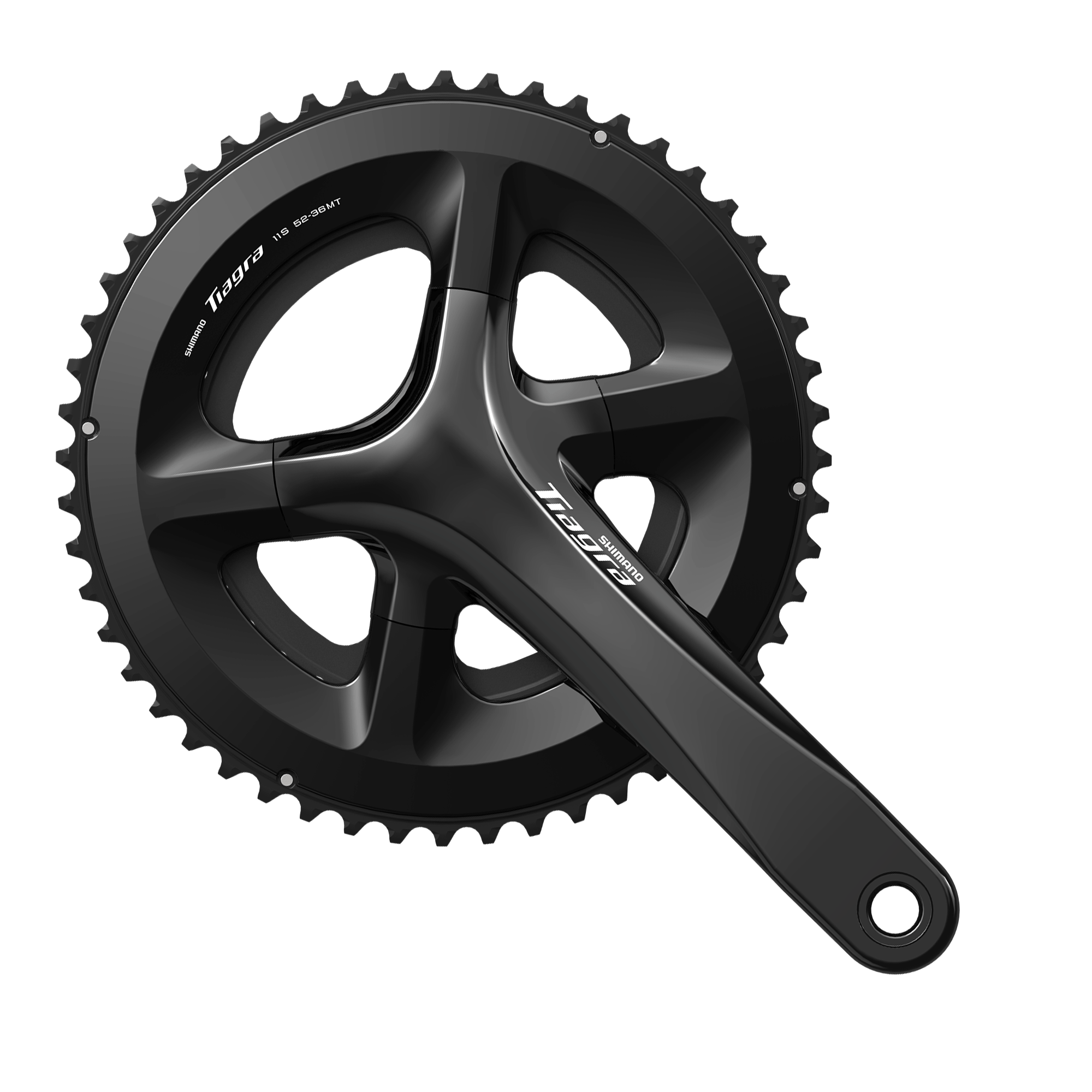
The cassette is the new CS-RS400-11, an 11-36T Hyperglide unit with a 327% gear range. That's a wide spread. Paired with the 50-34T compact rings, you get a low gear that's genuinely useful on steep stuff. The 52-36T option is there too, if you like to suffer.
Shimano kept the HG-X11 chain (CN-HG601-11) from previous 11-speed groups. Same SIL-TEC coating, same compatibility. If you've got 11-speed chains sitting in a drawer from that period when everyone panic-bought consumables, they'll work here.
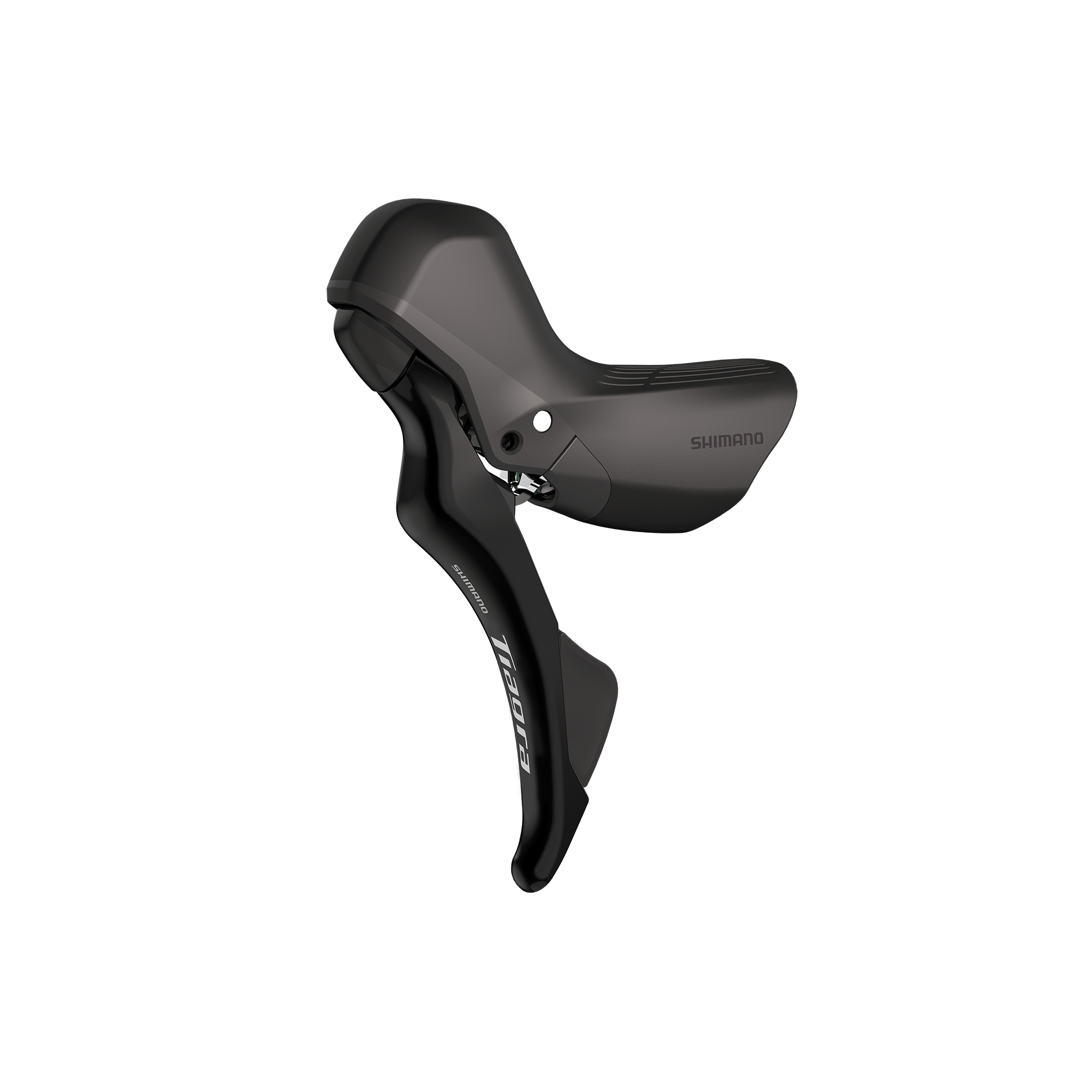
The levers are where Shimano spent design time. They claim the ST-R4020 borrows ergonomics from the 105 series — reshaped bracket, repositioned lever blade. I haven't put miles on these yet, but if the hood shape genuinely mirrors 105, that's a meaningful upgrade for long rides. Budget levers have historically been where hand fatigue starts and doesn't stop.
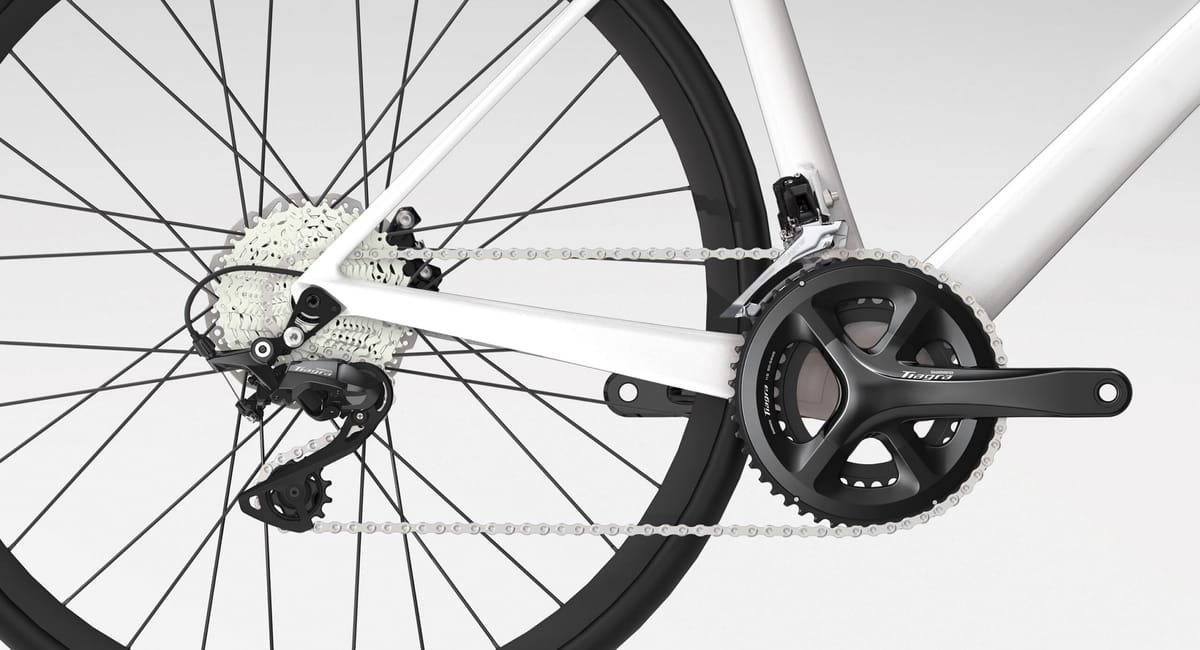
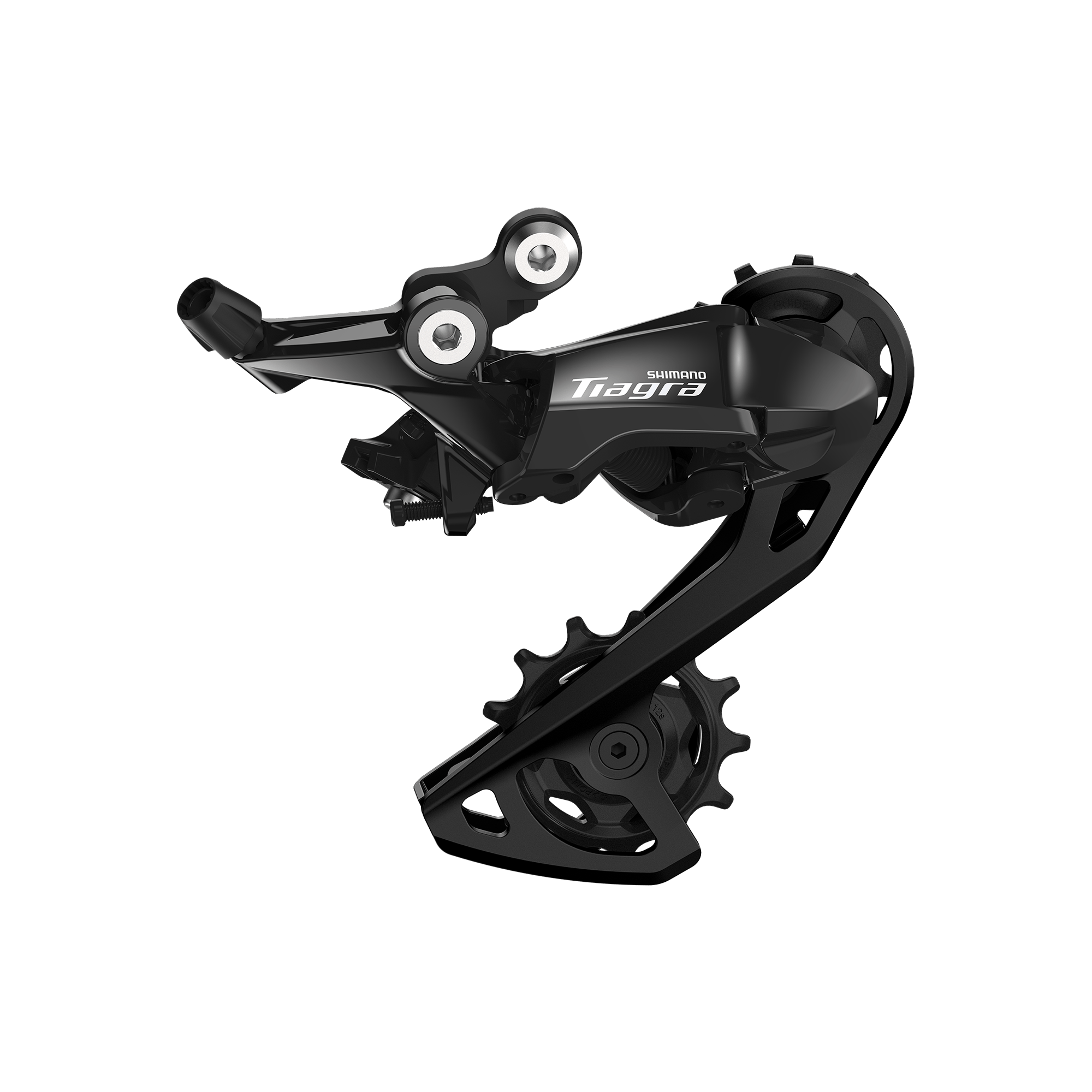
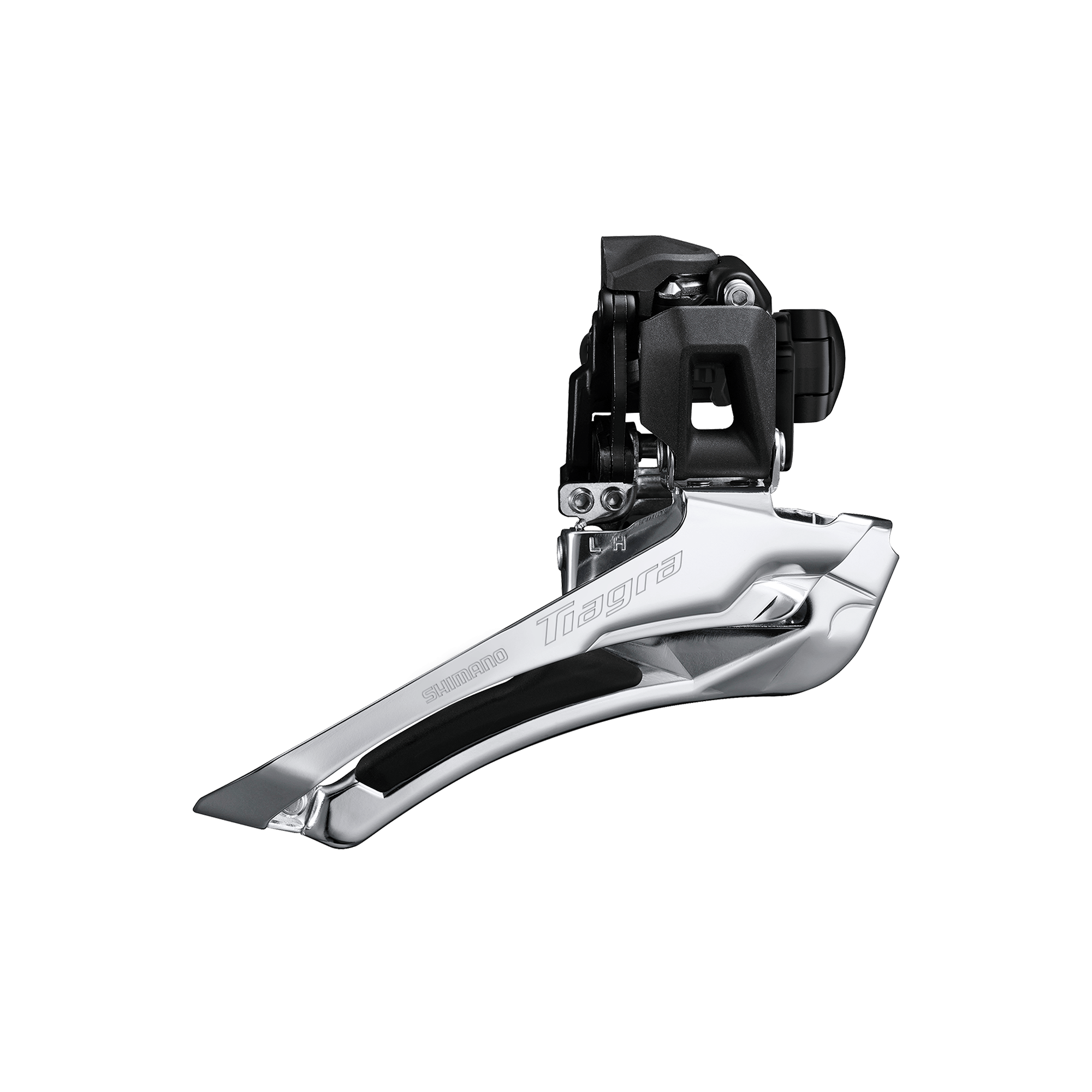
The front derailleur uses Shimano's toggle-link mechanism with a redesigned cage. The rear derailleur is compact and, per Shimano, optimized specifically for 2×11. Both promise lighter action and cleaner shifts. Standard claims. Whether they deliver depends on cable routing and setup quality as much as the derailleurs themselves.
Crank arm lengths: 165, 170, 172.5, and 175mm. Four options at this price point is good. A lot of riders on entry-level bikes are stuck with 170mm cranks whether they need them or not.
The mechanism that matters
Going from 10 to 11 cogs doesn't just add one gear. It changes the spacing between ratios across the cassette. Tighter spacing means smaller jumps when you shift, which means your cadence stays closer to your preferred range. Think of it like this: a 10-speed cassette is a staircase with bigger steps. You can still get to the same floors, but you land harder each time you move. With 11, the steps shrink.
The 11-36T range is the real story. On a 50-34T crankset, your easiest gear (34×36) gives you a ratio of 0.94 — basically a 1:1 spin. That's low enough to keep most riders seated on 8-10% grades without grinding their knees into dust. If you weigh north of 200 pounds or live somewhere with 15%+ pitches, you may still want a wider-range cassette on a different group. This one tops out at 36.
Compatibility: read this before buying
Shimano published a specific compatibility list, and it's worth paying attention to. Rear hub spacing is 135-142mm O.L.D. Chainline target is 43.5mm. Freehub interface is HG spline — both M and L variants work (L needs a 1.85mm spacer). That means your existing HG freehub is probably fine.
The front derailleur clearance references FD-R7000-type fit, and the chainring clearance references FC-RS510-type expectations. Translation: this is a disc-road-oriented group. If you're trying to bolt it onto a 2014 rim-brake frame, double-check your chainstay clearance and cable routing. Minimum chainstay length is 410mm.
Here's the catch. The levers are $240 each. That's $480 for a pair of mechanical shift levers on a budget drivetrain. For context, the rear derailleur is $70. The cassette is $70. The crankset is $160. Front derailleur is $55. The levers alone cost more than every other component combined except the crank. If you're building up or upgrading piecemeal, that lever price changes the math considerably.
What to do with this
If you're riding a Tiagra 4700 bike and it shifts fine, there's no urgent reason to swap. Ten-speed works. Chains and cassettes for 4700 will be available for years, even after Shimano phases out the group by early 2027.
If you're buying a new bike in the $1,200-$1,800 range and it comes spec'd with R4000 — good. You're getting tighter gear spacing, a wider cassette range, and levers that should feel better in your hands than the old Tiagra. That's a real upgrade for the same price tier.
If you're the type who upgrades individual components: the cassette and chain are the cheapest way in. The rear derailleur at $70 is reasonable. But I'd wait on the levers until you can feel them in a shop. $480 for a lever pair on a group that sits below 105 is a tough sell unless the ergonomics are noticeably better than what you've got.
One thing I can't verify yet: the claimed 200g weight savings over the outgoing group. Shimano didn't publish component-by-component weights, and reported total system weight isn't available as of today. Take that number as directional, not precise.
Verdict
The Tiagra R4000 is the update the group needed. Eleven-speed compatibility, a usable cassette range, and lever ergonomics borrowed from a higher tier. It doesn't reinvent anything. It just stops being behind.
Rule of thumb: if a bike comes with it, be happy. If you're upgrading to it, do the lever math first.
TL;DR
- Tiagra R4000 moves to 2×11 mechanical with an 11-36T cassette (327% range) and 105-derived lever ergonomics. It replaces the aging 10-speed 4700 group, which Shimano plans to phase out by early 2027.
- The lever price is the outlier: $240 each ($480/pair), which is more than the cassette, both derailleurs, and chain combined. Factor that in before upgrading piecemeal.
- Uses standard HG freehub, HG-X11 chain, and targets disc-road frames with 135-142mm rear spacing. If your current 10-speed setup shifts well, there's no rush to switch.