Why Intervals Aren't the Only Path to Getting Faster
Structured training burns people out. Pure unstructured riding produces junk miles. The middle ground—semi-structured training—actually works for most riders.

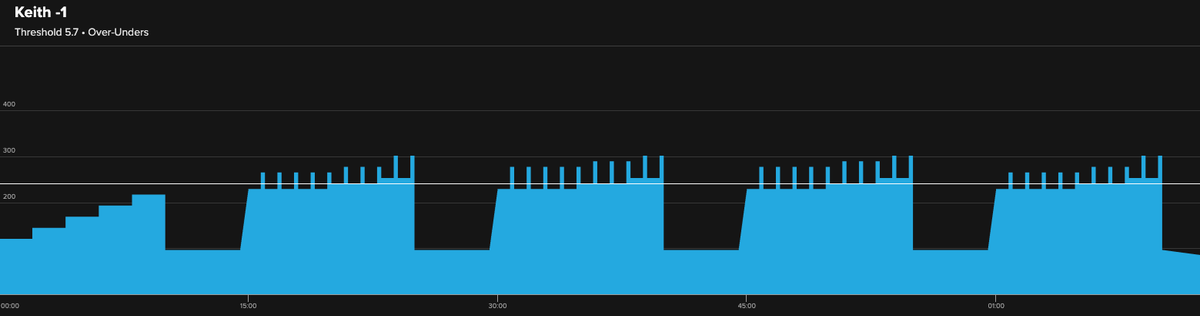
Structured training works—until it doesn't. That's the uncomfortable truth most training advice skips over. The intervals-and-targets approach delivers measurable progress, clear benchmarks, and the satisfaction of green checkmarks. It also burns people out, creates rigid athletes who can't adapt mid-race, and sometimes just stops producing gains no matter how perfectly you execute the plan.
The alternative isn't abandoning structure entirely. It's finding the middle ground that actually exists between "follow the beeps" and "just ride around."
Key Takeaways
- Unstructured training becomes effective when you add minimal intent—a single goal per ride, not a rigid prescription
- Semi-structured approaches work particularly well for off-road riders, time-crunched athletes, and anyone deep in a race season
- Group rides and hot laps can replace structured intervals if you approach them with purpose
- The basics still apply: recovery matters, junk miles are real, and TSS doesn't tell you what's actually in the ride
- Periodization can be semi-structured too—prioritize workouts by importance, then execute when life allows
- RPE becomes your primary tool when you ditch power targets, so practice reading it accurately
Why Structured Training Eventually Fails Some Riders
Structured training has obvious advantages. You can track progressive overload with precision. You can match workout demands to race demands. You can force yourself to work on weaknesses instead of defaulting to whatever feels good.
The problem emerges over time. Some riders become so dependent on targets that they can't produce power without them. Others accumulate mental fatigue that compounds with physical fatigue. And late in a season—say, October in the northern hemisphere—structured training often stops producing returns because you're already fit and carrying cumulative fatigue. Any gains you squeeze out now probably won't survive your off-season break anyway.
There's also a motivation component that doesn't show up in training load calculations. You have a finite number of times you can force yourself to do hard things. Burning those matches on structured indoor sessions in October means you might not have them in February when you actually need them.
The Semi-Structured Middle Ground
The false choice is between rigid structure and aimless riding. The actual option is semi-structured training: rides with intent but without beeps.
A totally unstructured ride might be "go ride this hilly terrain as hard as I can for an hour." A semi-structured version: "hit the hills hard, recover completely between them, accumulate 15-20 minutes of hard climbing." A fully structured version: "4x5 minutes at 310-320 watts with 3-minute recoveries."
All three can produce adaptation. The semi-structured approach sacrifices some precision in exchange for flexibility, enjoyment, and skill development that doesn't happen when you're staring at a power target.
Making Unstructured Rides Actually Work
The danger of abandoning structure is ending up with junk miles—riding hard enough to accumulate fatigue without riding hard enough or easy enough to produce adaptation. Tempo-ish efforts six days a week exemplify this. You're never fresh enough to push hard intervals, never recovered enough to absorb the work you've done.
The fix is simple: each ride needs a purpose, even if that purpose is just "fun" or "social." Some examples that work:
Hill reps without power targets. Find hills between 3-8 minutes. Accumulate 15-25 minutes of hard climbing. Breathe hard. That's a VO2 max workout without the structure. Shorter hills—30 seconds to 2 minutes—work for punchy, race-like efforts. Roll through them continuously for fartlek-style tempo, or smash each one with full recovery between for anaerobic capacity.
Group rides with a goal. "Contest all the town line sprints, sit in otherwise" is a sprint workout. "Stay in the draft, practice not overbraking into corners" is a skills session. "Go with the breakaway and see how long you last" is threshold work. The key is deciding the purpose before you clip in.
Hot laps on a familiar course. Pick a loop—mountain bike trail, gravel route, even a road circuit. Do it 2-3 times with intent. This works especially well off-road because you're building bike handling and terrain reading alongside the fitness stimulus.
RPE-guided climbing. "Climb this 20-minute mountain at a 7/10 effort. Make your legs tired but don't breathe too hard." Most riders will land around tempo to sweet spot. That's enough stimulus to progress, and you can track improvement by seeing if you go faster at the same RPE next time.
Why This Approach Matters for Off-Road Riders
Power targets work poorly on technical terrain. Your output fluctuates constantly—punchy on roots, soft through corners, hard on loose climbs. Chasing a number on your head unit means missing the actual skill of producing power while negotiating terrain.
The better approach: overall RPE for the effort. "This technical climb should feel like a 7-8" gives you a target without the distraction. You learn to read the trail, manage momentum, and put force into the pedals at the right moments—skills that don't develop when you're focused on hitting watts.
Racing single-speed cross or mountain bike accelerates this learning. You can't solve problems by dumping watts when you only have one gear. You learn to value momentum, pace effort across variable terrain, and not explode trying to muscle through sections that require finesse.
Semi-Structured Weeks and Periodization
The same principle scales up. A semi-structured week starts with a prioritized menu of workouts based on your current training phase. Priority one might be a VO2 max session. Priority two might be a longer tempo or sweet spot ride. Priority three might be optional—a group ride, a skills session, extra volume if you're feeling good.
Execute them when life allows. Maybe priority one happens Tuesday because that's when your legs feel ready. Maybe it slides to Thursday because work exploded. The key is hitting the important work when you're fresh enough to do it well, rather than forcing Tuesday's workout on Tuesday regardless of readiness.
This auto-regulation approach works particularly well for riders with unpredictable schedules—parents, people with demanding jobs, anyone whose week rarely goes as planned. The structure exists in the priorities, not the calendar.
What Unstructured Training Can't Do
Time in zone doesn't equal training dose. Fifteen minutes of heart rate at VO2 max during a chaotic cross race isn't equivalent to fifteen minutes of controlled VO2 max intervals. The race effort is fragmented, the recoveries are incomplete, and the muscular stimulus differs from sustained efforts.
TSS fails as a comparison metric when rides have different character. Normalized power inflates on courses with steep ups and long downs. Off-road TSS underestimates actual stress because you're rarely on the pedals long enough to ping high numbers. You can't compare a mountain bike ride to a road ride using TSS and expect meaningful conclusions.
Progressive overload becomes fuzzier without structure. You can approximate it—more time at intensity, longer climbs, faster repeats at the same RPE—but you won't have the clean data that structured training provides. For some riders, that tradeoff is worth the increased enjoyment and reduced mental load. For others, it isn't.
When to Use Each Approach
Late season, when fitness is high and fatigue is accumulated, leans toward unstructured. Early base period, when any consistent riding produces adaptation, can go either way. Specific race preparation, when you need particular systems at particular capacities, leans toward structure.
The rider matters too. If you're burned out on intervals, forcing more structure compounds the problem. If you lack discipline and default to comfortable intensities, more structure helps. If you're preparing for off-road racing where handling matters as much as fitness, semi-structured approaches on actual terrain beat indoor intervals.
Most riders benefit from mixing approaches across a season rather than committing entirely to one. Structure when you need precision. Semi-structure when you need flexibility or skill development. Unstructured when you need to remember why you ride in the first place.
The Commute Problem
Commutes are the most common source of junk miles. Stop-and-go urban riding, pressure to keep up with traffic, the stress of aggressive drivers—all of it pushes intensity higher than intended without producing useful training stimulus.
One coaching cue that helps: keep your heart rate in double digits. Harder than it sounds when you're trying not to get run over. Some days, the better choice is public transit or driving, especially if you're already carrying fatigue from training.
The commute to your actual workout location counts too. Treat it as warmup, not as additional training stress. Arrive ready to execute the work rather than already depleted from the ride there.
TL;DR
- Semi-structured training—rides with intent but without rigid targets—bridges the gap between effective and enjoyable
- Each ride needs a purpose, even if that purpose is just "fun"; without intent, unstructured training drifts toward junk miles
- The basics still apply: recovery matters, time in zone doesn't equal dose, and TSS doesn't capture ride quality