Roval's New Gravel Wheels: Aero vs. Light (and Both Expensive)
Specialized's new Roval Terra wheels: one aero, one light, both expensive. Here's what the specs actually mean and which one makes sense.

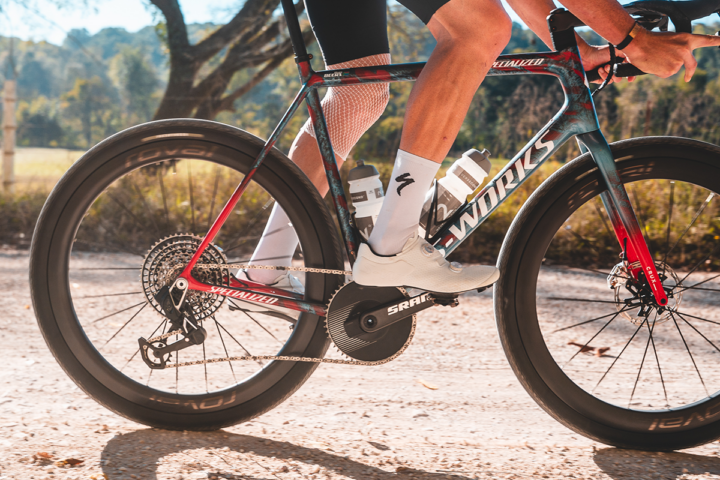
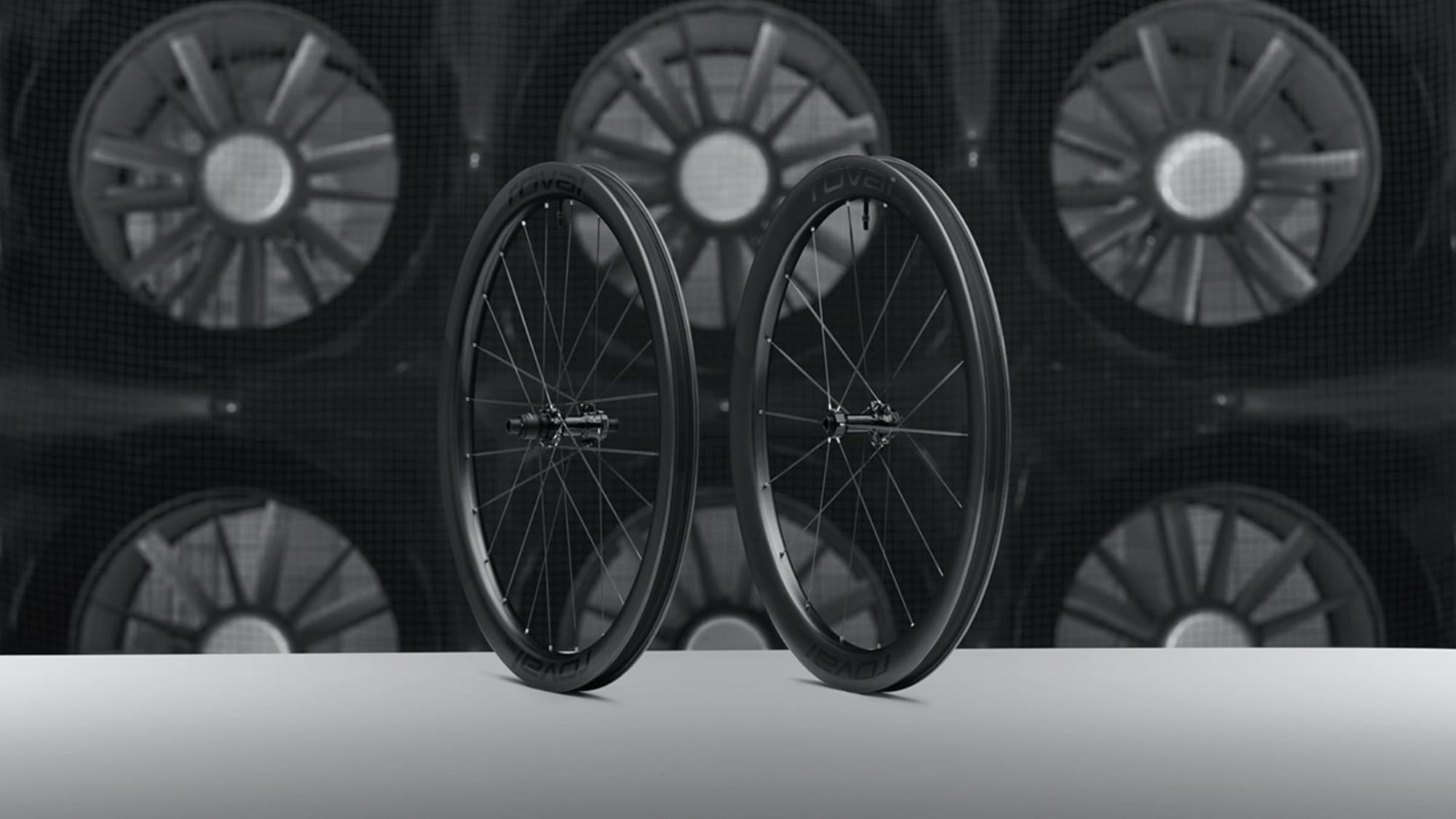
Specialized just released two gravel wheelsets under the Roval brand: the Terra Aero CLX and the Terra CLX III. One's deep and aero, the other's shallow and light. Both cost more than most people's bikes.
The interesting part isn't that they exist — everyone's making carbon gravel wheels now. It's that Specialized is betting you need two different wheels for gravel, depending on the terrain. That's either smart segmentation or expensive marketing, depending on whether you actually race Unbound and also ride technical mountain passes.
The Aero Wheel: Terra Aero CLX
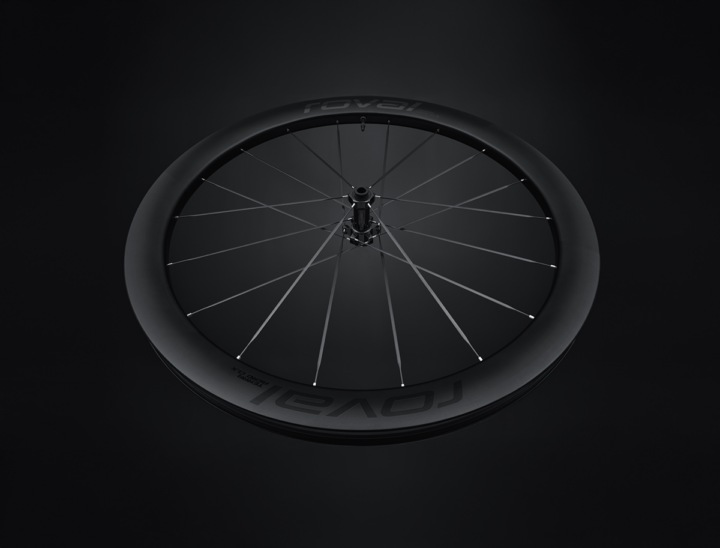
This is a 50mm deep rim with what Specialized calls a "chopped" airfoil. Think of a standard aero road wheel, then lop off the trailing edge. The technical term is a Kamm tail, and the idea is you keep most of the aero benefit from the leading edge while saving weight and (theoretically) improving crosswind stability.
The rim is 27mm internal, 38.5mm external, ballooning to 40mm at its widest point. That's designed to pair with 40–50mm gravel tires — Specialized tested it with their own Pathfinder and Tracer tires, which matters because the aero claims are system-dependent.
The wheelset weighs 1,340g with tape and valves. That's light for a 50mm rim, but not featherweight. For context, the shallow Terra CLX III weighs 1,079g, so you're paying 261g for the aero profile.
Specialized claims 5.84 watts saved over the previous Terra CLX II at 40 kph with a 45mm tire. That's... fine. Not revolutionary. At 30 kph (a more realistic gravel pace), the gain shrinks. If you're doing Unbound at 18 mph for 200 miles, maybe that matters. If you're doing mixed terrain at variable speeds, it probably doesn't.
The Composite Spoke Thing
Both wheels use Roval's new composite spokes — flat-profile thermoplastic with titanium end pieces. Specialized says they're lighter and stronger than steel, with better vibration damping. The flat profile is claimed to save 0.3–0.5 watts over round spokes.
I can't verify the damping claim without putting miles on them, but the weight savings are real. The catch: proprietary spokes mean proprietary replacement parts. If you snap one on a remote gravel route, you're not fixing it at the local bike shop.
The Lightweight Wheel: Terra CLX III
This is the one I'd actually consider if I were spending my own money.
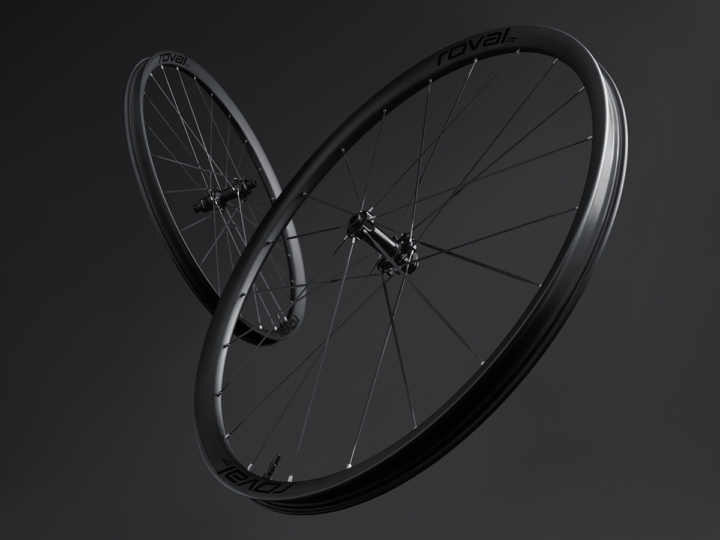
1,079g for the pair. That's legitimately light — competitive with the lightest carbon clinchers on the market. The rim is shallow (27mm deep), with the same 27mm internal width but a slightly narrower 38mm external.
Specialized claims a 21.52% improvement in lateral compliance compared to the previous generation. That's a suspiciously precise number, and I'd want to know what test protocol produced it. But the intent is clear: this wheel is built to flex over rough terrain without feeling harsh.
The rim has a 4.86mm hooked bead. That's notably wide, especially when most companies are moving to hookless construction to save weight. Specialized says the wider hook reduces pinch flats by changing how the tire sidewall interacts with the rim during hard impacts.
Here's the tradeoff: hooked beads add a small amount of weight and limit you to lower pressures than hookless (though that's rarely an issue in gravel). The benefit is you can run any tire you want, including ones not rated for hookless, and you get more tire retention at low pressure.
What Actually Matters Here
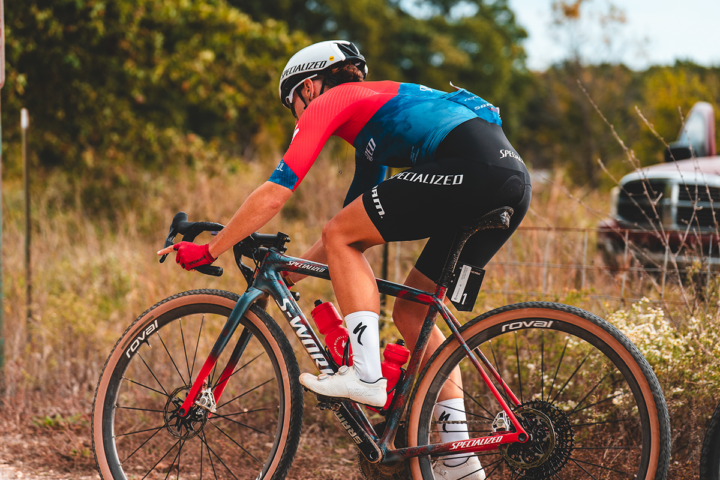
Both wheels are 27mm internal. That's the Goldilocks width for 40–50mm gravel tires — wide enough for good tire support and a smooth transition from rim to tire, narrow enough that you're not forcing a 35mm tire into a weird lightbulb shape.
Both have hooked beads. That's a deliberate choice in a market moving toward hookless, and it tells you Specialized is prioritizing tire compatibility and flat protection over saving 20 grams per rim.
Both are designed around tubeless with relatively tall rim profiles. If you're still running tubes, these are the wrong wheels.
The real question is whether the aero wheel is worth the extra $200 and 261g. Specialized ran "hundreds" of digital models to optimize the shape, which sounds impressive until you remember that computational fluid dynamics is cheap and wind tunnel validation is what actually costs money. They don't mention tunnel testing.
If you race flat, fast gravel events where you're holding 20+ mph for hours, the Aero CLX might be worth it. If you ride varied terrain with lots of climbing, technical sections, or just don't care about marginal aero gains, the CLX III is the smarter buy.
The Catch
Both wheelsets cost more than $3,000. The Aero CLX is $3,400; the CLX III is $3,200.
That's Hunt or Light Bicycle money, where you can get similar specs for half the price. You're paying for the Roval name, the composite spokes, and presumably some level of quality control and warranty support.
The composite spokes are a potential long-term concern. They're proprietary, which means if Roval discontinues them or you're traveling internationally, you're stuck. Steel spokes are a commodity; thermoplastic spokes with titanium ends are not.
Also worth noting: these wheels are optimized around Specialized's own tires. The aero claims are based on testing with the Pathfinder and Tracer. If you're running a different tire with a different casing profile, the numbers change. How much? Specialized doesn't say.
Who These Are Actually For
If you're a data-driven cyclist trying to decide between these two, here's the decision tree:
Get the Aero CLX if: You race long, fast gravel events where sustained speed matters. You're comfortable with proprietary parts. You already run Specialized tires or are willing to switch. You have $3,400 and this isn't your only wheelset.
Get the CLX III if: You prioritize weight and compliance over aero. You ride varied terrain with significant climbing. You want a do-everything gravel wheel that's light enough for bikepacking and tough enough for racing. You'd rather save $200.
Get neither if: You're not sure you need carbon wheels, you ride in areas where you can't easily get proprietary parts, or you're comparing these to wheels half the price with similar specs.
The CLX III is the more versatile wheel. The Aero CLX is the more specialized tool (pun unavoidable). Both are well-executed, but neither is a must-have unless you're already deep into the gravel racing ecosystem and chasing marginal gains.
TL;DR
- Specialized released two carbon gravel wheelsets: the Aero CLX (50mm deep, 1,340g, $3,400) for flat/fast courses, and the CLX III (27mm deep, 1,079g, $3,200) for climbing and rough terrain. Both use 27mm internal width and proprietary composite spokes.
- The aero wheel saves 5.84 watts at 40 kph over the previous generation — meaningful for long, sustained efforts like Unbound, less relevant for varied terrain. The lightweight wheel offers a claimed 21.52% improvement in lateral compliance and weighs 261g less.
- The catch: both cost over $3,000, use proprietary spokes that limit field repairs, and are optimized around Specialized's own tires. The CLX III is the more versatile choice unless you specifically need aero gains on fast gravel.