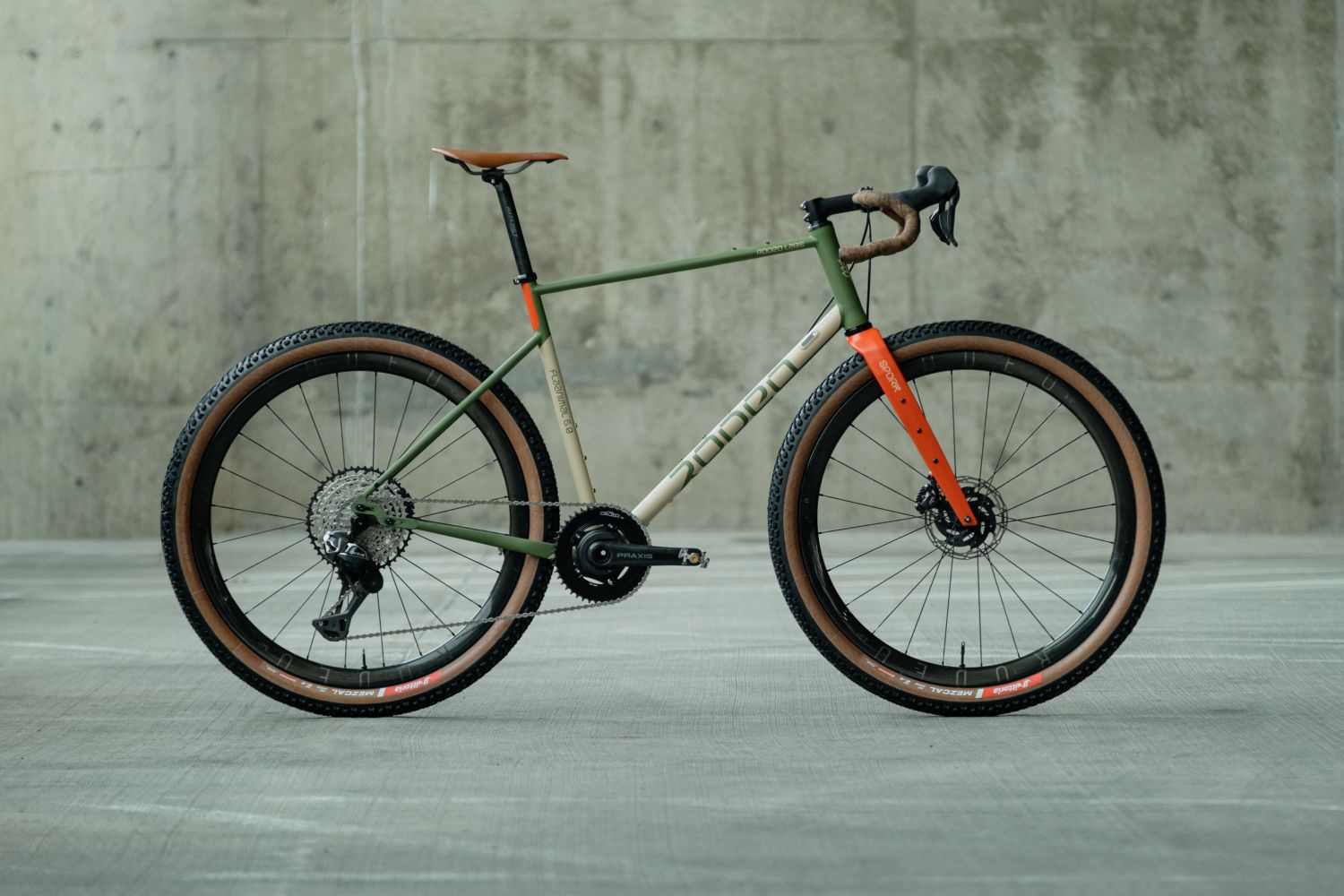
Rodeo Labs Spork 4.0: Dynamo Wiring Built Into the Fork, Finally
Rodeo Labs Spork 4.0 builds dynamo wiring into a carbon fork with SON SL dropouts, magnetic connectors, and 61mm tire clearance. Here's what matters.

Dynamo lighting solves a problem most busy riders know too well: forgetting to charge your lights, or worse, watching them die mid-commute. No batteries to manage, no USB cables to hunt down at 5 a.m. Just spin the wheel and you've got light. The friction penalty on modern hubs is negligible—maybe 3-5 watts at cruising speed—and the mental overhead drops to zero. Rodeo Labs' Spork 4.0 takes this a step further by building the wiring directly into the fork, with optional self-connecting dropouts or magnetic connectors pre-installed before it ships.
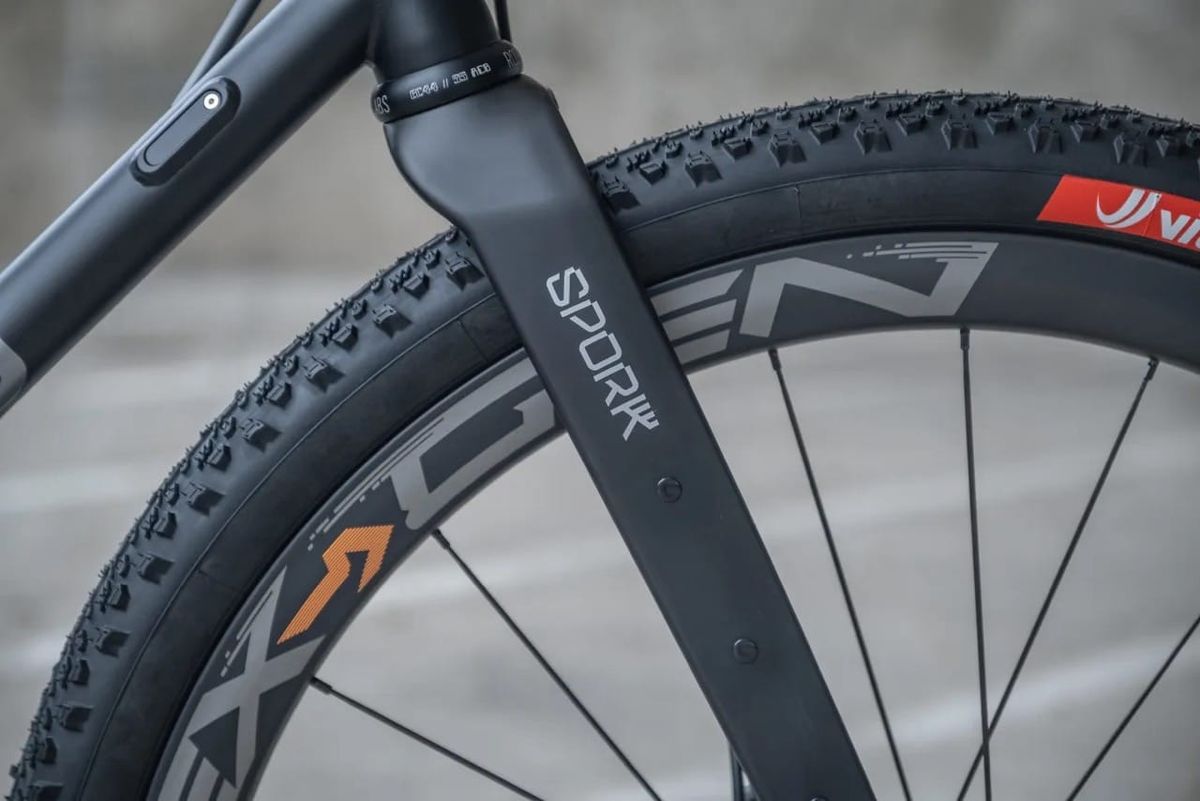
The SON SL Self-Connecting Dropouts ($75 extra) are the real draw here. Pop your wheel in, the electrical connection makes itself. No fiddly plug, no exposed wires to snag. Rodeo claims this is the only retail carbon adventure fork compatible with SON's SL system, which matters if you're already running their hub or planning to. The magnetic connector option ($50) is less elegant but still useful—stainless steel contacts, weather-tested, easy to disconnect when you swap wheels or travel. Either way, the wiring runs internally from the dropout to the crown, where you can route it out or continue through the D-shaped steerer to your cockpit.
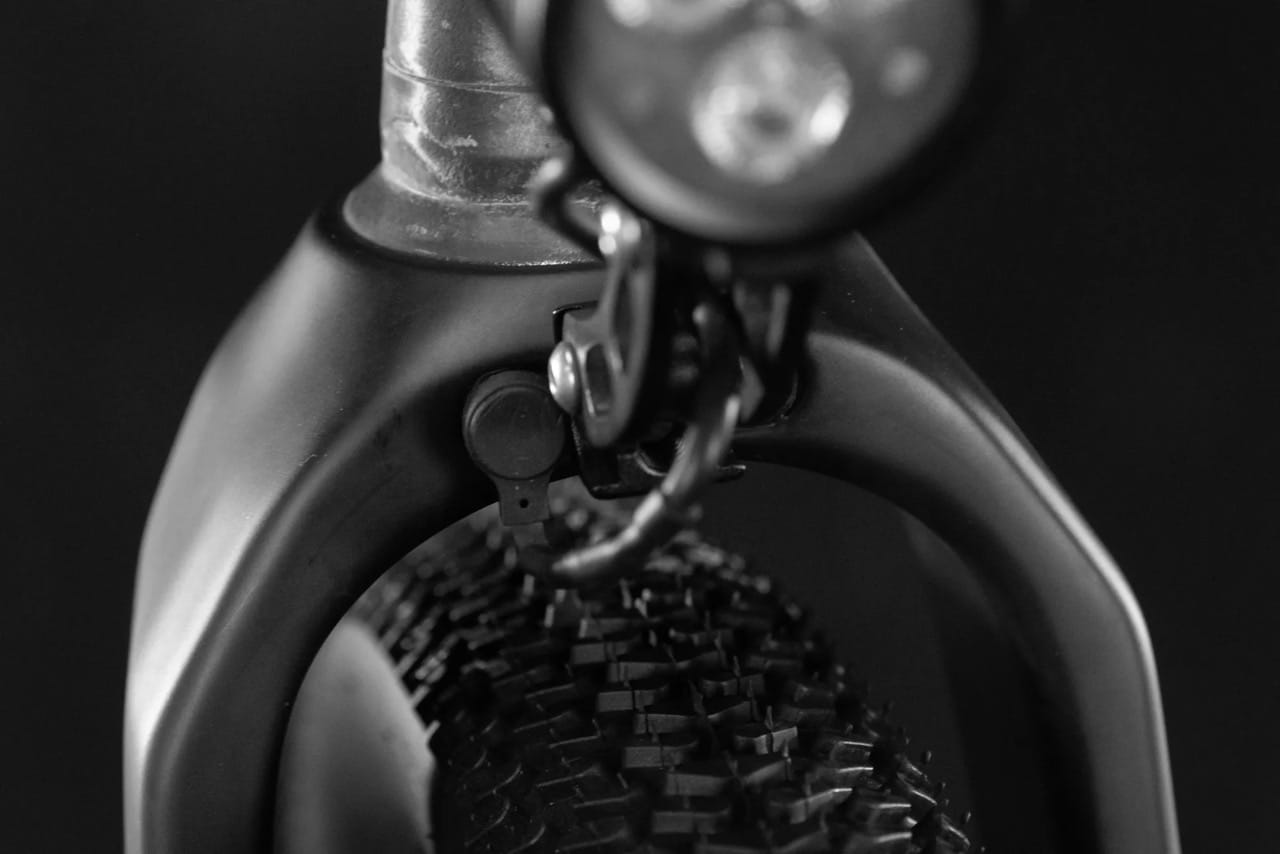
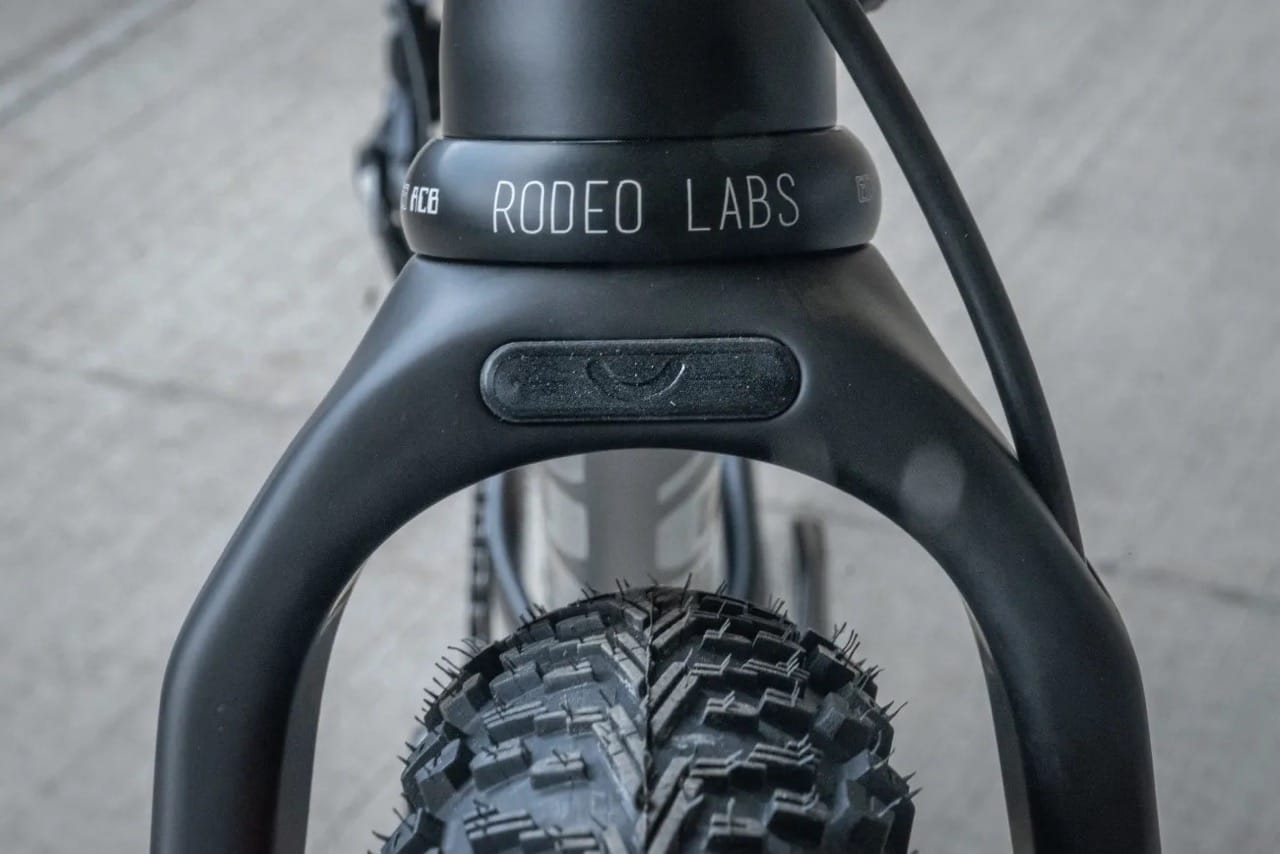
That D-shaped steerer is worth understanding. It carves out internal space for brake and shift housing without requiring one of those oversized proprietary headsets. You can run a standard stem, standard spacers, and still hide your lines. Compatibility is broad—Chris King InRoute, Wolf Tooth, Cane Creek, and others work, but so does a plain round-steerer headset if you want no integration at all. Flexibility like this matters when you're cobbling together parts from three different group buys.
Tire clearance jumps to 700x61mm (2.4"), which handles most gravel and light MTB rubber. Brake support moves to 180mm rotors flat-mount, no adapter needed. The fork weighs in unspecified, but the 270 lb rider limit and 27.5 lb cargo cap suggest Rodeo isn't chasing ultralight weight here—they're building for loaded touring and mixed-surface abuse. At $595 base, it's not cheap, but it's also not boutique-crazy for a carbon fork with this much integration.
One geometry wrinkle: the 405mm axle-to-crown is 10mm taller than most gravel bikes expect. If your frame was designed around 395mm, you'll raise the front end and slacken the head angle slightly—probably unnoticeable unless you're sensitive to fit changes. But if your bike was designed for a suspension-corrected fork (420mm), you'll actually drop the front end 15mm, which is harder to ignore. Rodeo doesn't currently offer a 420mm version, which feels like a gap for riders on newer suspension-ready frames. Something to measure before you order.