Taxonomy Collapse: The Pinarello Grevil MX and the Death of the Gravel Category
Pinarello's Grevil MX puts drop bars on an Olympic XC frame. Is it the evolution of gravel or a confused hardtail? A PharmD analyzes the specs.

Biological taxonomy exists for a reason. It separates the wolf from the coyote, ensuring we understand the behavior and capabilities of the organism in front of us. In the cycling industry, that taxonomy is currently collapsing.
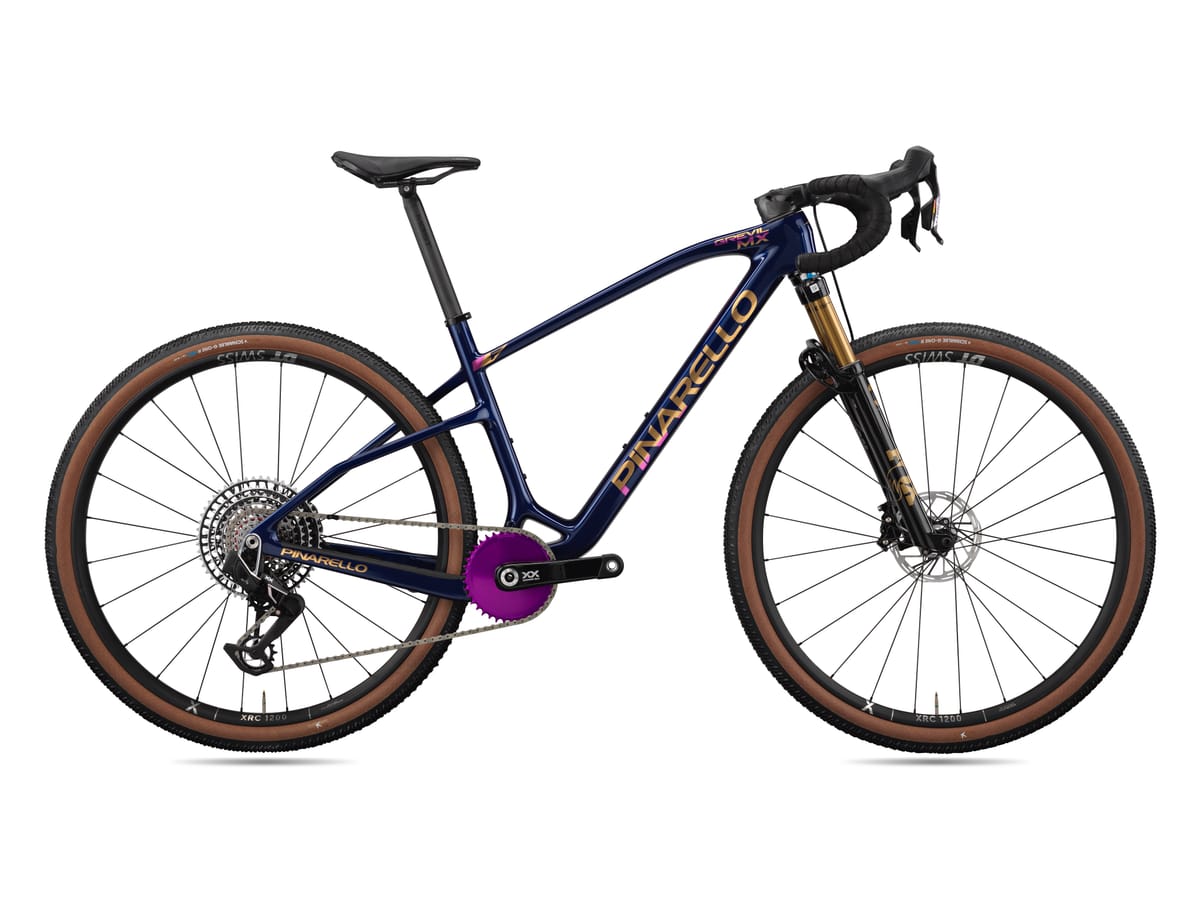
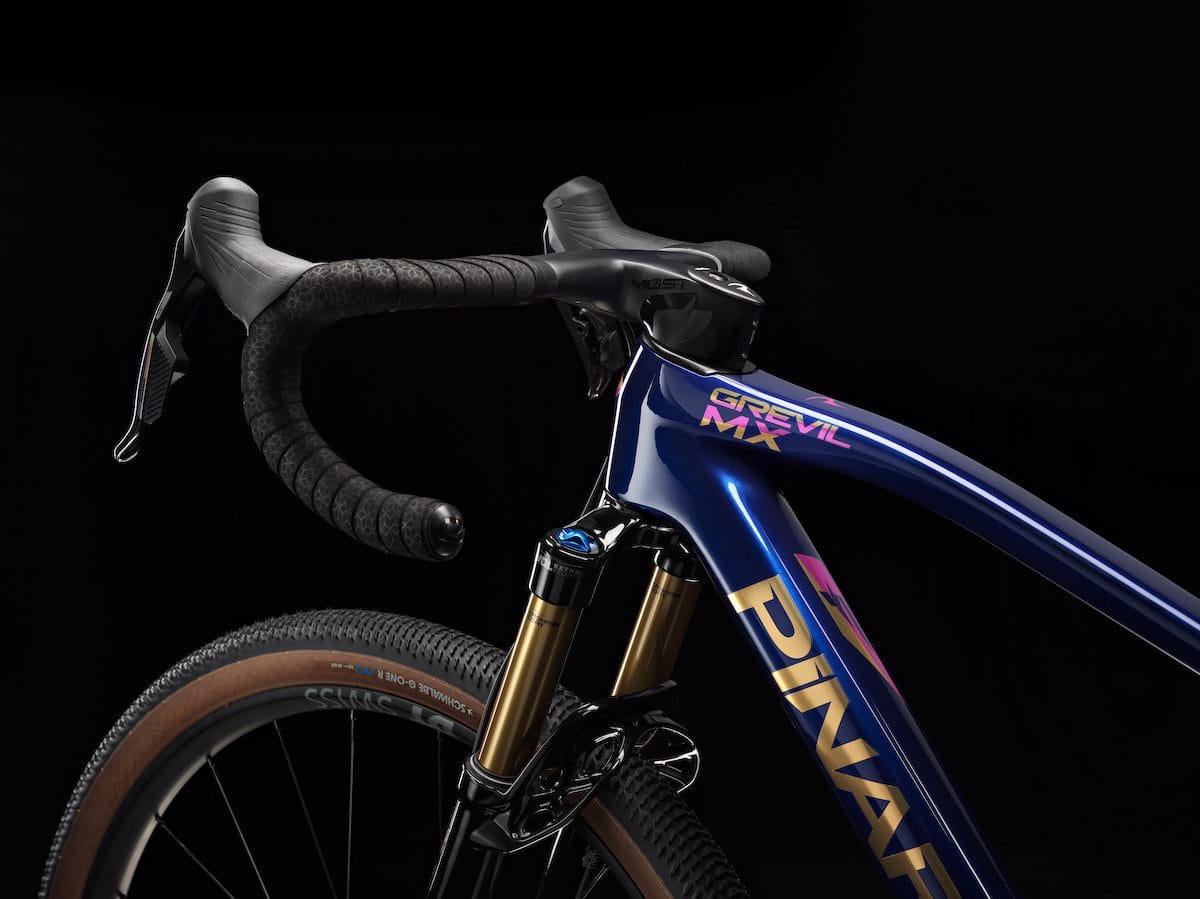
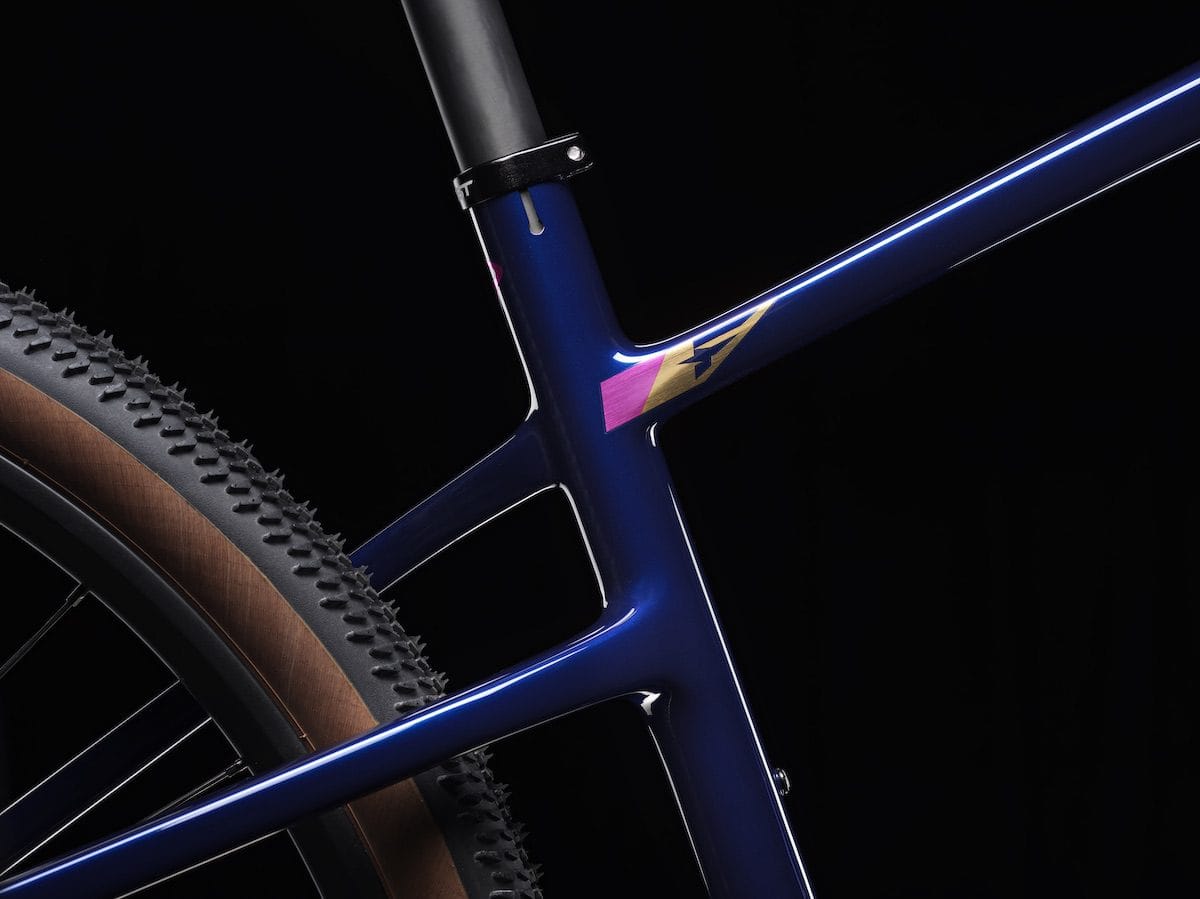
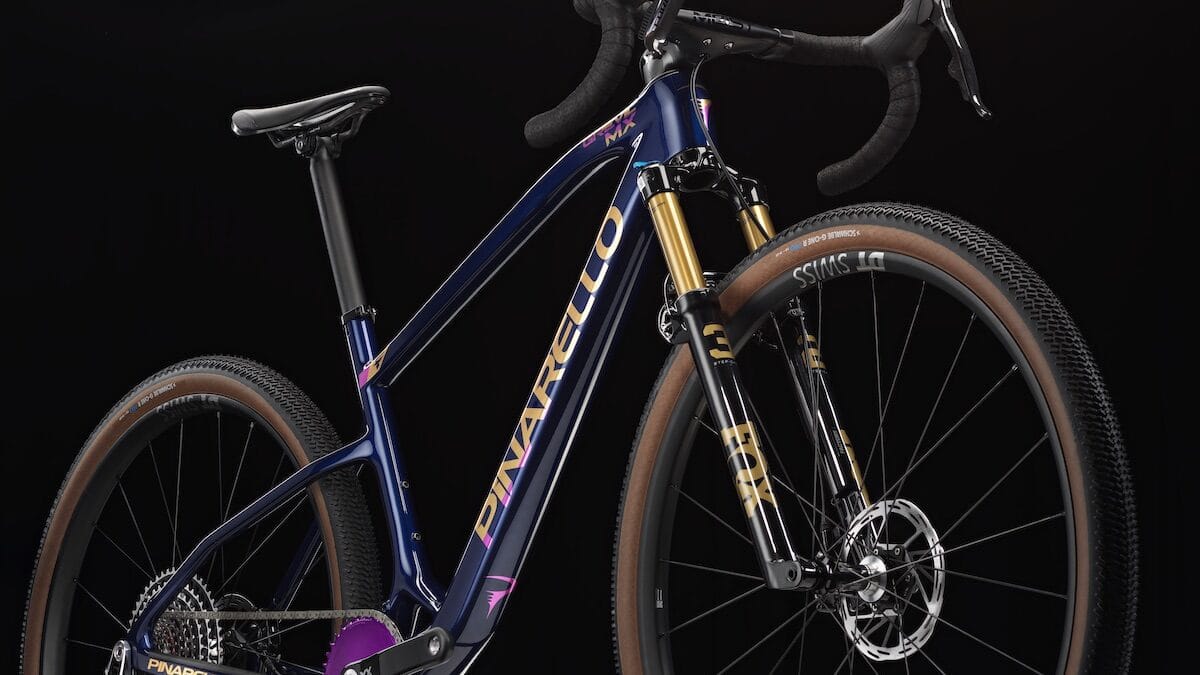
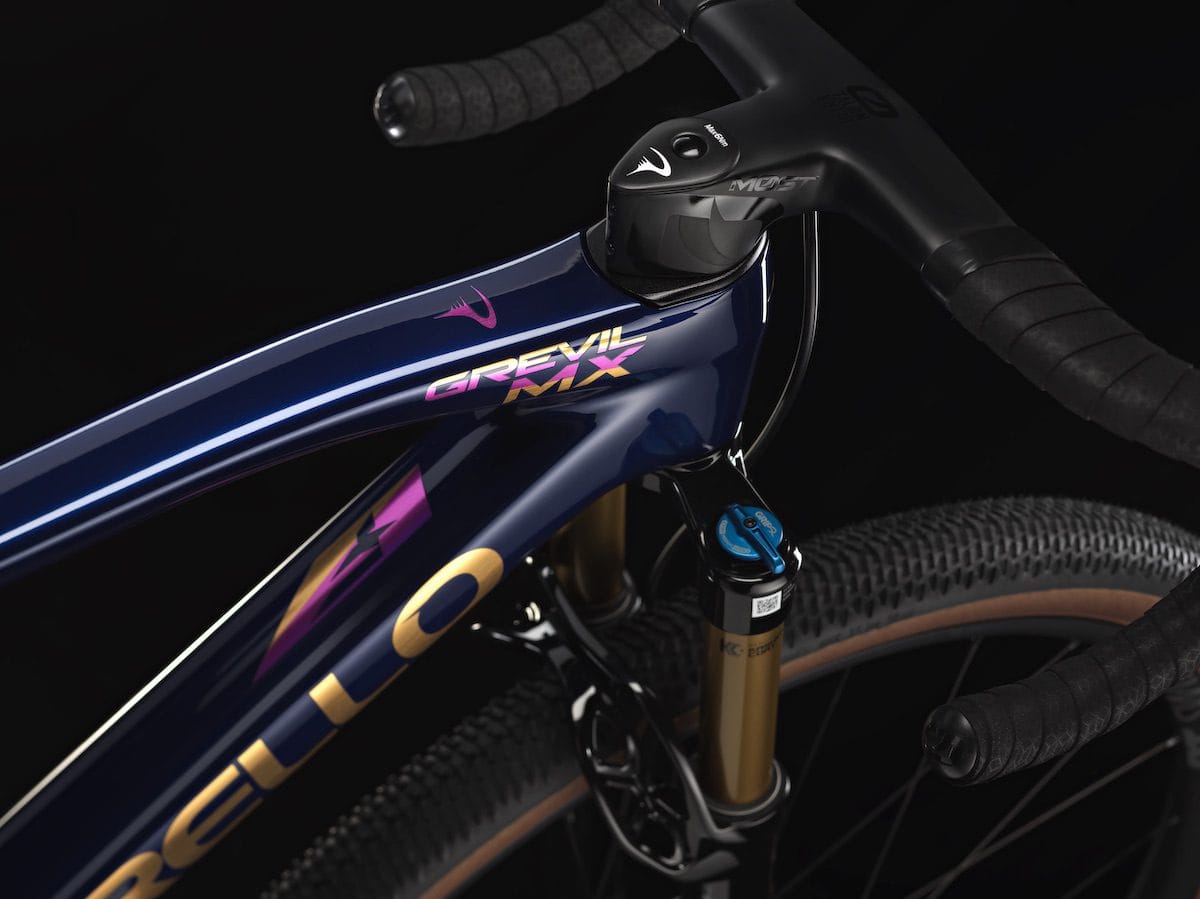
For years, we’ve watched "gravel" slowly cannibalize features from mountain biking—wider tires here, a little suspension there. But Pinarello just stopped pretending. The new Grevil MX isn’t a gravel bike influenced by mountain bikes. It is literally a hardtail mountain bike with a drop bar.
This isn’t hyperbole. Pinarello took the Dogma XC frame—the very chassis Pauline Ferrand-Prévot rode to Olympic gold in Paris—slapped a road cockpit on it, and called it the Grevil MX.
As a cyclist who values efficiency and purpose-built tools, I have to ask: Is this the ultimate "do-it-all" machine, or have we finally engineered a Frankenstein that is mechanically confused?
⚡️ Mechanism of Action: The Biology of the Beast
In pharmacology, we look at the "mechanism of action"—how a drug binds to a receptor to produce an effect. Let’s apply that to the Grevil MX.
The core of this bike is the geometry. The head angle sits at 67.75 degrees. For context, a standard road bike is around 73 degrees, and a racy gravel bike is usually 71-72. A 67-degree head angle is slack. It increases the "trail" figure, stabilizing the wheel at high speeds and on steep descents.
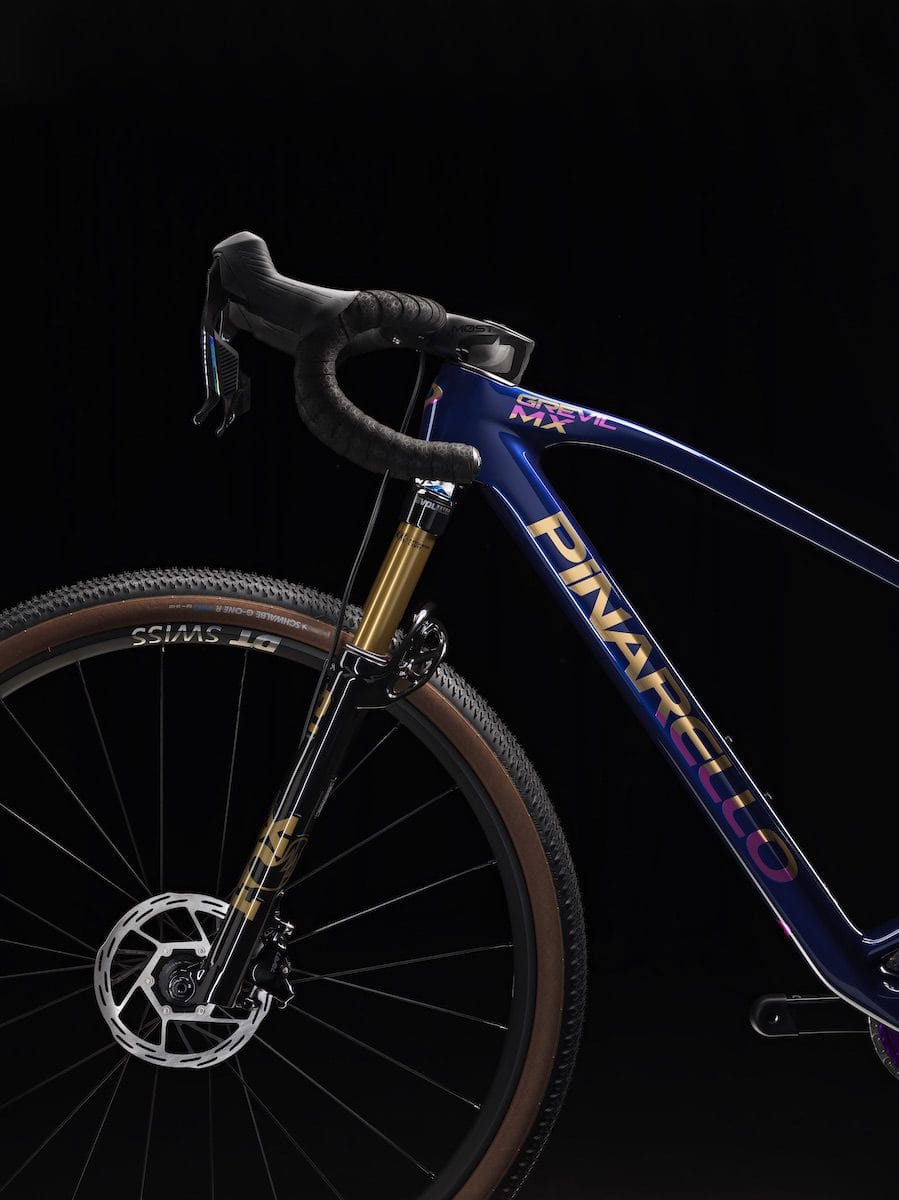
However, the "drug interaction" here is the cockpit. Pinarello paired this slack, off-road chassis with the MOST Talon Ultra Light integrated road cockpit.
Here is the biomechanical conflict:
- The Chassis wants to plow through rock gardens and take heavy hits (supported by a 100mm Fox 32 Step-Cast fork).
- The Cockpit puts your hands in a narrower, lower, aerodynamic position, reducing the leverage you have over the front wheel compared to a wide flat bar.
The Physics of Suspension: The inclusion of 100mm of travel is significant. Most gravel suspension forks offer 30mm or 40mm to dampen high-frequency road vibration (what we call "chatter"). That’s about fatigue reduction—keeping the rider’s neuromuscular system fresh.
100mm of travel is different. That is impact absorption. It is designed for hits that would otherwise stop the wheel or eject the rider. By adding this much travel, Pinarello has shifted the bike's energy expenditure profile. You gain descending capability, but you are carrying the weight (9.04kg total build) and aerodynamic penalty of a suspension fork on climbs and flats where it provides zero kinetic benefit.
"The Grevil MX is designed for riders who push gravel beyond its typical boundaries." — Fausto Pinarello
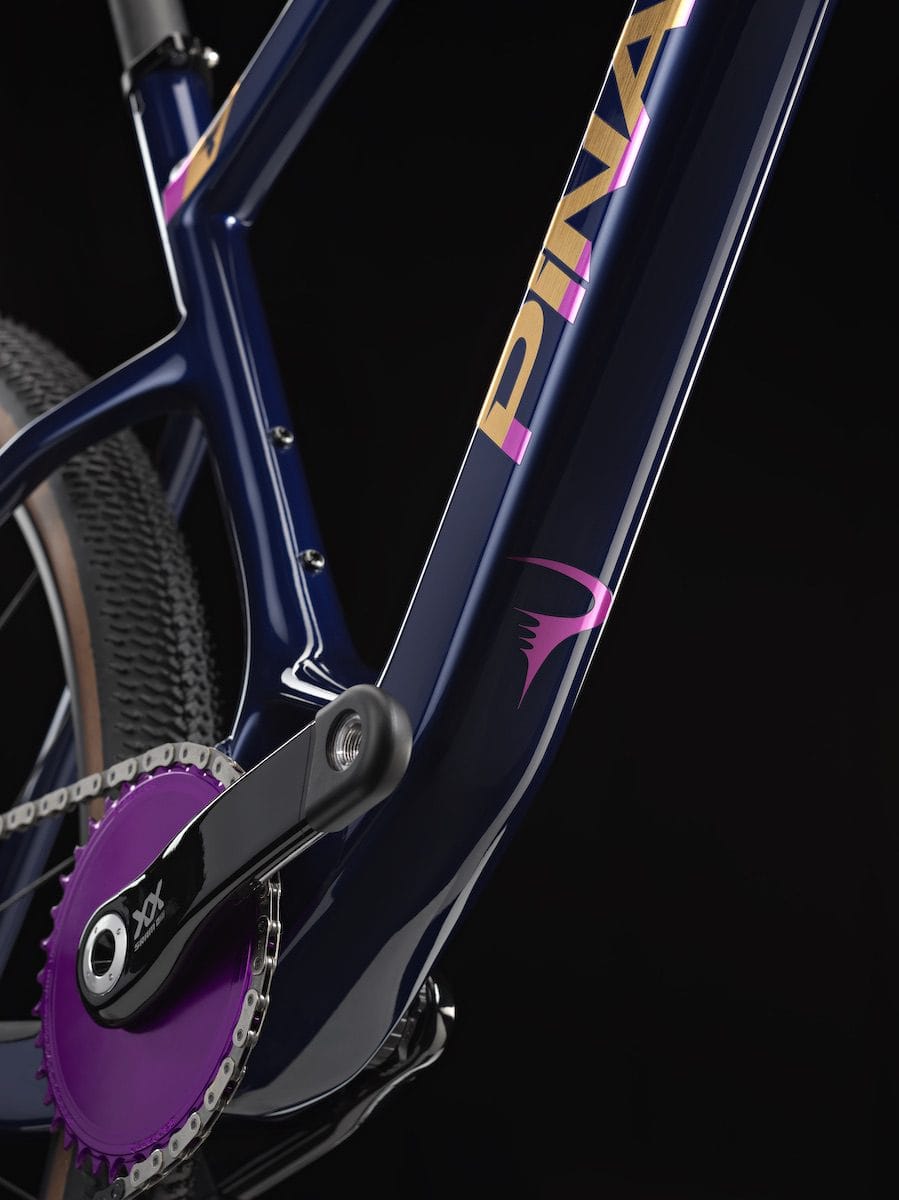
The transmission follows suit. It uses a SRAM XX SL Eagle AXS mullet setup (MTB derailleur, road controls). The 38T chainring paired with a 10-52t cassette is a massive gear range. Biologically, this allows you to spin high cadence up walls, keeping lactate accumulation in check, but you will spin out on fast pavement descents.
🧠 The Clinical Application: Does it Work for You?
Let’s bring this back to the "Deliberate Cyclist"—the person with a job, kids, and limited training time.
If you live in a place like Bentonville or parts of Colorado where "gravel" is actually singletrack connecting fire roads, this bike offers a unique proposition. It allows you to ride the road to the trail efficiently (aerodynamics of the drop bar) and survive the trail (suspension and slack geo).
However, we must consider the Therapeutic Index—the ratio of the benefit to the toxicity (or in this case, cost and complexity).
- The Cost: €8,500 (approx. $9,200 USD). This is a heavy dose.
- The Maintenance: You are now maintaining a high-end suspension fork and an electronic drivetrain.
- The Specificity: This bike is proprietary. The cockpit, the seat post clamp, the specific integration—it is not a bike for the home mechanic who likes to tinker with standard parts.
If your rides consist of 80% fire roads and 20% pavement, a 100mm fork is overkill. You are hauling dead weight. If your rides are 80% singletrack, you should be on a mountain bike. A flat bar offers superior leverage and control for technical terrain. The drop bar on a bike this capable is mechanically paradoxical—it limits the handling potential of the frame it is attached to.
The Verdict
The Pinarello Grevil MX is a stunning piece of engineering. It is also a symptom of an industry running out of niches.
By taking a literal Olympic XC frame and putting drop bars on it, Pinarello has proved that the line between gravel and XC is gone. But just because you can combine two compounds doesn't mean the resulting interaction is stable.
For the vast majority of us, this bike is "polypharmacy"—too many prescriptions treating the same symptom. If you need 100mm of travel and a 67-degree head tube, buy a mountain bike. You’ll go faster, have more control, and probably save money.
However, if you are a niche rider who wants the aesthetic of a roadie but the soul of a downhiller—and you have the wallet to support it—the Grevil MX is a potent, if confusing, dose of adrenaline.
Current availability is limited to Europe and South Africa, so for those of us in North America, this remains a theoretical case study rather than a clinical trial.
TL;DR
- It's a Shape-Shifter: The Grevil MX is literally the Dogma XC hardtail frame with a road cockpit; it features a slack 67.75° head angle and 100mm of travel.
- Biomechanics vs. Mechanics: The bike combines high-capability suspension with low-leverage drop bars, creating a machine that can handle rough terrain but may lack the control of a flat-bar MTB.
- The Use Case: Unless your local loops are technical singletrack connected by long stretches of wind-swept pavement, this is likely overkill compared to a standard gravel rig or a dedicated hardtail.