Gravel Pedals: Platform Area, Float, and the Q-Factor Problem
Gravel pedal systems ranked by what actually matters: platform area, float, Q-factor, and durability. SPD vs. Time ATAC vs. Wolf Tooth—plus power meter tradeoffs.

Gravel pedals have become a microcosm of the sport itself: fractured into race-day efficiency, adventure durability, and the awkward middle ground where most of us actually ride. The problem isn't choice—it's that the spec sheets don't tell you what happens at mile 80 when your feet go numb or your knee starts tracking sideways.
Here's what matters if you're trying to decide between a $55 workhorse and a $365 boutique pedal with adjustable Q-factor. I haven't put miles on every system here, but the mechanical differences are clear enough to guide you toward what'll work—or fail—for your specific constraint.
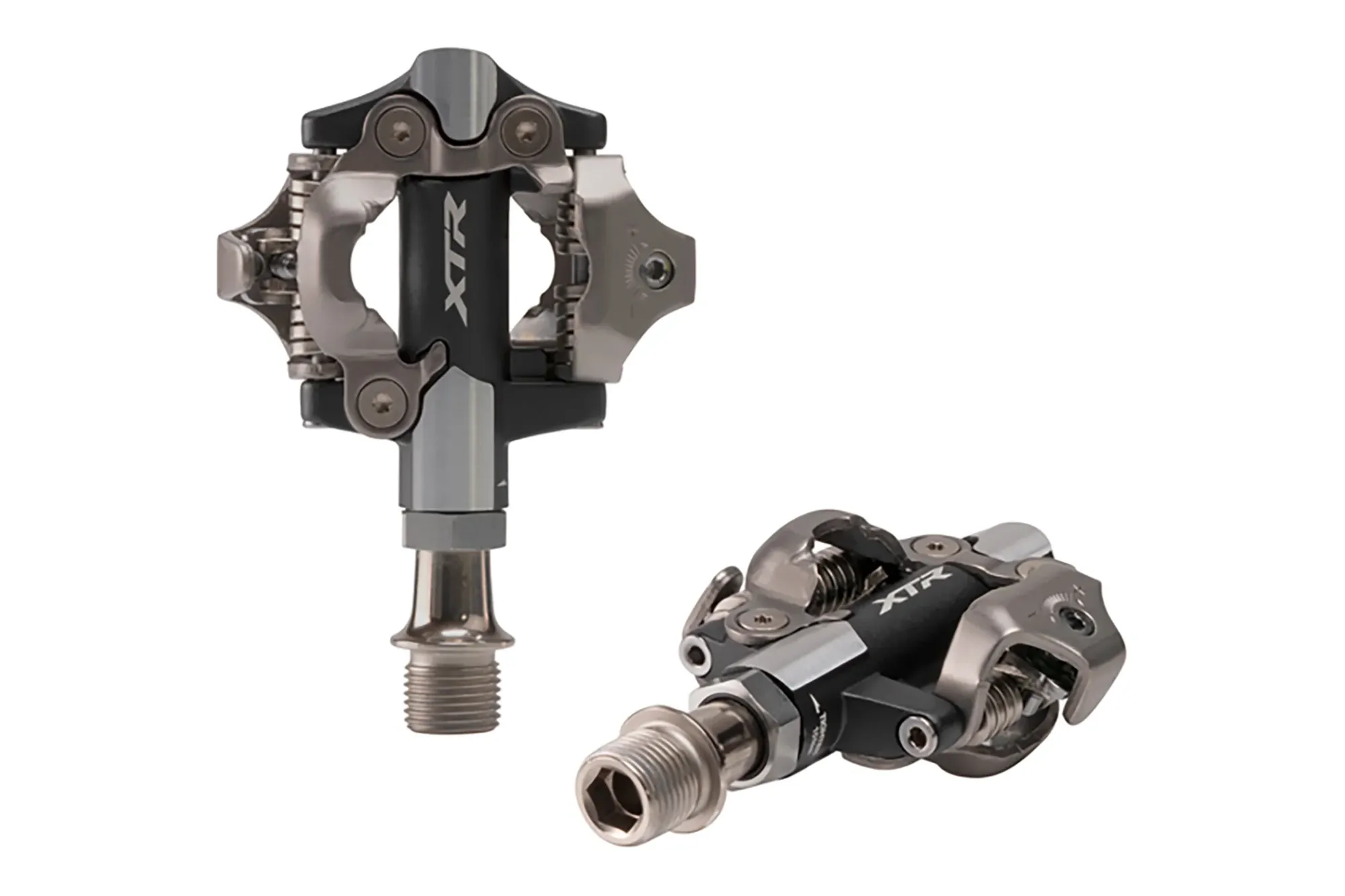
The SPD Standard: Why Shimano Still Owns the Baseline
The Shimano SPD mechanism is 30 years old and hasn't changed much because it doesn't need to. Dual-sided spring retention, forged steel cleat, effective mud shedding. If you're riding in remote areas where a pedal failure means a long walk, this is the system you default to.
The PD-M520 is the entry point: 380 grams per pair, chromoly spindle, cup-and-cone bearings you can service with a 10mm wrench. It's heavy, but it outlasts most bikes. The PD-M540 trims 28 grams by using a slimmer spindle (no wrench flats) and better seals, which matters if you ride in wet or coastal environments where grit gets everywhere. For $100, the M540 is the "Goldilocks" choice—refined enough to feel precise, durable enough to ignore.
At the top end, the Deore XT M8100 adds integrated "shelves" on the pedal body to increase contact area with your shoe's lugs. This reduces lateral rocking during high-torque climbs, which is the difference between feeling locked-in and feeling like you're balancing on a pencil. The XTR M9100 goes further: 15.1mm stack height (lower center of gravity), Teflon-coated retention claws for smoother engagement, and two spindle lengths (52mm or 55mm) so you can adjust Q-factor. If you're racing and you care about grams and biomechanics, this is the pedal. If you're not racing, the XT is 90% of the performance for half the price.
The Catch
SPD systems use a heavy centering spring, which means your foot is constantly being pulled back to neutral. For some riders—especially those with knee issues—this lack of float is a problem. You're locked into a fixed rotational position, and if that position doesn't match your natural tracking, you're fighting the pedal on every stroke.
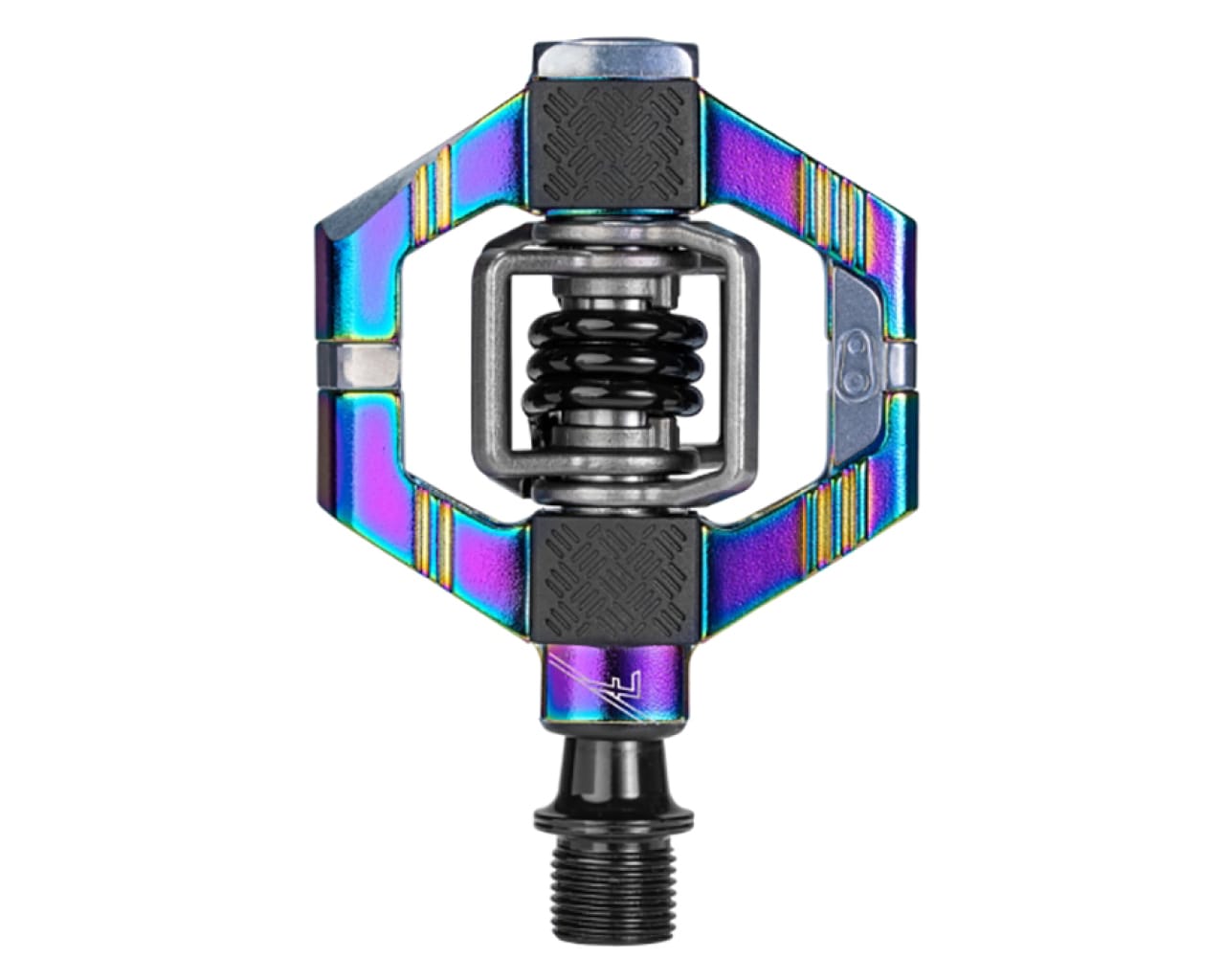
Crankbrothers: Four-Sided Entry, Shorter Cleat Life
The Eggbeater is the minimalist's pedal: four-sided entry, rotating spring cage, no platform. You can stomp onto it from any angle, which is why cyclocross racers love it. The flagship Eggbeater 11 uses titanium for the body and spindle, hitting 179 grams per pair—but it has a 90kg rider weight limit, so if you're over 200 pounds, this isn't your pedal.
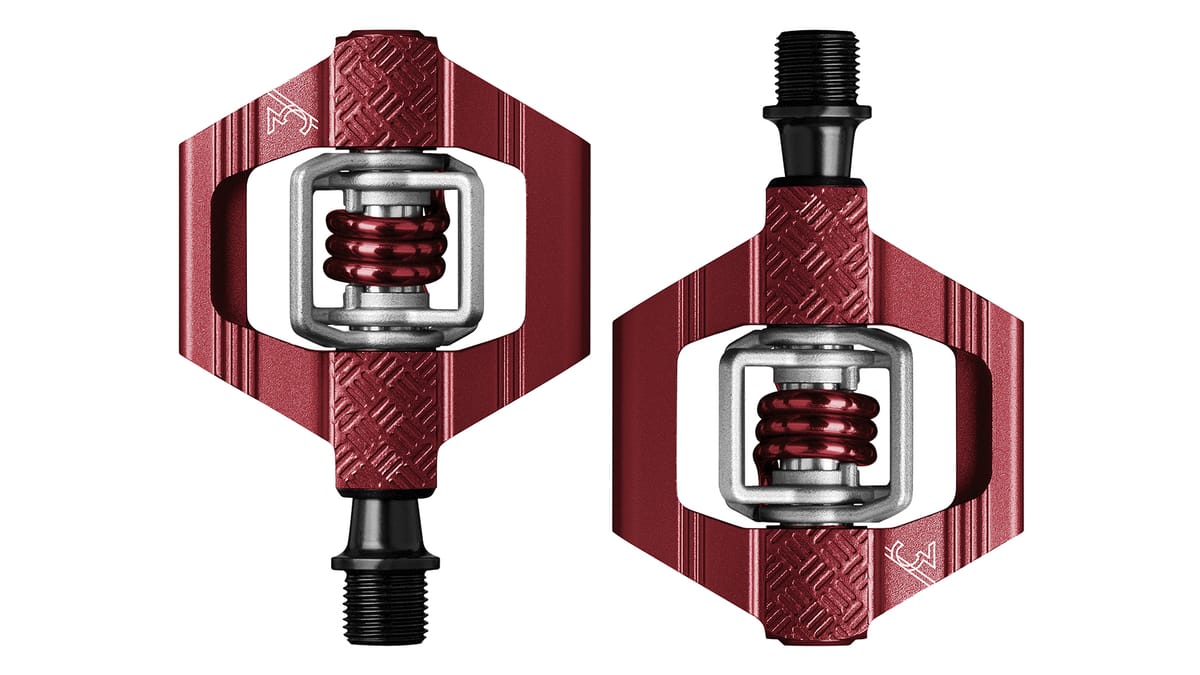
The Candy series adds a small platform around the Eggbeater mechanism to distribute pressure. This matters on long rides where a tiny contact patch (the Eggbeater's Achilles heel) can cause hot spots. The Candy 7 is the sweet spot: 320 grams, stainless steel body, 5-year warranty.
The Catch
Crankbrothers uses a brass cleat that's deliberately softer than the steel retention cage. This prevents pedal wear, but it means you're replacing cleats more often—sometimes every 500–1,000 miles if you walk on pavement frequently. The Shimano steel cleat lasts 2–3x longer.
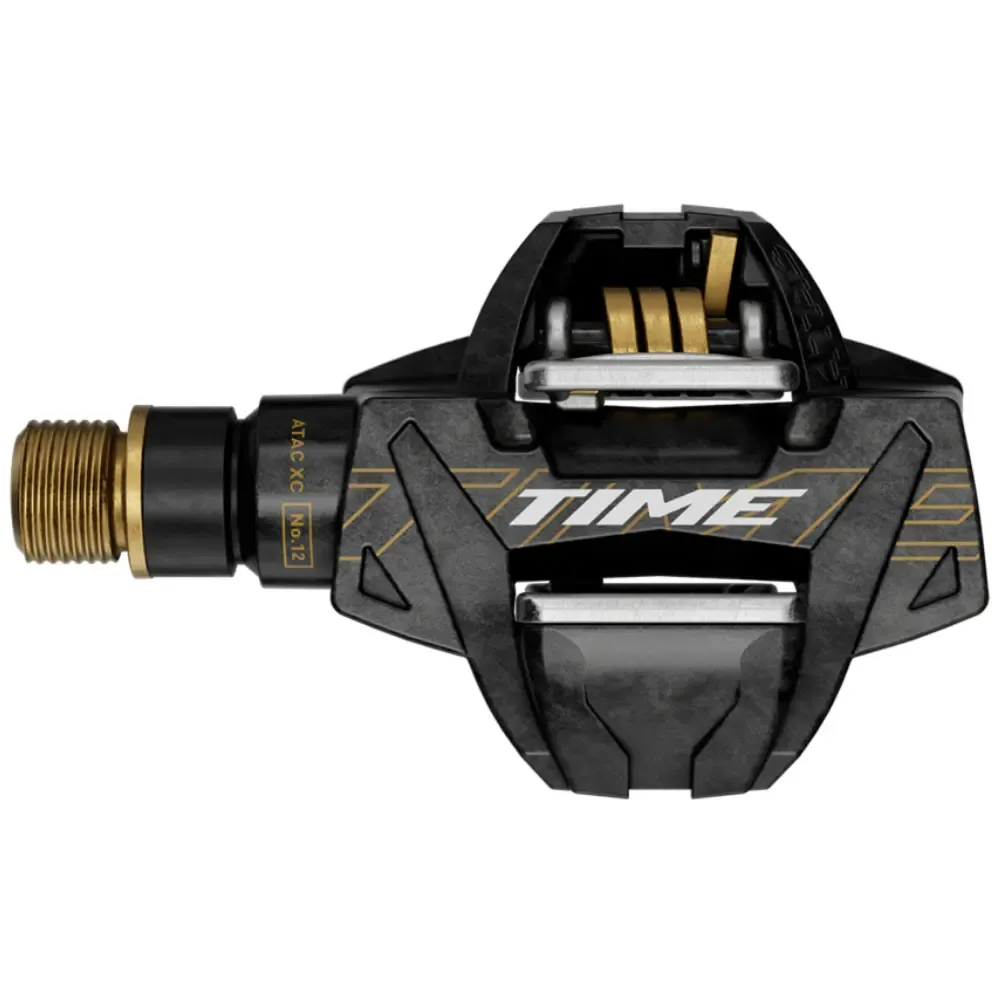
Time ATAC: The Joint-Saving Float You Didn't Know You Needed
The Time ATAC system provides ±5mm of lateral float and up to 10 degrees of angular freedom. This allows your tibia to rotate naturally relative to your femur, which is how your knee actually wants to move. The mechanism lacks the heavy centering spring found in SPD pedals, so your foot finds its own path instead of being forced into one.
The ATAC XC 10 is the competitive option: carbon-filled body, hollow steel axle, 280 grams per pair. Stack height is 18.3mm, which is high compared to the XTR's 15.1mm, but many riders find the float worth the trade. The system is also inherently self-cleaning—the forward-sliding cleat motion pushes mud through the open center of the pedal.
The Catch
Time pedals are harder to find in rural bike shops, and the cleat interface is proprietary. If you're touring in remote areas, SPD is the safer bet for parts availability. Also, the high float can feel "vague" to riders used to the locked-in feel of Shimano—it's a preference thing, but it's real.
Look's 2026 Gravel Lineup: The Road-ification of Off-Road
Look has split their gravel pedals into three categories: X-One-G
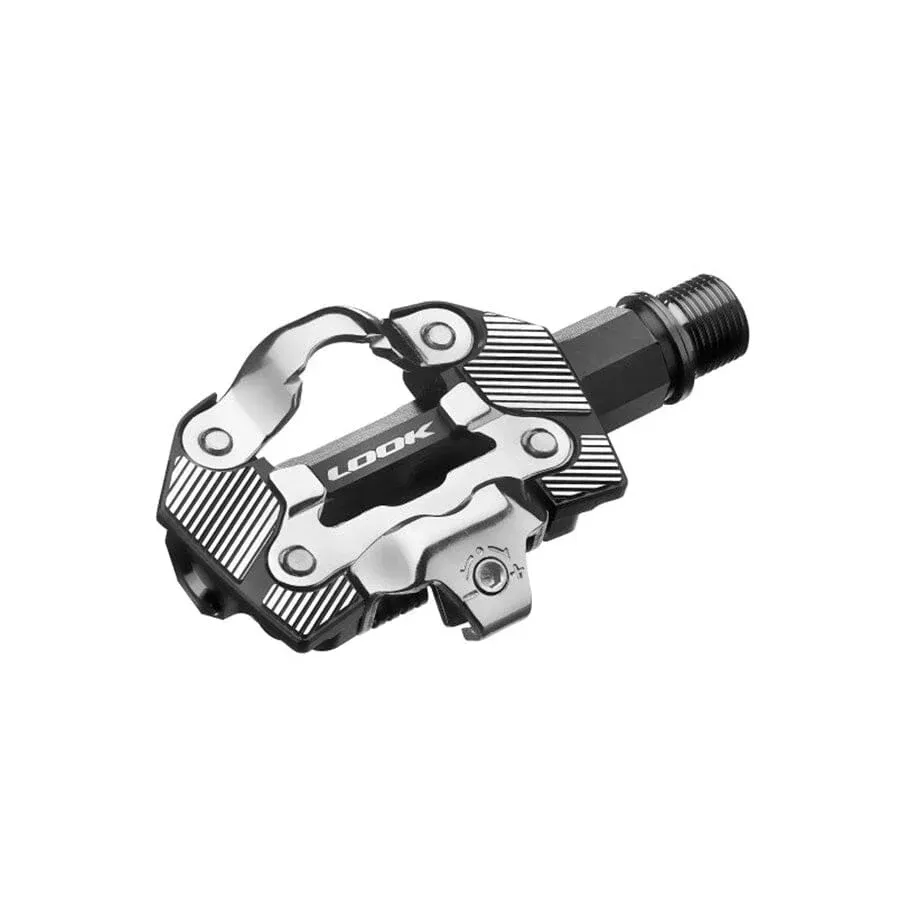
(race), X-Track (all-round), and X-Venture (adventure). The X-One-G is the most interesting because it's a single-sided pedal with a 650mm² contact surface—30% larger than Look's Keo road pedal. This is designed for elite gravel racing, where dismounting is rare and sustained power on smooth-to-moderate gravel is the priority.
The X-One-G Ti weighs 240 grams per pair and has a 10.7mm stack height, which is road-pedal territory. The massive platform distributes pressure to delay foot numbness on long efforts. The X-Track Race Carbon is the dual-sided option with a 515mm² platform and SPD compatibility—this is the "90% solution" for most riders who want Look's platform feel without committing to single-sided entry.
The Catch
Single-sided pedals require you to orient the pedal before clipping in. In technical sections where you're unclipping frequently, this adds a half-second of fumbling. If you're racing on smooth gravel at 20+ mph, it's fine. If you're riding chunky doubletrack with frequent dismounts, dual-sided is faster.
Wolf Tooth: Adjustable Q-Factor and the Right to Repair
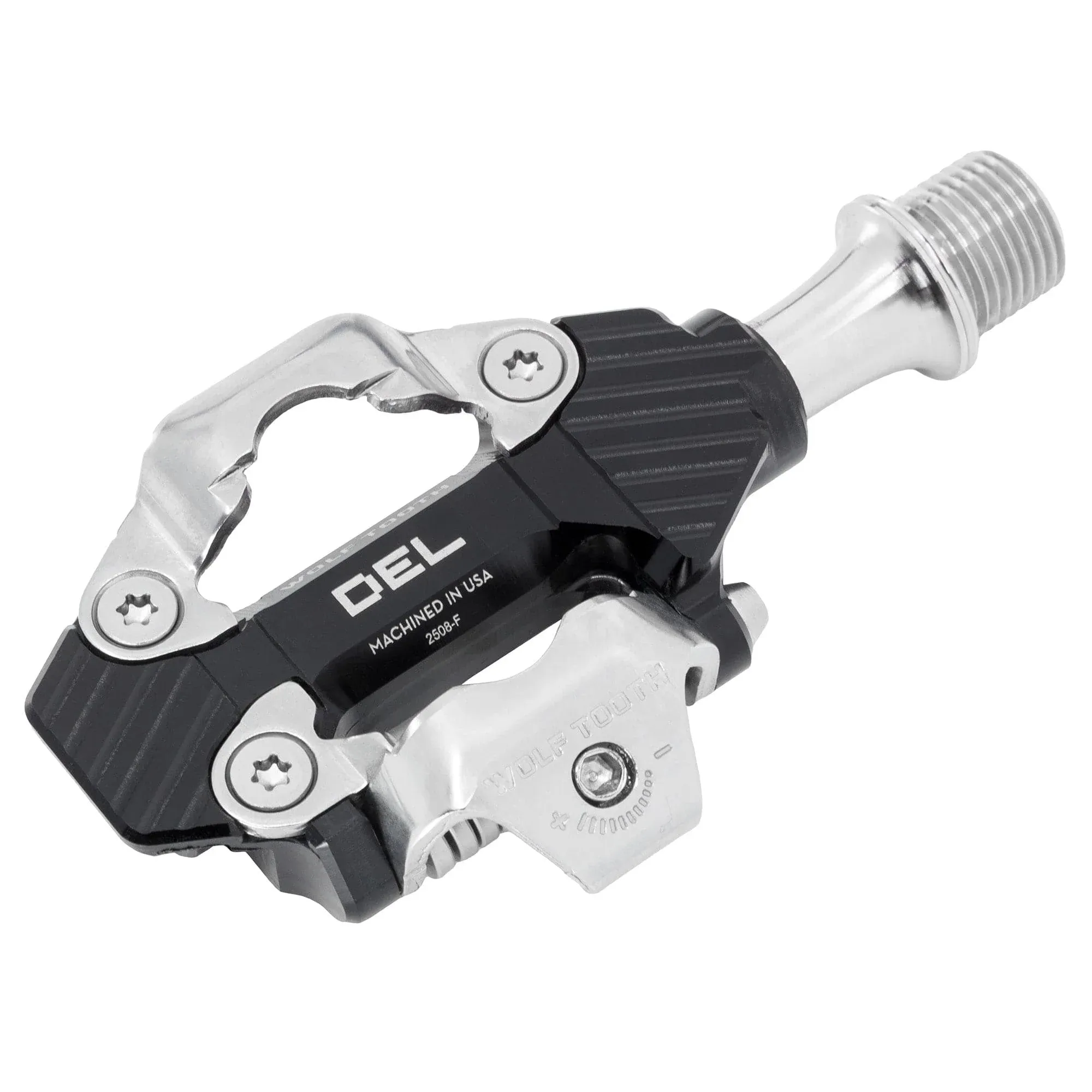
The Wolf Tooth DEL pedals are engineered around serviceability and biomechanical customization. The defining feature is adjustable Q-factor: you can set the pedal center at 51mm, 55mm, or 59mm from the crank using internal spacers. This is rare in off-road pedals and critical if you have knee or hip issues caused by stance width mismatch.
The DEL MK0 uses DLC-coated titanium axles and PVD-coated titanium hardware to hit 174 grams per pair—the lightest full-featured SPD-compatible pedal on the market. The platform is 559mm², which is larger than the XTR's and close to Look's X-Track. Stack height is 14.5mm.
Every component is available for replacement, which means you can rebuild these pedals instead of replacing them. If you're the type who services your own hubs, this matters.
The Catch
The DEL MK0 costs $365. The standard DEL Gravel is $220, which is still double the price of a Deore XT. You're paying for domestic manufacturing (USA), titanium, and the adjustability—but if you don't need custom Q-factor, the XT is the better value.
Power Meters: Favero Assioma Pro MX-2 vs. Garmin Rally
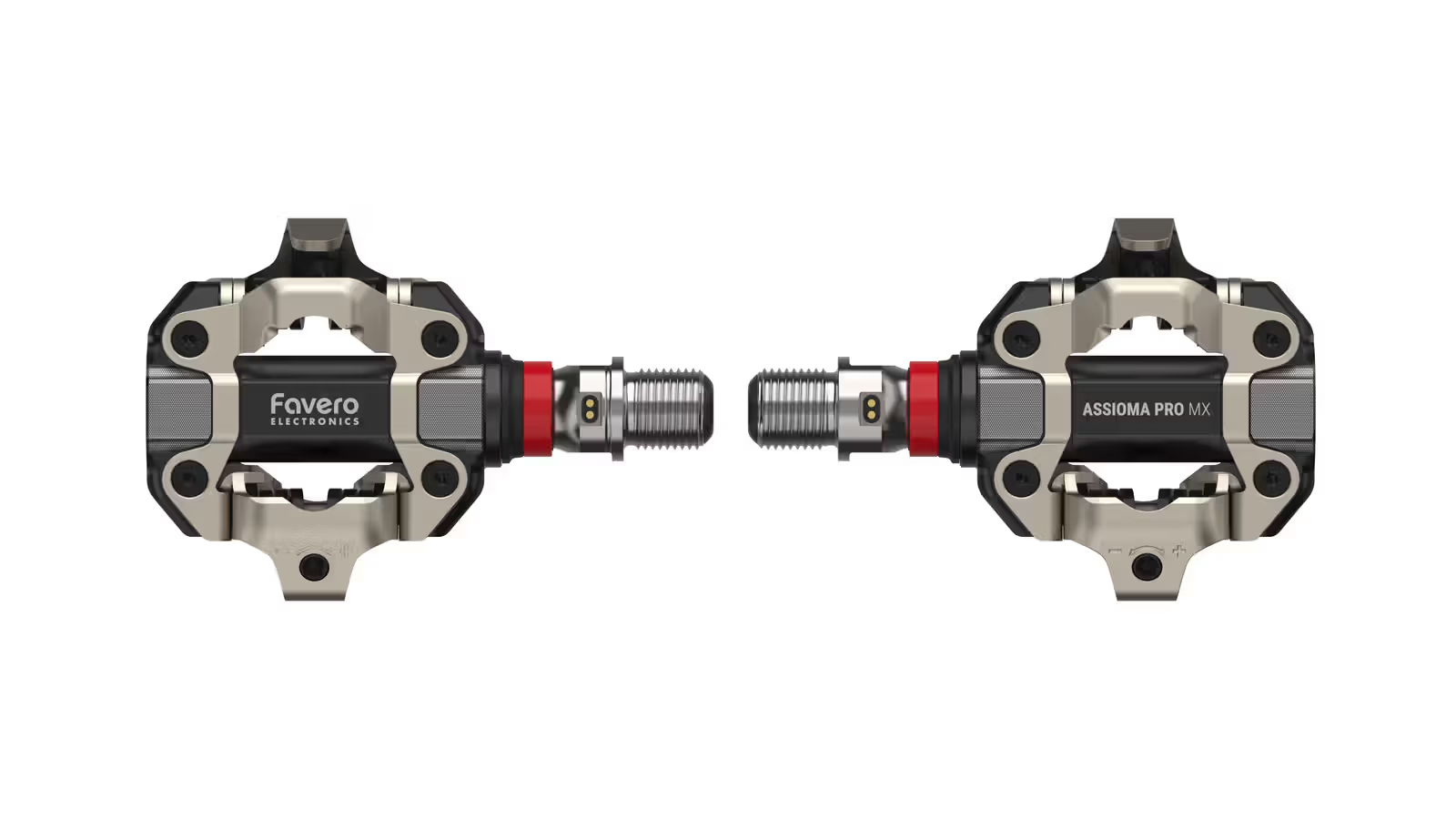
If you're training with power, pedal-based meters are the easiest to install and the only option that measures left/right leg balance. The Favero Assioma Pro MX-2 is the current standard: all sensors and rechargeable batteries are housed in the spindle, achieving IP67 waterproofing. The IAV Power system uses an integrated gyroscope to measure actual angular velocity, maintaining ±1% accuracy even with oval chainrings or high-torque climbing on loose surfaces.
Weight is 384 grams per pair, battery life is 60+ hours, and charging is via magnetic USB. The system is SPD-compatible and uses a standard Shimano cleat.
The Garmin Rally XC200 is the modular alternative: the power-sensing spindles can be swapped between different pedal bodies (road, gravel, MTB). Weight is 444 grams, battery life is 120 hours, but it uses replaceable CR1/3N batteries instead of rechargeable. Some riders prefer this for long tours where charging isn't guaranteed; others find it annoying to carry spare batteries.
The Catch
Pedal-based power meters add 100+ grams and $500+ to your setup. If you're not using the data to guide training (structured intervals, FTP testing, race pacing), you're carrying extra weight for a number on a screen. Also, the Favero's magnetic charging port can collect metal shavings if you ride in dusty or industrial environments—clean it occasionally or it won't charge.
Pressure Distribution and Why Platform Area Actually Matters
In events over six hours, localized pressure on the metatarsal arch can cause peripheral neuropathy—"hot spots" that make it impossible to maintain power. A minimalist XC pedal might have a contact patch as small as 144mm². The Look X-One-G's 650mm² platform spreads that force over 4.5x the area, reducing nerve compression and delaying the onset of discomfort.
This isn't theoretical. If you've ever had to stop mid-ride to take your shoes off and wiggle your toes, you've experienced this. A larger platform won't eliminate it entirely (shoe fit and insole support matter more), but it buys you time.
Float, Q-Factor, and the Metabolic Cost of Misalignment
A mismatched Q-factor or insufficient float forces your knee into non-linear tracking. The stabilizing muscles of your hip and ankle have to work harder to maintain a vertical pedaling plane, diverting energy away from your glutes and quads. Over 10,000 pedal strokes (a typical 100-mile gravel ride), this adds up.
Systems like Time ATAC (5mm lateral float) or Wolf Tooth DEL (adjustable Q-factor) allow your body to find its most efficient biomechanical path. This is especially relevant for riders over 40 or anyone with a history of IT band syndrome or patellar tendonitis. I can't verify the exact metabolic savings, but the joint-health benefit is well-documented in biomechanics literature.
What to Buy (and What to Skip)
If you're racing gravel and care about grams: Wolf Tooth DEL MK0. It's the lightest, has the largest platform in its weight class, and the adjustable Q-factor is a legitimate performance tool if you need it.
If you're riding long endurance events and your knees hurt: Time ATAC XC 10. The float is joint-saving, the mud-shedding is real, and the weight penalty (280g vs. 312g for XTR) is negligible over 200 miles.
If you want bombproof reliability and don't care about grams: Shimano Deore XT M8100. It's the pedal you install and forget about for 5,000 miles. Serviceable bearings, hardened steel construction, and a platform that reduces lateral rocking.
If you're integrating power into your training: Favero Assioma Pro MX-2. The spindle-integrated design is more resilient than pod-based systems, and the IAV Power accuracy holds up in off-road conditions.
If you're on a budget and need something that works: Shimano PD-M520. It's 380 grams and $55. It will outlast your bike.
TL;DR
- Platform area matters for long rides—650mm² (Look X-One-G) or 559mm² (Wolf Tooth DEL) delays foot numbness by spreading pressure. Minimalist pedals under 200mm² cause hot spots after 4–6 hours.
- Float and Q-factor aren't luxuries if you have knee issues—Time ATAC's 5mm lateral float or Wolf Tooth's adjustable stance width (51/55/59mm) reduce joint stress. SPD's fixed position works until it doesn't.
- Shimano XT M8100 is the default choice for 90% of gravel riders—338g, serviceable bearings, integrated platform shelves, and it'll last 5,000+ miles. Skip the XTR unless you're racing and the 26-gram savings justify $150 more.