2027 Orbea Oiz: The XC Race Bike for Riders Who Don't Need Excuses
Orbea's 2027 Oiz is 22% stiffer, 48g lighter, and built around marginal gains that actually matter—if you're racing XC or chasing KOMs on technical climbs.

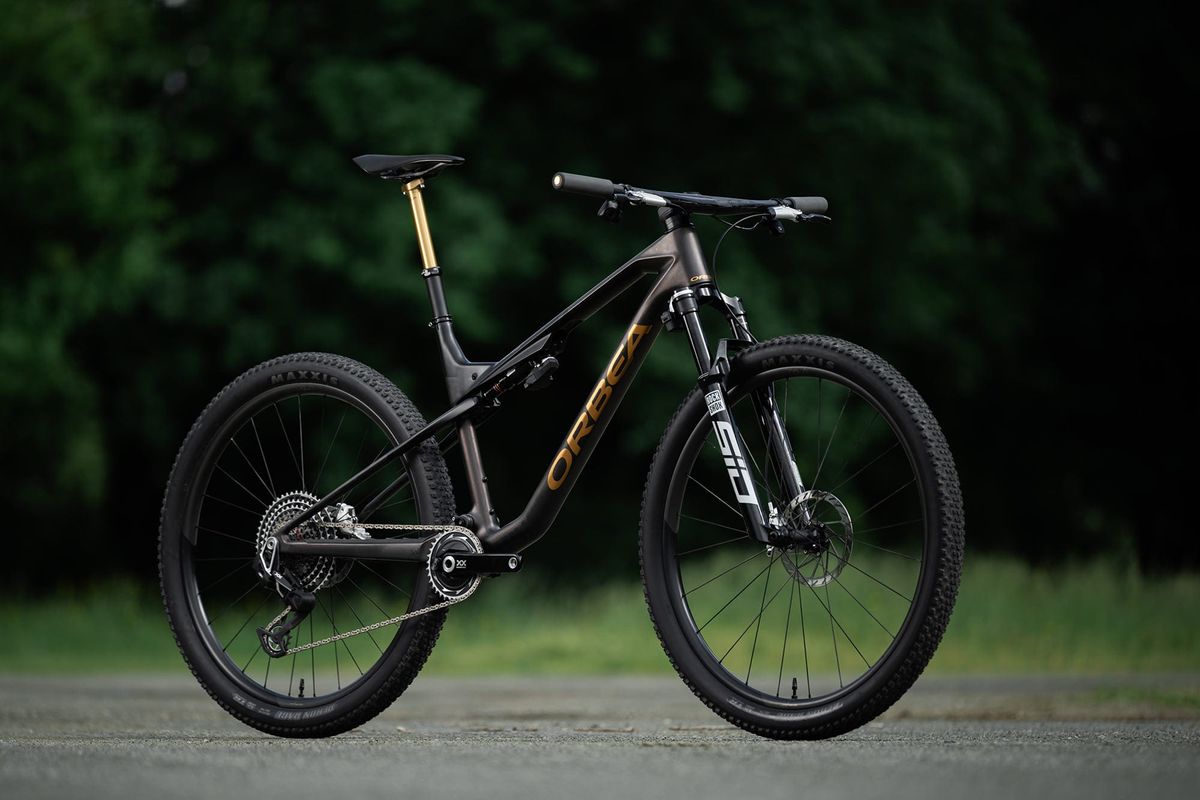
Orbea's 2027 Oiz just went official after a quiet debut at Nove Mesto, and it's one of those rare updates where the sum of small changes actually matters. This isn't a ground-up redesign—it's 120mm of travel, 29-inch wheels, and a regressive suspension curve, same as before. But Orbea spent three years obsessing over stiffness, alignment, and manufacturing details that most riders won't see. The result: a lighter, stiffer frame that climbs like an XC race bike should, but handles rough descents without the twitchy, nervous feel that plagued earlier short-travel platforms.
The question is whether those marginal gains translate to anything you'd feel on a ride. And whether a pure XC race bike—analog, 29er, no e-assist—still makes sense when gravel bikes are faster on fire roads and downcountry rigs are more fun on descents.
Stiffness Without the Weight Penalty
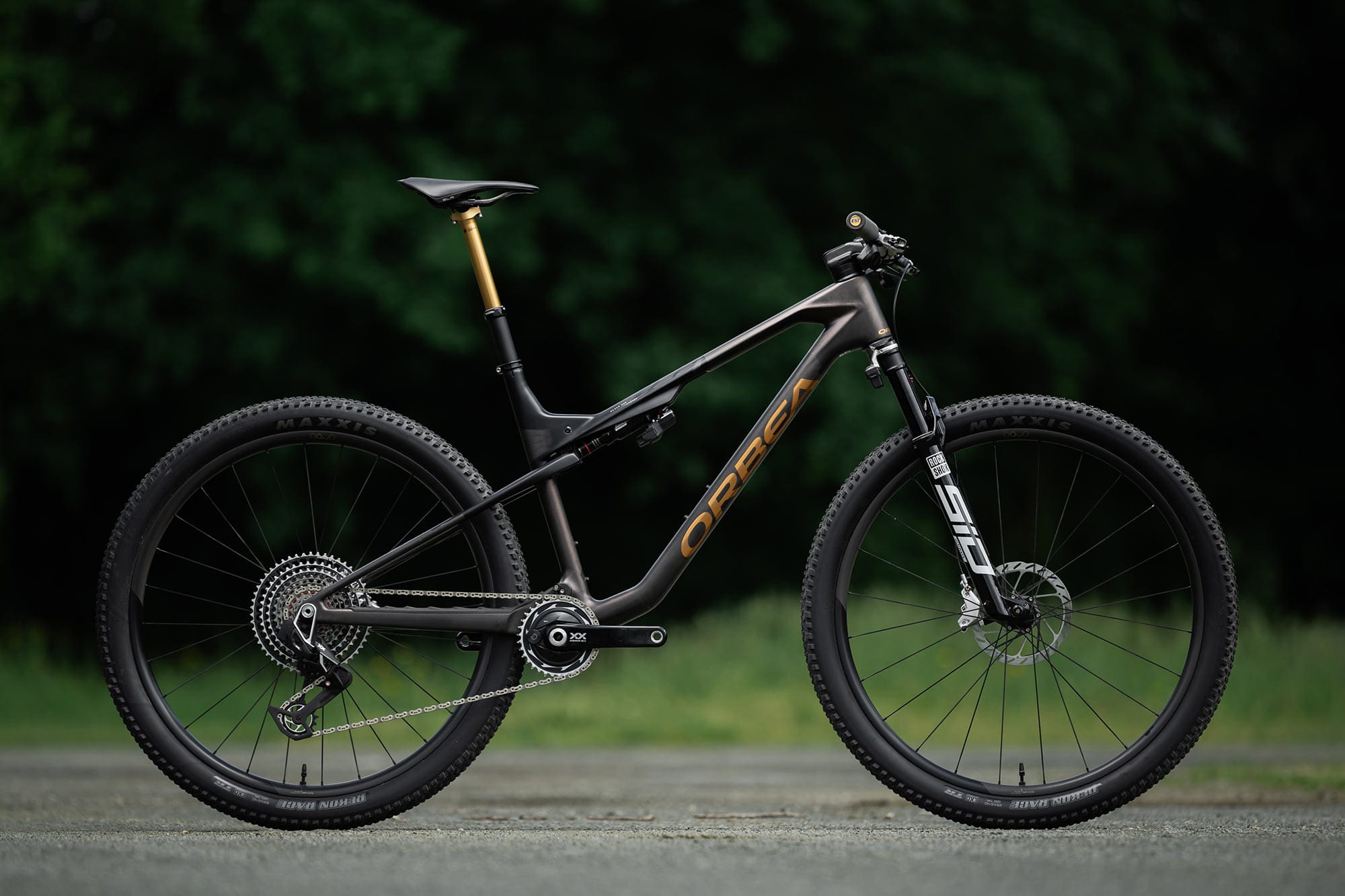
Orbea's focus was rear-triangle stiffness, specifically lateral and torsional rigidity around the pivots. Stiffer pivots keep the suspension tracking straight under load, which reduces binding and improves both climbing efficiency and descending control. The trick was adding stiffness without adding grams.
They did it by redesigning the frame layup and moving to a straight top tube. The old bent tube required more material to maintain stiffness; the new one uses a hollow "winged" shape around the shock mount. Small change, but it let them shed 48 grams from the carbon layup while increasing front-triangle stiffness by 36%.
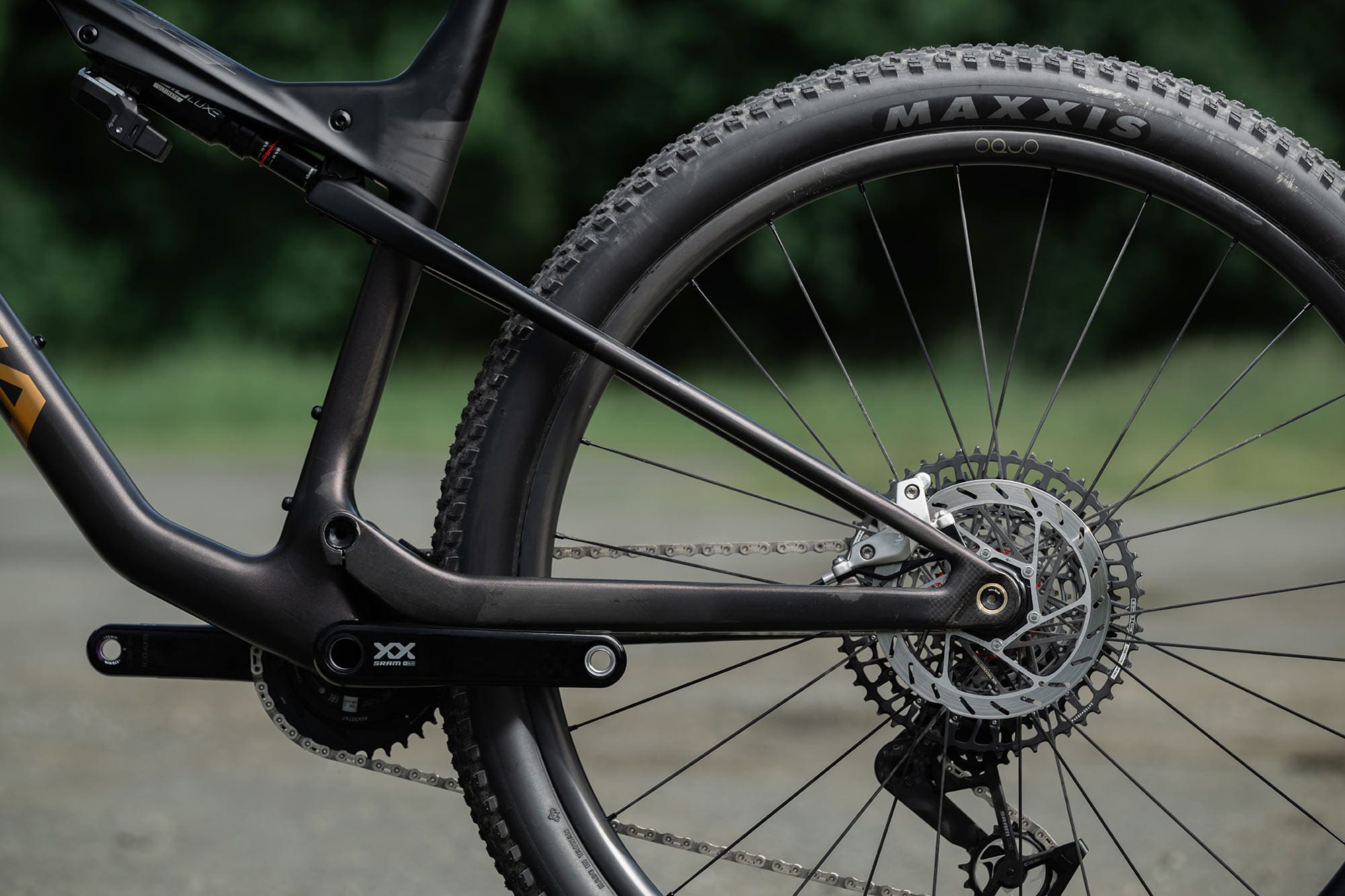
The rear triangle got an aluminum bridge that connects the seatstays in front of the seat tube, not behind it. Most brands bolt a bridge to the seatstays above the rear wheel, but Orbea says that adds stiffness at the wrong place—you want rigidity at the axle and upper linkage, not halfway up the seatstay. This bridge sits lower, keeps the stays aligned through the full range of motion, and prevents the kind of lateral flex that makes a bike feel vague in fast corners.
Cost: 100 grams total for the bridge and a new alloy linkage. The linkage dropped from 77g (carbon) to 44g (alloy) by shrinking it and optimizing the shape. Net stiffness gain for the rear triangle: 22%.
Symmetrical Seatstays and a Floating Brake Mount
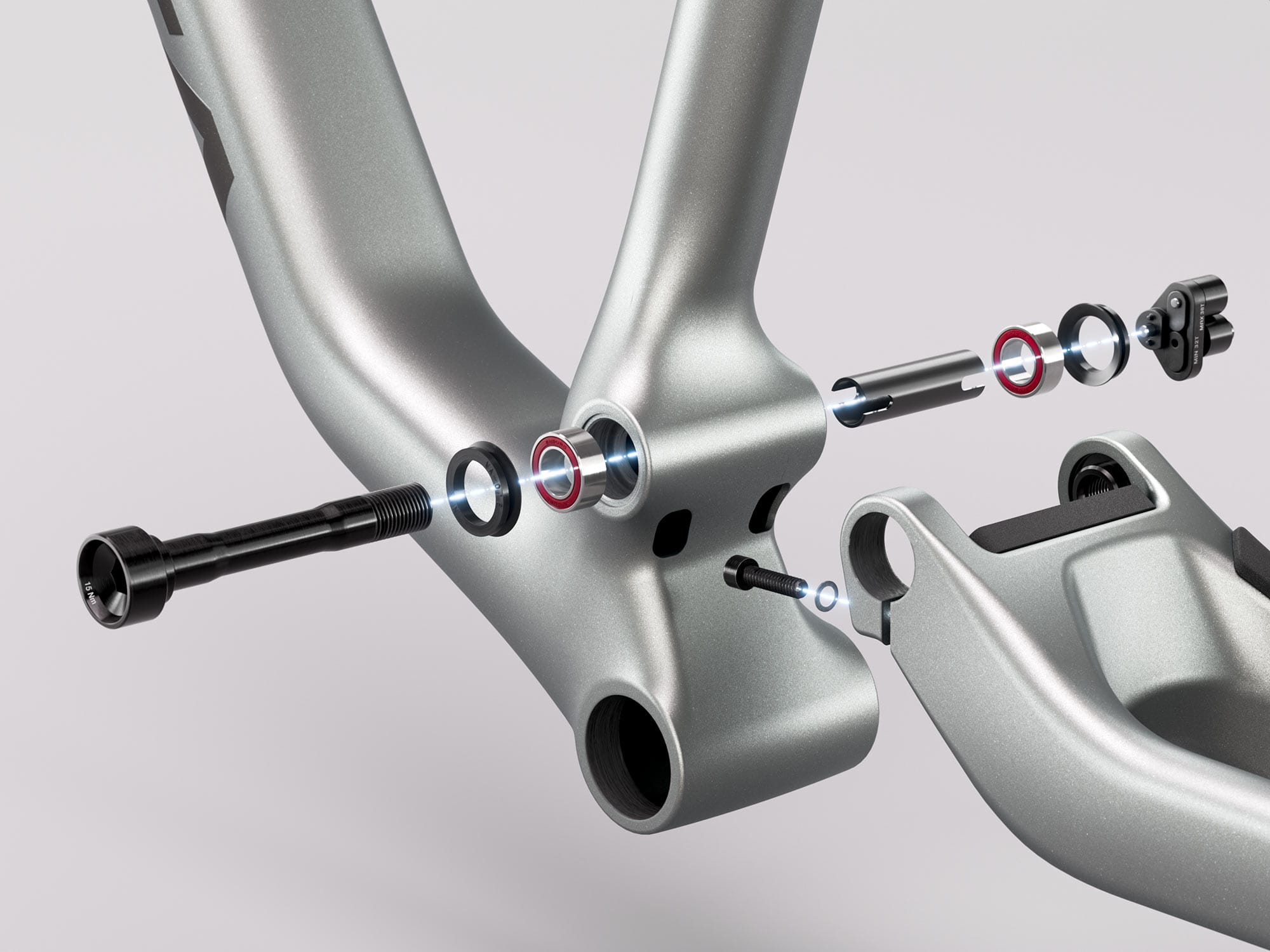
The rear brake mount is now a separate aluminum piece that slides over the axle and bolts only to the chainstay. This let Orbea make both seatstays identical—same layup, same flex characteristics—which matters because the Oiz has no pivot near the rear axle. The seatstays flex to absorb small bumps, and if one side is stiffer than the other (because it has a brake mount molded into it), the suspension won't track straight.
They also switched back to post-mount from flat-mount, which gives you more caliper options and makes bleeding brakes slightly less annoying.
The main pivot now uses a pinch bolt to secure the chainstays instead of clamping them around the seat tube. This eliminates static tension on the stays, which reduces friction and lets the suspension move more freely. Small detail. Adds up.
Actual Weights and Frame Construction
Claimed frame weight is 1,473 grams for a painted size medium with hardware, no shock. The test frame came in at 1,484 grams, well within tolerance. Complete bike weights: 9.63 kg (21.23 lb) for the top OMX with SRAM XX SL and RockShox Flight Attendant, 9.86 kg (21.74 lb) for the OMX with Shimano XTR and Fox Factory suspension.
The OMR frame uses a lower-grade carbon layup and weighs 160–180 grams more. If you go raw carbon instead of paint, you drop another 20+ grams.
Front triangle is made in two pieces: top/head/down tubes in one mold, seat tube and BB junction in another, then bonded. Rear triangle is five pieces—front two-thirds of the chainstays and yoke are one piece, each seatstay is molded separately, and the dropouts (which include the brake mounts) are separate. This lets Orbea optimize material thickness and fiber orientation in each section without compromise.
Cockpit, Wheels, and the One-Piece Bar-Stem
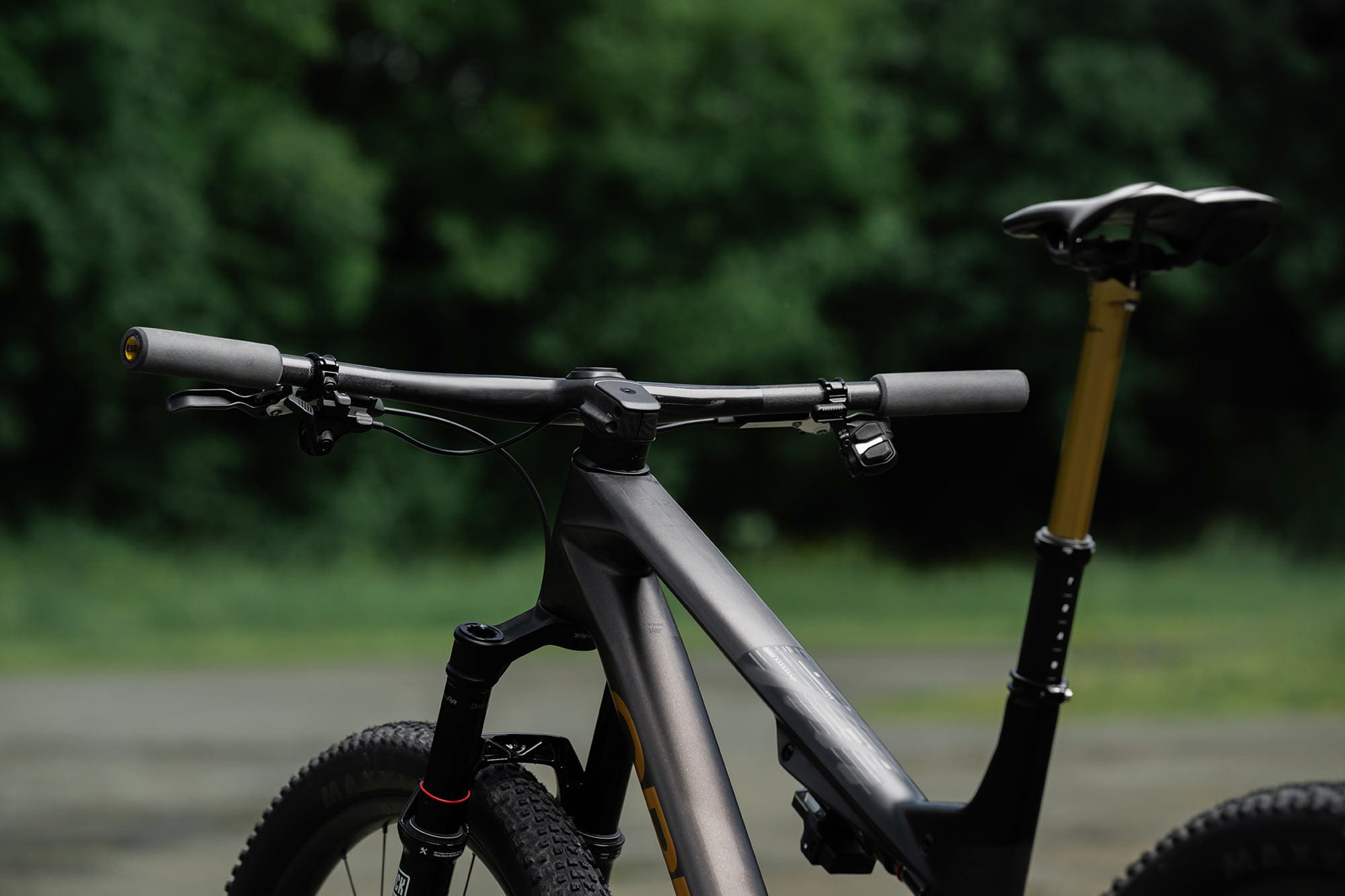
All models come with Orbea's one-piece carbon bar and stem: 760mm wide, -18° stem angle, available in 75mm or 90mm reach. That's long by modern trail-bike standards, but this is a race bike, and the geometry assumes you're leaning forward. The stem tucks almost flush with the head tube if you run zero spacers, which looks aggressive but limits fit adjustments.
Orbea includes removable cable port covers for wireless and mechanical shifting, plus an integrated computer mount with Garmin and Wahoo-compatible pucks. It's a tidy setup, but if you need a different stem length or bar width, you're replacing the whole cockpit.
Wheels are Orbea's Oquo LTD carbon hoops on top models: 30mm internal width, hookless, asymmetric front and rear designs, DT Swiss 36-tooth internals with upsized bearings. Total wheelset weight is 1,350 grams. Rims are stiff enough for XC racing but not overbuilt, so they're not ideal if you're riding chunk at speed.
Geometry: Shorter Stays, Slacker Head Angle
Chainstays are 430mm, down 2mm from the prior model. Head angle is 66.8°, slacker by 0.2°. Wheelbase is unchanged. Orbea tested a 65° head angle but found it didn't track well on climbs—acceptable tradeoff on a trail bike, not on an XC race platform where you're spending more time going up than down.
Stack is extremely low, and the seat angle is slightly steeper, which shifts rider weight forward for a more powerful pedaling position. This balances the shorter chainstays and keeps enough weight on the front wheel during steep climbs.
Larger sizes have shorter seat tubes than before, so you can run a longer-travel dropper. Pair that with a 130mm fork (optional in Orbea's MyO configurator) and the Oiz becomes a capable downcountry bike, though you're still limited by the 120mm rear travel and XC-tuned suspension curve.
All frame sizes fit two bottles: 650ml on the seat tube, up to 1,000ml on the downtube depending on size and whether you're running Flight Attendant.
Suspension: Regressive Curve, Fox or RockShox
The suspension curve is regressive, built around a small-volume shock. It's firm early in the stroke for efficient pedaling, supple in the mid-stroke for bump compliance, then ramps up at the end to prevent harsh bottom-outs. Orbea recommends 24–30mm sag, which is about 20–25% of the shock's stroke—less than you'd run on a trail bike, but typical for XC race setups.
You get two suspension options: Fox Factory with Orbea's Squidlock dual-lever remote (locks fork and shock with one lever, drops the seatpost with the other), or RockShox Flight Attendant with a standard RockShox dropper remote. Flight Attendant adds about 230 grams but gives you automatic compression and rebound adjustments based on terrain. Whether that's worth the weight depends on how much you trust the algorithm and how often you're toggling lockouts manually.
Every build comes with a Fox Transfer SL dropper, even on RockShox-equipped bikes, because it's lighter than a Reverb AXS. Not ideal if you wanted a fully wireless cockpit, but this is a race bike, and 50 grams matters more than cable clutter.
Pricing, MyO Customization, and the 32-Inch Question
OMR models start at €3,799 and top out at €6,999. OMX models range from €7,299 to €11,499 and are available through Orbea's MyO custom program, which lets you swap parts (including Trickstuff brakes and Maxxis tires) and customize paint at no extra cost. You can even pick colors for the one-piece handlebar and LTD wheels.
Orbea is testing 32-inch wheels but says the component ecosystem isn't there yet—not enough tire options, not enough fork and shock tunes, not enough real-world racing data to justify launching a product. Fair. This bike was in development for three years, long before 32-inch became a thing, and 29ers are so well dialed now that the gains from going bigger are uncertain.
One nice touch: an optional 77-gram mini tool that mounts directly in front of the rear shock. The sleeve bolts into the frame, and a strong magnet holds the tool in place. Small detail, but it's the kind of thing that makes a race bike feel complete without adding a saddle bag.
Who This Is For (and Who It Isn't)
This is a race bike. If you're looking for a fun, versatile trail bike that climbs well, you'll be happier on a downcountry rig with 130mm rear travel and slacker geometry. The Oiz is optimized for efficiency, not comfort, and the aggressive position and firm suspension tune reflect that.
But if you're racing XC or want a bike that rewards smooth, fast riding on technical climbs and punchy descents, the marginal gains here are real. Stiffer pivots, better alignment, lower weight—it's the kind of bike that doesn't give you an excuse when you get dropped.
TL;DR
- Rear triangle is 22% stiffer thanks to an alloy bridge in front of the seat tube, a smaller alloy linkage, and a floating brake mount that lets both seatstays flex symmetrically—adds 100g but eliminates the vague, twitchy feel of earlier short-travel XC bikes.
- Complete bike weighs 9.63 kg (21.23 lb) with SRAM XX SL and Flight Attendant, 9.86 kg (21.74 lb) with XTR and Fox; frame is 1,473g claimed (1,484g actual) for a painted size M with hardware, no shock—drop another 20g by going raw carbon.
- Geometry is unchanged except for 2mm shorter chainstays (430mm) and a 0.2° slacker head angle (66.8°); Orbea tested 65° but found it didn't track well on climbs—acceptable tradeoff on a trail bike, not on an XC race platform where pedaling efficiency matters more than descending confidence.
More info --> Orbea