What Zwift's Rouvy Acquisition Means for Hardware, Subscriptions, and Esports
Zwift acquired Rouvy, consolidating virtual and real-world indoor cycling under one company. Here's what it means for your hardware, subscription, and training.

Zwift bought Rouvy. That's the headline, and it's a bigger deal than it sounds if you're trying to decide which platform gets your $15/month or if you already own Zwift hardware.
Here's what actually matters: Zwift now controls both the gamified cartoon worlds (Watopia, fake New York) and the real-world video route library that Rouvy built. If you prefer riding actual footage of cols in the Alps or recon-ing an IRONMAN course, that's now under the same corporate roof as the animated racing leagues. The platforms will stay separate for now—Rouvy keeps its team, its app, its subscription—but "for now" is doing a lot of work in that sentence.
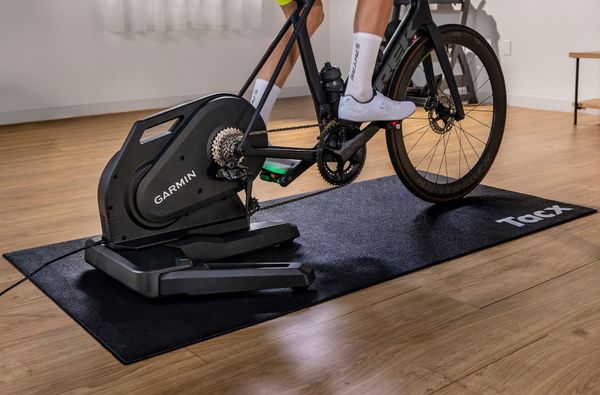
The hardware angle is more concrete. Rouvy reverse-engineered Zwift's proprietary Cog and Click virtual shifting earlier this year, which let Rouvy users actually use Zwift's trainer ecosystem without paying Zwift. That workaround is now officially sanctioned because Zwift owns both sides of the equation. If you bought into Zwift's hardware, you're no longer locked into one app. That's good. The catch: you're still locked into Zwift's corporate ecosystem, which now happens to include two apps instead of one.
The esports piece is where this gets weird. Zwift also just absorbed Rouvy's digital licensing deals with IRONMAN, Life Time Grand Prix, and a handful of WorldTour teams. That gives Zwift control over virtual versions of major real-world race courses, which directly undercuts the UCI's attempt to govern cycling esports through MyWhoosh (the free, UAE-backed platform that took over the UCI Esports World Championships in 2024). Zwift's independent series pulled 80,000+ riders and 215,000+ race completions in 2024. The UCI's Abu Dhabi event had 44 total starters. I can't verify the UCI's long-term strategy here, but the participation gap speaks for itself.
If you're a busy parent trying to get quality intervals done before work, this doesn't change much tomorrow. Both apps still work. Your trainer still connects. But if you're deciding whether to invest in Zwift hardware or commit to a yearly subscription, you're now betting on a single company's roadmap for both gamified racing and real-world route simulation. That's either convenient or concerning, depending on how much you trust consolidation in a market that's already pretty thin on alternatives.