Cervélo's 2026 Caledonia Refresh: What Changed and What Actually Matters
Cervélo's 2026 Caledonia refresh adds in-frame storage and dropped seatstays. Here's what matters: threaded BB vs. integration, and which build is worth it.

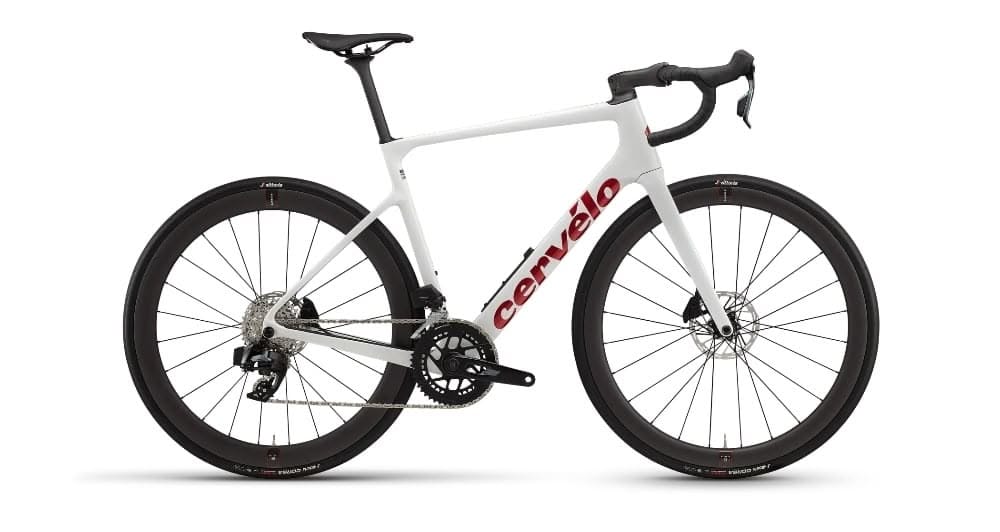
Cervélo just updated the Caledonia family for 2026, and the changes are subtle enough that you might miss them if you're skimming—but meaningful if you're the kind of person who spends six hours on a bike and cares about where your spare tube lives.
The headline: two versions now. The Caledonia-5 is the integrated, race-ready model. The standard Caledonia is the mechanic-friendly workhorse with a threaded bottom bracket and semi-external routing. Both clear 36mm tires. Both share the same geometry. The differences are in the details, and those details matter more than Cervélo's marketing wants to admit.
What Actually Changed
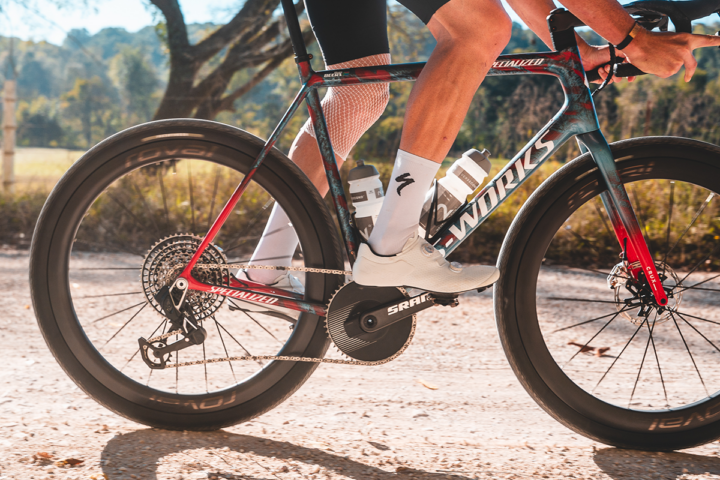
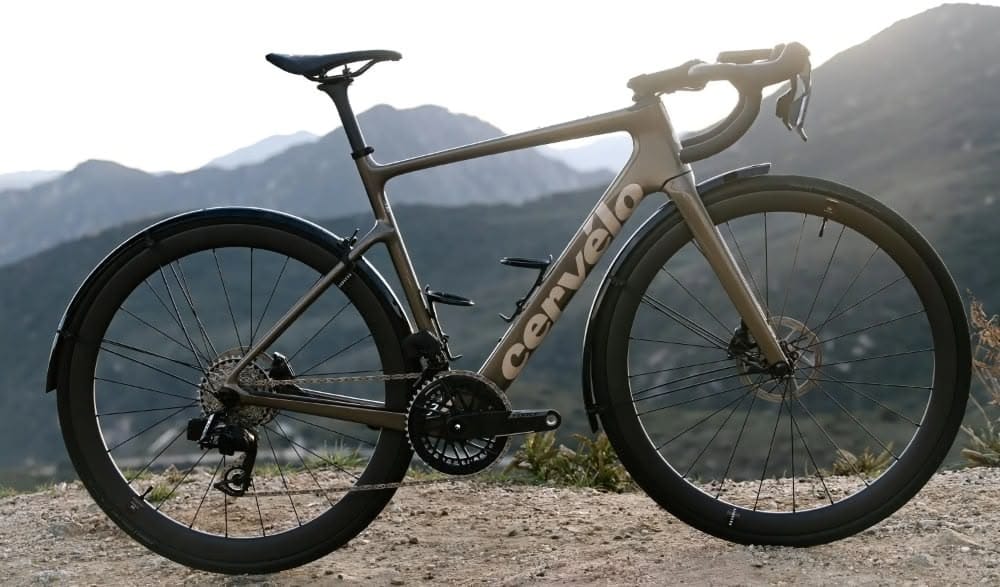
The 2026 refresh isn't a ground-up redesign. It's refinement. Cervélo borrowed dropped seatstays from the Áspero gravel bike, which should improve vertical compliance without making the rear end feel vague. The fork offset changed by 1mm to better balance handling with wider tires. Frame weight dropped about 53 grams on the Caledonia-5.
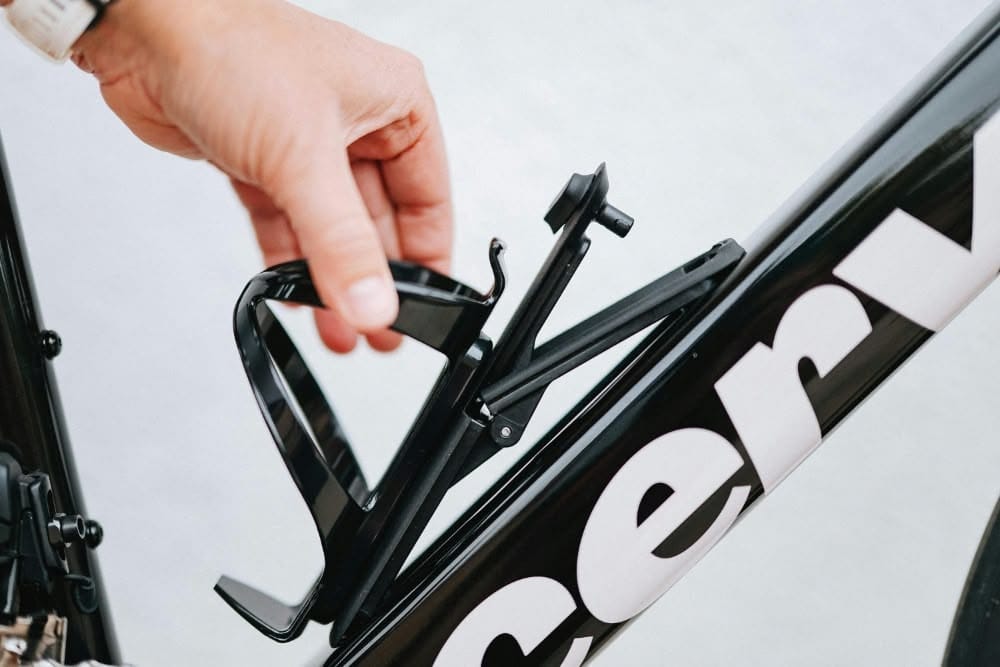
The bigger news: the Caledonia-5 now has an integrated storage compartment in the downtube. It's designed for a tube, CO₂, and a multi-tool—the stuff you need on a long ride but don't want rattling in your jersey. I haven't ridden this bike yet, but that feature alone changes the calculus for anyone doing unsupported centuries or gravel events where you can't rely on a feed zone.
Here's the catch: the standard Caledonia doesn't get the storage. You're stuck with top tube mounts. If in-frame storage is a priority, you're paying the premium for the 5.
Caledonia-5: The Integrated Option
Fully internal routing. D-shaped steerer. Carbon cockpit (Cervélo's ST31 stem and HB13 bar). BBRight press-fit bottom bracket. This is the bike Cervélo wants you to see as the "pro" version, and it probably is—if you never wrench on your own bike and you're comfortable with the quirks of internal routing.
The downtube storage is clever. It keeps your repair kit low and centered, which is better for handling than a saddle bag swinging behind you. But it also means you're committed to Cervélo's system. If you want to run a different stem or swap bars, you're dealing with full cable housing replacement. That's fine if you have a shop relationship. It's annoying if you like to tinker at 10 p.m. before a weekend ride.
The BBRight bottom bracket will be divisive. Press-fit has improved, but it's still press-fit. If you live somewhere wet or ride year-round, expect to deal with creaks eventually. Cervélo's tolerances are tight, but physics doesn't care about tolerances when water gets in.
Caledonia: The Practical Choice
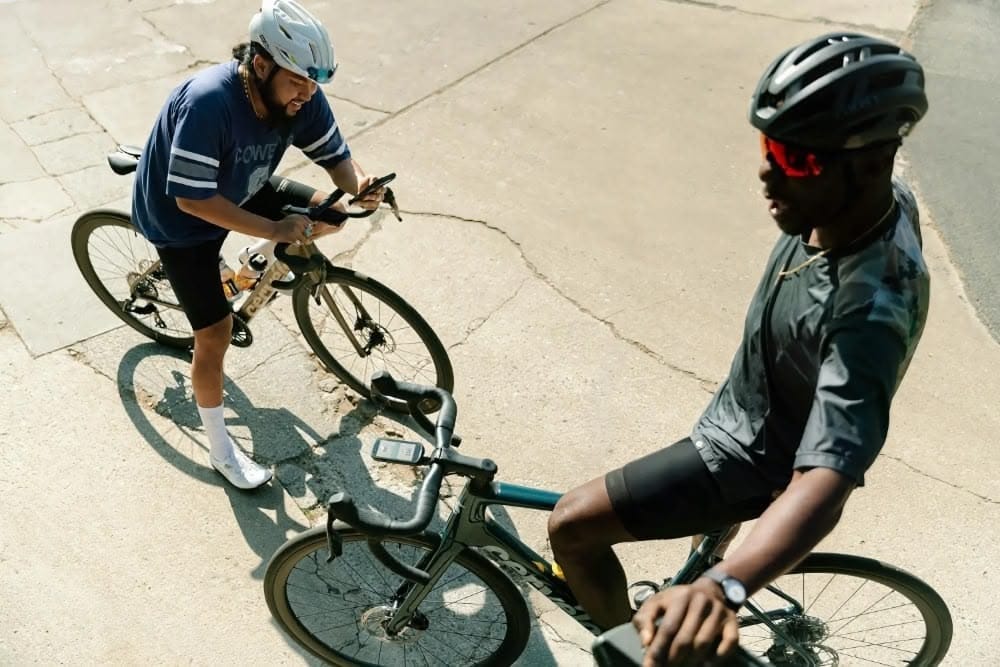
This is the version I'd buy if I were spending my own money. T47 threaded bottom bracket. Semi-external cable routing that ducks under the stem but stays accessible. Alloy cockpit (ST36 stem, HB23 bar). Round 27.2mm seatpost with an external clamp, which means you can swap posts without proprietary tools.
The tradeoff: no in-frame storage, and the carbon layup is slightly less exotic. Frame weight is marginally higher, but we're talking grams you won't feel unless you're racing. The bigger win is maintenance. You can adjust stack height, swap stems, or replace cables without a full teardown. If you're a busy dad who does your own wrenching between bedtime and midnight, that's worth more than 53 grams.
The threaded bottom bracket is the real story. T47 is overbuilt in the best way—wide bearing stance, high thread engagement, and compatibility with nearly every crank on the market. You can run it for years in wet conditions without drama. I can't verify this directly, but every mechanic I've talked to prefers T47 over press-fit for long-term reliability.
Geometry: Stable, Not Slow
Both bikes share the same geometry, which Cervélo describes as "calmer" than the R5 race bike but "punchier" than a gravel bike. In practice, that means a 72° head tube angle (on most sizes), a 415mm chainstay, and a stack/reach progression that favors stability over twitchiness.
The 415mm chainstay is short for an endurance bike. That keeps the rear end responsive, but it also means heel clearance can be tight if you run fenders or wide panniers. Cervélo lists 34mm as max tire width with fenders, which is honest but limiting if you want to run 35mm or 36mm rubber year-round with coverage.
The head tube angle is conservative enough that the bike won't feel sketchy on fast descents, but it's not so slack that it feels dead in tight corners. If you're coming from a race bike, it'll feel stable. If you're coming from gravel, it'll feel quick.
Size-Specific Notes
Smaller sizes (48, 51) get a slacker head tube angle (70.5°, 71.5°) and higher bottom bracket drop to preserve handling with shorter wheelbases. Larger sizes (58, 61) get a lower BB drop to keep the bike stable at speed. This is smart design, but it also means the 48cm and 61cm versions ride differently. If you're between sizes, test ride both.
Pricing and Build Kits
The Caledonia-5 starts at $7,400 with SRAM Rival AXS and tops out at $12,750 with SRAM Red. The standard Caledonia starts at $3,300 with Shimano 105 mechanical and goes to $6,500 with SRAM Force AXS.
Here's what matters: the $3,300 mechanical 105 build is the value play. You're getting the same frame geometry, the same tire clearance, and a threaded bottom bracket. The only thing you're giving up is electronic shifting and in-frame storage. If you're a data-driven cyclist who wants the platform without the premium, that's the build to buy. Upgrade the wheels and contact points later.
The Caledonia-5 with Ultegra Di2 at $8,950 is the sweet spot if you want integration and don't need SRAM's wireless ecosystem. But the $12,500+ builds are hard to justify unless you're racing or you've already maxed out your fitness and you're chasing marginal gains.
Who This Bike Is For
If you're doing long, mixed-surface rides—centuries with gravel sectors, brevets, unsupported bikepacking overnights—the Caledonia-5 with its in-frame storage makes sense. The integrated look is cleaner, and the dropped seatstays should smooth out rough pavement without feeling mushy.
If you're a busy dad who rides early mornings, does your own maintenance, and wants a bike that won't punish you for skipping a derailleur adjustment, the standard Caledonia is the smarter buy. The threaded BB and semi-external routing will save you hours over the life of the bike.
Here's what I'm not sure about: whether the dropped seatstays actually deliver noticeable compliance gains, or if it's just a design flourish borrowed from the Áspero. Cervélo doesn't publish compliance data, so we're trusting their word. If you weigh over 200 pounds or you're particularly sensitive to road chatter, the difference might be real. If you're 160 and you run 32mm tires at 60 psi, you probably won't notice.
TL;DR
- Caledonia-5 gets in-frame storage and full integration; standard Caledonia gets a threaded BB and easier maintenance. Same geometry, different priorities.
- The $3,300 mechanical 105 build is the value play—same frame, same tire clearance, no electronic tax. Upgrade wheels and contact points later.
- Dropped seatstays and 1mm fork offset tweak are incremental refinements, not a revolution. If you're happy with your current endurance bike, this isn't a must-upgrade.